
Cruise Ship Accessibility: Cabins, Decks, and Shore Excursions Explained
What accessible cruising actually looks like—from cabin configurations and deck navigation to mobility support during port visits.
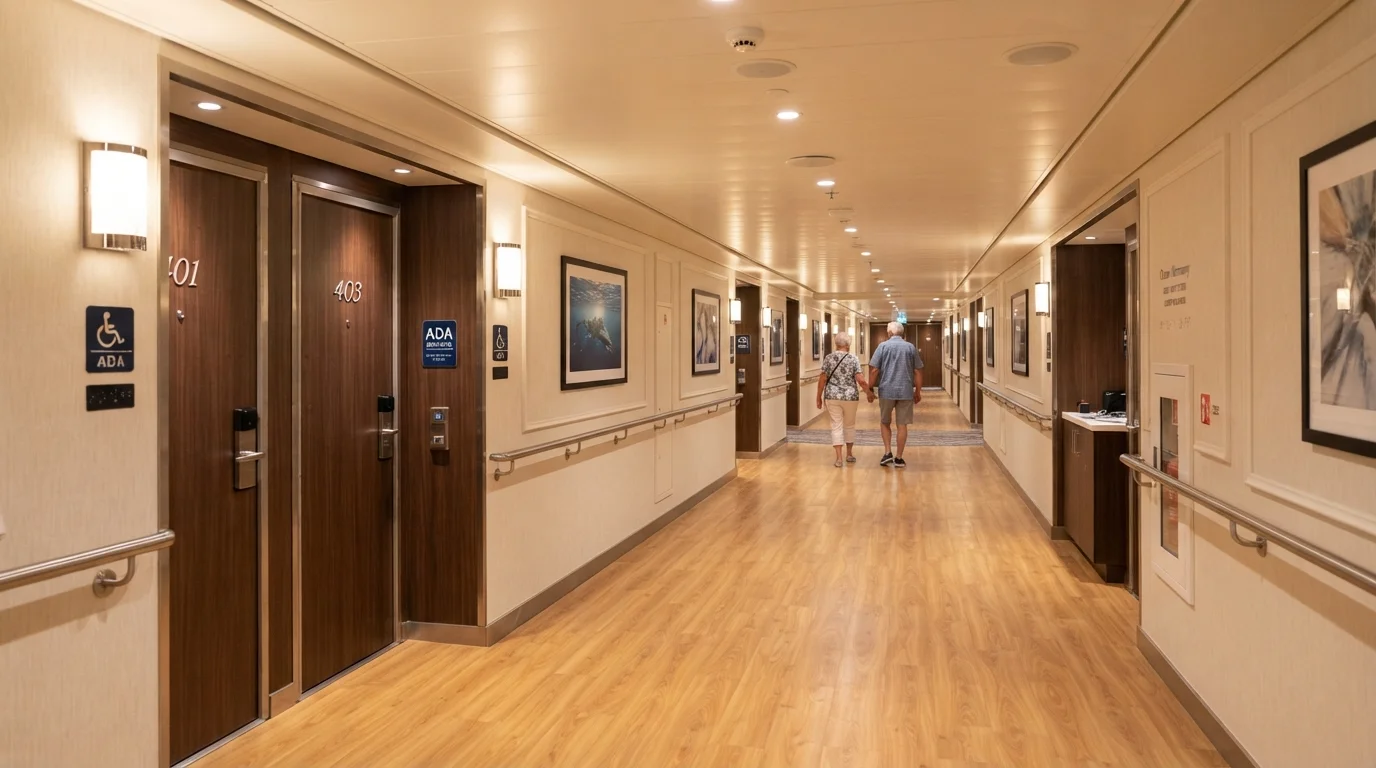
Photo: MyUrbanEscapes.net | Small Escapes. Big Experiences. editorial
—— In This Article
Key Takeaways
- Accessible cabin categories vary widely—always request a detailed spec sheet before booking.
- Most modern ships offer step-free routes between key public areas, but layouts differ by vessel.
- Shore excursion accessibility depends heavily on port infrastructure, not just the cruise line.
- Formally requesting special assistance services in advance significantly improves the onboard experience.
- Tender ports—where a small boat ferries passengers to shore—can be challenging for mobility aid users.
Accessible Cabins: What the Labels Actually Mean
When a cruise line lists a cabin as "accessible," that term covers a wide spectrum. Some staterooms are fully ADA-compliant with roll-in showers, grab bars, lowered closet rods, and visual fire alarms. Others labeled "ambulatory accessible" are designed for passengers who can walk but need modest support—wider doorways and a shower seat, for instance, but not a roll-in shower.
Before booking, request the cabin's exact door width, bathroom layout, and bed height. A written spec sheet from the cruise line is more reliable than a general category name. What 'Accessible Cabin' Actually Means on a Cruise Ship walks through the key questions to ask before you commit to a booking.
Accessible cabins are limited in number and book quickly—often months before departure. Seniors who need specific features should prioritize this step early in the planning process. See also Accessible Cabin Types on Cruise Ships for a breakdown of how cabin categories are defined across different vessels.
Always Request a Written Cabin Specification
Generic labels like "accessible" or "mobility-friendly" can mean different things on different ships. Ask the cruise line's accessibility department to send you the exact dimensions of the cabin doorway, bathroom layout, shower type, and bed configuration in writing before finalizing your booking. This documentation is also useful if there is a discrepancy when you board.
Navigating Decks and Public Spaces
Modern large cruise ships are generally well-suited to passengers with mobility limitations—wide corridors, smooth flooring, and elevator banks serving most decks are now standard on newer vessels. However, ship layout matters enormously. Elevator placement, the distance from accessible cabins to dining areas, and the availability of step-free pool deck access all differ by ship class and age of vessel.
Getting Around the Ship: Mobility Aid Use and Elevator Access at Sea provides a practical overview of what to expect when navigating a large ship with a walker, wheelchair, or scooter. Elevator banks on very large ships can be far from some cabin corridors, so reviewing the ship's deck plan before sailing is worthwhile.
Some areas—specialty outdoor lounges, certain pool decks, or upper-deck observation platforms—may only be reachable via stairs. Identifying these limitations in advance, rather than discovering them onboard, helps seniors plan their daily routines with confidence. How Cruise Ships Are Designed With Older Travelers in Mind explores the broader design philosophy behind modern ship construction.
~25%
U.S. adults aged 65+ with a disability
According to the U.S. Centers for Disease Control and Prevention, roughly one in four older adults in the United States lives with some form of disability, underscoring the importance of accessible travel options.
Varies
Accessible cabin availability per ship
The number of accessible staterooms on any given ship is limited—typically a small percentage of total inventory—making early booking essential for travelers who require specific features.
Shore Excursions and Port Accessibility
Onboard accessibility is only part of the picture. Once a ship docks—or anchors offshore—the experience of getting to land and exploring a destination depends entirely on port infrastructure, which the cruise line does not control.
Ports vary dramatically. Some, like those in Alaska or Scandinavia, have modern, flat pier facilities with accessible transfer options. Others, particularly in historic Mediterranean towns or Caribbean tender ports, involve uneven cobblestones, steep hills, or small-boat transfers that present genuine challenges for mobility aid users.
A tender port deserves special attention. At these locations, the ship cannot dock directly, so passengers travel to shore on a smaller vessel. Stepping onto a tender requires crossing a gangway that moves with the sea, which can be difficult or inadvisable for passengers using wheelchairs or walkers. Some cruise lines allow passengers with significant mobility limitations to skip the tender and remain onboard—with access to ship amenities—when tendering is deemed unsafe for them.
When reviewing excursion options, look for tours specifically labeled as "wheelchair accessible" or "limited mobility" and verify the specific physical requirements directly with the excursion operator. The cruise line's shore excursion team can often clarify which tours involve significant walking, steps, or uneven terrain. For comprehensive planning, A Complete Guide to Cruising With a Mobility Aid covers gangways, tenders, and shore access in detail.
Port Accessibility Is Outside Cruise Line Control
Cruise lines can design accessible ships, but they cannot control the infrastructure of the ports they visit. Cobblestone streets, historic sites without ramps, and limited accessible transportation ashore are common in many popular destinations. Researching specific ports—and building flexibility into your itinerary—reduces the risk of unexpected barriers once you reach land.
Requesting Assistance and Planning Ahead
Cruise lines offer a range of formal accessibility services—embarkation assistance, hearing loops, closed-captioned entertainment, visual alert systems, and dietary accommodations for medical conditions. These services are not automatically assigned; they must be requested in advance, typically at the time of booking.
Most major cruise lines operate a dedicated accessibility or special needs department. Contacting this team directly—rather than relying solely on a travel agent—ensures your requirements are documented and confirmed in writing. Understanding Special Assistance Services Cruise Lines Provide outlines the full range of what can be formally requested.
Embarkation day itself can be physically demanding. The Hidden Logistics of Cruise Embarkation Days explains what actually happens during boarding and how to navigate check-in queues with less stress. Passengers who require wheelchair assistance from the terminal to the ship can request this service in advance through the cruise line or the terminal operator.
For seniors traveling with a wheelchair, walker, or scooter, Mobility Aids on Cruise Ships addresses what to request before departure and where onboard terrain can still pose challenges despite good overall design.
This article provides general travel information for educational purposes. Accessibility features, services, and port conditions vary by cruise line, ship, and destination. Travelers with specific medical or mobility needs should consult with their healthcare provider and contact their cruise line's accessibility services team directly before booking.
Frequently Asked Questions

Cruise Travel Editorial Team
Cruise Travel Editorial Team is the collective byline for our editorial team and contributor network. Articles published under this byline or an editorial pen name are researched, written, and reviewed according to our editorial standards for clarity, consistency, and independence before publication.
View author profile