
Accessible Cabin Types on Cruise Ships: What the Categories Actually Mean
ADA-compliant, ambulatory accessible, and standard cabins explained — so seniors can choose the right stateroom before booking.
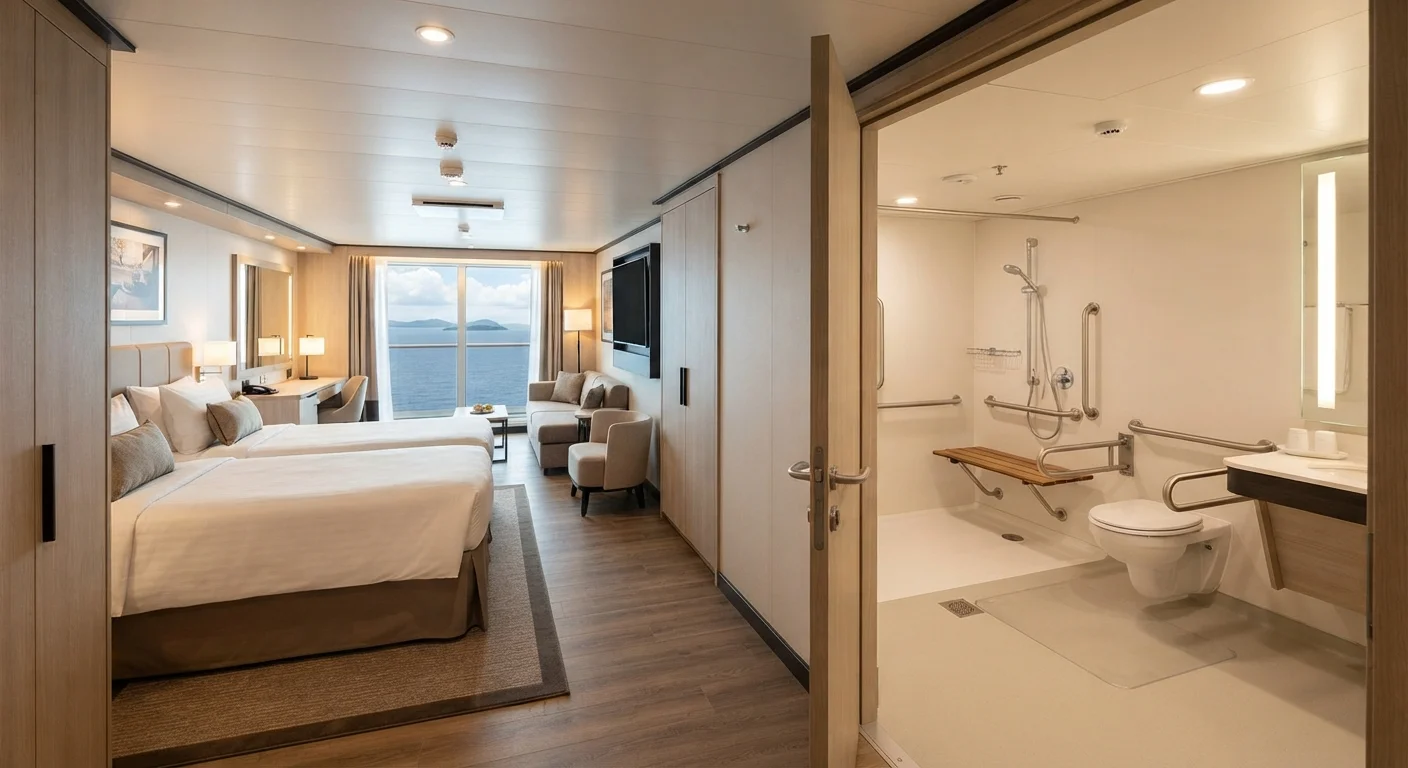
Photo: MyUrbanEscapes.net | Small Escapes. Big Experiences. editorial
—— In This Article
The Three Main Accessible Cabin Categories
Cruise lines typically offer three distinct cabin categories for travelers with mobility or physical needs: ADA-compliant accessible, ambulatory accessible, and standard staterooms. Each label signals a different level of physical accommodation, and choosing the wrong category can create real challenges onboard. Understanding what these designations actually mean — before you book — is one of the most practical steps any senior traveler can take.
| ADA-Compliant Cabin Door Width | Minimum 32 inches (often 36 inches) (U.S. ADA Standards for Accessible Design, as adapted for passenger vessels) |
| Ambulatory Accessible Shower Type | Step-in shower with grab bars and fold-down bench |
| ADA Turning Radius Requirement | 60-inch clear floor circle in bathroom and bedroom (U.S. ADA Standards for Accessible Design) |
| Cabin Type Suited to Walker Users | Ambulatory accessible (not full ADA) |
| Advance Notice Recommended | Book accessible cabins as early as possible — supply is limited on all ships |
For a broader look at how modern ships are built around older passengers, see how cruise ships are designed with older travelers in mind.
ADA-Compliant Accessible Cabins
ADA-compliant cabins (also called fully accessible cabins on some lines) are designed to meet the Americans with Disabilities Act standards as adapted for marine vessels. These are the most comprehensively equipped staterooms for passengers who use a wheelchair or have significant mobility limitations.
Key features typically include:
- A roll-in shower with a fold-down bench and handheld showerhead
- Grab bars near the toilet, shower, and often the bed
- A doorway clearance of at least 32 inches (sometimes 36 inches) to accommodate standard power wheelchairs
- Lowered closet rods, light switches, and peepholes
- Turning radius space of at least 60 inches in the bathroom and sleeping area
- Raised toilet height to ease transfers
These cabins are limited in number on every ship. Cruise lines typically require passengers to self-certify that they have a qualifying need to reserve one. If you use a power wheelchair or scooter, this is almost certainly the category you need. See our guide on mobility aids on cruise ships for details on dimensions and advance requests.
ADA-Compliant Cabin
A stateroom designed to meet Americans with Disabilities Act accessibility standards as adapted for cruise vessels. Features include roll-in showers, wide doorways, and turning radius space for wheelchairs.
Ambulatory Accessible Cabin
A cabin suited to passengers who can walk but benefit from support features such as grab bars and a shower bench. Not designed for full wheelchair access.
Roll-In Shower
A shower with no step threshold, allowing a wheelchair or shower chair to enter directly. A standard feature of ADA-compliant cruise cabins.
Turning Radius
The clear floor space required for a wheelchair to complete a full 360-degree turn. ADA standards typically require a 60-inch diameter clear circle.
Transfer Space
Unobstructed floor area beside a bed, toilet, or shower to allow a person to move safely from a wheelchair or mobility aid to the fixture.
Ambulatory Accessible Cabins
Ambulatory accessible cabins are often misunderstood — and frequently booked by travelers who don't actually need them, while those who do miss out. These staterooms are designed for passengers who can walk but benefit from physical support features. They are not suitable for full wheelchair users.
What you'll generally find in an ambulatory accessible cabin:
- A step-in shower (not roll-in) with a fold-down bench and grab bars
- Grab bars near the toilet
- Slightly wider doorways than standard cabins, but typically not wide enough for a power wheelchair
- A bathroom threshold that may still require stepping over
These cabins suit travelers who have balance concerns, use a cane or standard walker, or find bending and low seating difficult. They represent a practical middle ground — more support than a standard room, without taking a fully accessible cabin that someone else may urgently need.
The terminology varies by cruise line. Some use "accessible with shower" or "modified accessible" — always read the cabin description carefully or call the line directly. For more on decoding cruise accessibility language, see what 'accessible cabin' actually means on a cruise ship.
Standard Cabins and What They Lack
Standard cruise cabins are designed for the general passenger population. Bathrooms are typically compact, with a shower-over-tub combination or a small stand-up shower stall, no grab bars, and a narrow doorway. For many active seniors these cabins work perfectly well. For anyone with reduced balance, limited grip strength, or a mobility aid, they can present daily friction and, in some cases, fall risk.
A few features sometimes present in standard cabins that seniors should verify before assuming:
- Bed height — standard beds vary widely; some can be difficult to get in and out of
- Step thresholds into bathrooms or onto balconies
- Door handle type (lever vs. round knob, relevant for arthritis)
If you're uncertain which category suits your needs, cruise ship accessibility explained walks through the full picture — including deck navigation and shore excursion considerations.
Verify Features Directly With the Cruise Line
Cabin descriptions on booking sites don't always capture every physical detail. Before finalizing a reservation, contact the cruise line's accessibility desk directly and ask for the specific measurements and features of the cabin you're considering. Many lines also have written accessibility policies available on request. Always confirm your needs are documented on your booking record.
When comparing cruise cabins with land-based accommodations, note that the standards differ. Our related piece on how accessible hotel room categories differ from standard rooms explains what changes when you step ashore.
For general guidance on selecting a ship and itinerary, the Choosing a Cruise hub is a useful starting point.

Cruise Travel Editorial Team
Cruise Travel Editorial Team is the collective byline for our editorial team and contributor network. Articles published under this byline or an editorial pen name are researched, written, and reviewed according to our editorial standards for clarity, consistency, and independence before publication.
View author profile