
Mobility Aids on Cruise Ships: Wheelchairs, Walkers, and Scooters
How cruise ships accommodate common mobility aids, what to request in advance, and where onboard terrain can still be challenging.
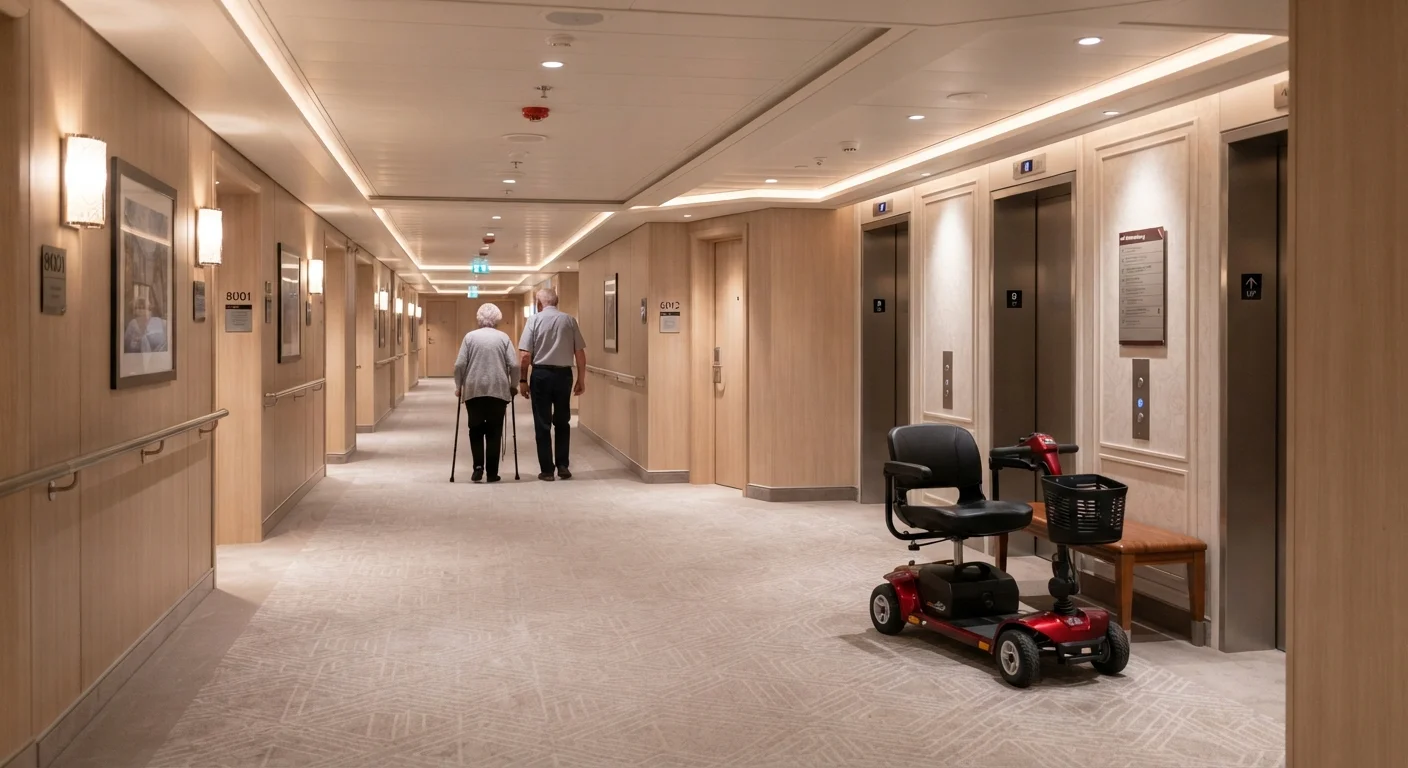
Photo: MyUrbanEscapes.net | Small Escapes. Big Experiences. editorial
—— In This Article
What Cruise Ships Typically Accommodate
Most large ocean-going cruise ships are built with significant accessibility infrastructure, including wider-than-standard corridor widths, elevator banks on multiple decks, and accessible public restrooms. The three most common mobility aids travelers bring aboard — manual wheelchairs, walkers or rollators, and motorized scooters — are generally permitted on all major cruise lines, though policies vary by vessel and line.
Manual wheelchairs fold compactly and are the least logistically complex aid to manage onboard. Walkers and rollators are similarly straightforward but may require extra cabin storage space. Motorized scooters, by contrast, require battery charging access, more corridor clearance, and are subject to size and weight limits that differ by ship. Always confirm your specific scooter's dimensions against the cruise line's published specifications before sailing.
For a thorough overview of how ships are physically designed around these needs, see our complete guide to cruising with a mobility aid.
What to Request Before You Board
Advance notice is critical. Cruise lines generally ask that passengers with mobility needs declare them at the time of booking or as early as possible thereafter. Key requests to make in writing include:
- Accessible stateroom: ADA-compliant cabins feature roll-in showers, lowered beds, and turning radius space for scooters. These cabins are limited in number and fill early. Our article on accessible cabin types explains the distinctions between categories.
- Scooter or wheelchair rental: Some cruise lines partner with third-party rental companies, allowing you to have equipment waiting in your stateroom.
- Gangway assistance: Boarding ramps vary by port and tide; staff can be arranged to assist at embarkation and debarkation.
- Shore excursion accessibility: Not all excursions accommodate mobility aids. Verify terrain and vehicle access for each port in advance. See shore excursions for limited mobility for planning guidance.
Pre-trip logistics extend beyond the ship itself. Our guide on mobility aids and pre-trip planning covers what to arrange well before departure day.
Document Your Equipment in Writing
When notifying your cruise line about a mobility aid, always do so in writing — via email confirmation or a documented special needs form — and retain a copy. Verbal requests made by phone are difficult to verify if a dispute arises at embarkation. Confirming dimensions, battery type (for scooters), and any rental arrangements in advance reduces the risk of surprises on boarding day.
Challenging Terrain to Know About
Even well-equipped ships have areas that can present difficulty for mobility aid users. Being aware of these in advance reduces frustration onboard.
ADA-Compliant Cabin
A stateroom designed to meet Americans with Disabilities Act accessibility standards, featuring wider doorways, roll-in showers, grab bars, and turning radius space for wheelchairs or scooters.
Tender Port
A port where the cruise ship anchors offshore and passengers travel to land via smaller vessels called tenders. Accessibility for mobility aid users at these ports is often limited.
Rollator
A wheeled walker with a frame, handles, and usually a seat. Rollators provide more stability than a standard walker and are widely used by senior travelers.
Gangway
The ramp or bridge connecting the ship to the dock at embarkation and debarkation. Angle and width vary by port and tidal conditions, which can affect mobility aid users.
Ambulatory Accessible Cabin
A cabin type designed for passengers who walk with some assistance but do not use a wheelchair or scooter. Features may include grab bars and a shower seat, but with less floor-turning space than a full ADA cabin.
- Tender ports: When a ship anchors offshore and passengers transfer to land via small tender boats, wheelchair and scooter access may be limited or entirely unavailable depending on sea conditions and tender design. Confirm tender port status for every stop in your itinerary.
- Pool deck lips and raised thresholds: Watertight door frames and deck lips are structural necessities but can be obstacles for wheeled aids. Staff are generally available to assist, but navigating solo requires extra care.
- Elevator demand at peak times: On large ships, elevator banks serve thousands of passengers. During embarkation, meal times, and port departures, wait times can be significant. Understanding elevator access and deck navigation can help you plan movement around busy periods.
- Shore terrain: Cobblestone streets, steep hillside paths, and uneven docking surfaces are common at historic ports. Review each destination's physical demands alongside your own comfort level — our article on matching cruise destinations to your physical comfort level is a useful starting point.
For a broader look at how accessibility works across cabins, decks, and shore excursions in one place, refer to our overview of cruise ship accessibility.

Cruise Travel Editorial Team
Cruise Travel Editorial Team is the collective byline for our editorial team and contributor network. Articles published under this byline or an editorial pen name are researched, written, and reviewed according to our editorial standards for clarity, consistency, and independence before publication.
View author profile