
Getting Around the Ship: Mobility Aid Use and Elevator Access at Sea
What to expect when navigating a large cruise ship with a walker, wheelchair, or scooter — including elevator placement and deck layouts.
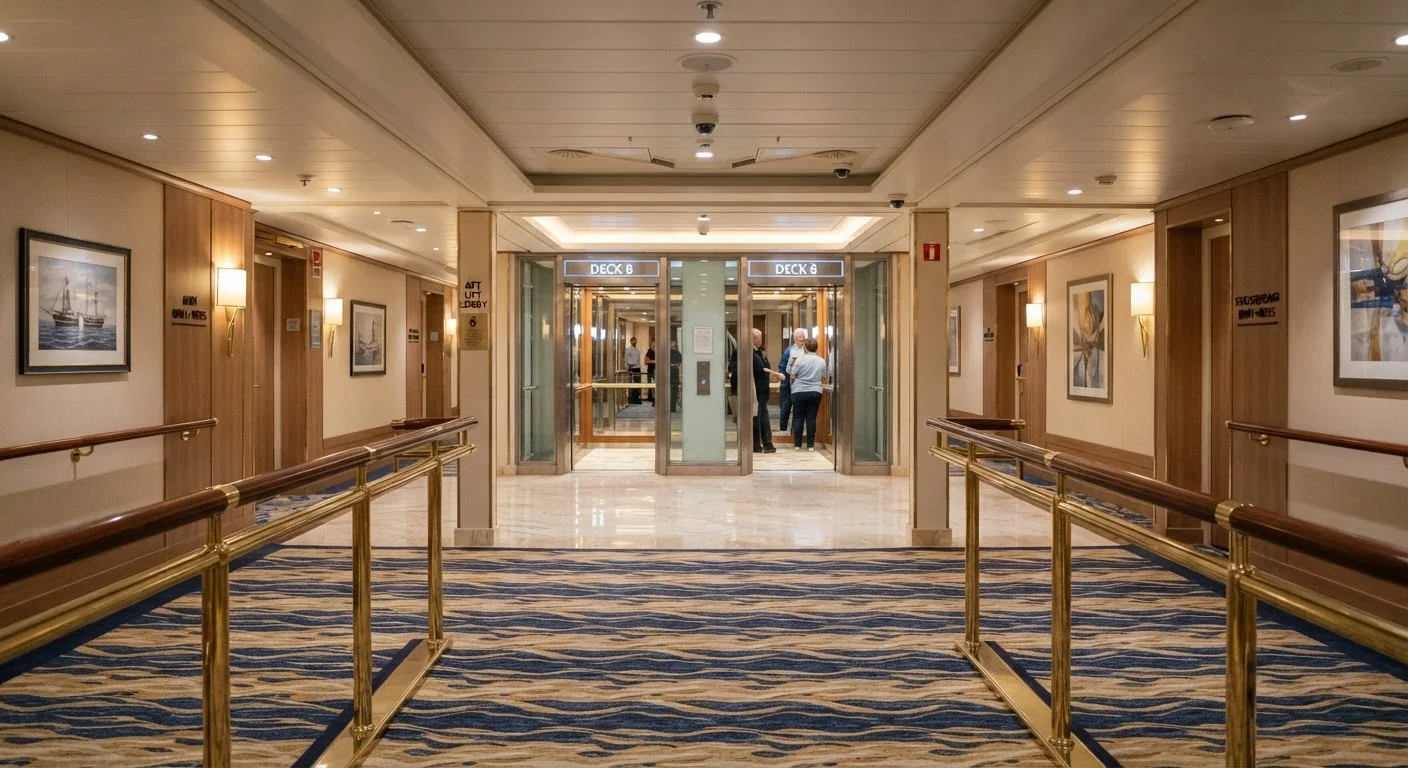
Photo: MyUrbanEscapes.net | Small Escapes. Big Experiences. editorial
—— In This Article
Key Takeaways
- Elevator banks on large ships cluster midship — learning their location on embarkation day saves time.
- Scooters and power wheelchairs require advance notification to your cruise line before sailing.
- Accessible cabins are usually closest to elevators; request this placement at booking.
- Peak elevator congestion occurs at mealtimes and port departures — plan routes accordingly.
- Ship deck maps from guest services are the fastest way to identify step-free routes.
Understanding Ship Layouts Before You Board
Large contemporary cruise ships are essentially floating small cities, and their layouts reflect that scale. A typical mega-ship spans 14–18 decks, stretches more than 1,000 feet in length, and carries several thousand passengers. For a traveler using a walker, wheelchair, or scooter, understanding the basic logic of how these ships are organized is the single most useful preparation you can make before embarkation day.
Most ships organize their public spaces vertically and horizontally. Cabins occupy the middle decks, while entertainment, dining, and pool venues spread across upper and lower public decks. Elevator banks — the vertical connectors between all of these — are positioned at three points along the ship's length: forward (toward the bow), midship (the center), and aft (toward the stern). Knowing this pattern means you can always estimate roughly where an elevator will be, even on an unfamiliar vessel.
For a broader look at how ship design supports senior passengers, see our guide on how cruise ships are designed with older travelers in mind. And if you're still in the process of selecting a voyage, the Choosing a Cruise hub offers practical guidance on matching the right ship to your mobility needs.
What you will need
Ship Deck Plan
Identifies elevator locations, step-free pathways, and the position of dining, medical, and amenity decks relative to your cabin.
Mobility Aid (wheelchair, scooter, or walker)
Your primary means of independent movement around the ship — dimensions must be confirmed with the cruise line before boarding.
Cruise Line Accessibility Contact Information
Allows you to pre-arrange priority boarding, accessible seating, and any onboard equipment loans such as shower chairs.
Portable Phone Charger or Ship Card Lanyard
Keeps your stateroom key card accessible at all times, which is needed to call the elevator and access restricted deck areas on some ships.
Step-by-Step: Navigating the Ship Confidently
The steps below walk you through the process of planning and executing independent navigation aboard a cruise ship when using a mobility aid — from pre-departure preparation through day-to-day movement at sea.
Request an Accessible Cabin Close to Elevator Banks
When booking, specifically request an accessible stateroom located near a main elevator bank. On most large ships, elevator clusters sit at the forward, midship, and aft sections of the vessel. Midship cabins generally offer the shortest distance to both elevators and the ship's main public areas. Confirm the cabin's proximity to elevators directly with the cruise line's accessibility desk — do not rely solely on deck plan imagery, which may not show exact distances to scale.
Download or Print the Ship's Deck Plan Before You Board
Most cruise lines publish detailed deck plans on their websites. Before your sailing date, download the plan for your specific ship and mark the location of every elevator bank, the medical center, dining venues, and any outdoor deck access points. Large ships can span 15 or more decks, and without a plan you may spend considerable energy navigating dead ends or stairwell-only passages. Guest services can also provide a printed copy upon boarding.
Board Early to Familiarise Yourself With Elevator Locations
Embarkation day is the ideal time to take a slow, deliberate orientation tour of the ship. Ride each elevator bank and note which decks they serve — not all elevators reach every deck. Some ships have separate glass elevators at the atrium that serve only the middle decks, while service elevators at the ends of the ship reach all levels including crew areas. Identifying these nuances early prevents frustration when you need to reach a specific venue quickly.
Plan Routes Around Peak Elevator Congestion Times
Elevator demand spikes predictably: at main dining seatings (typically 6 p.m. and 8 p.m.), when the ship arrives in port in the morning, and when passengers return in the afternoon. If you use a scooter or power wheelchair, these are the moments when elevator waits can extend significantly. Build extra time into your schedule during these windows, or adjust your dining reservation to an off-peak seating if the ship offers flexible dining. Many ships also have a secondary elevator bank that sees less foot traffic — identify it on your deck plan.
Identify Step-Free Outdoor Deck Access
Exterior deck access is one of the most overlooked navigation challenges for mobility aid users. Many ships have coaming — raised metal thresholds — at the doorways leading from interior corridors to outdoor decks. These can be 2–4 inches high and present a real tripping hazard for walker users and a bump obstacle for scooter riders. Ask crew which outdoor access points have flush or ramped thresholds. On most modern ships, at least one or two doorways per outdoor deck level are designed without coaming or with a built-in ramp.
Use Guest Services and Crew Proactively
Ship crew are trained to assist passengers with mobility needs. Do not hesitate to ask a crew member to hold an elevator, help you navigate a difficult threshold, or clarify which route to a venue is step-free. Guest services can also arrange for a crew escort on embarkation and disembarkation days, when gangways and tender boats introduce additional terrain challenges. Logging a formal accessibility request with guest services at the start of your sailing ensures your needs are on record for the duration of the voyage.
Scooter Dimensions Matter More Than You Think
Cruise ship cabin doorways in accessible staterooms are typically 32–36 inches wide, but standard scooters can vary considerably in width. Measure your scooter's widest point — usually the armrests or footrest — and confirm it fits through your cabin doorway before you sail. Many cruise lines also offer scooter rental programs arranged through approved vendors, which can be a practical option if you're unsure about bringing your own.
Not All Ships Are Equally Accessible
Accessibility features vary significantly between ship classes and construction eras. Older vessels may have narrower corridors, fewer elevators, and more threshold obstacles than newer builds. Always research your specific ship — not just the cruise line — using its published deck plan and accessibility documentation. Our article on how cruise ships are designed for older travelers covers these differences in detail.
Notify the Cruise Line Before You Book, Not After
Accessible cabins are limited in number and are typically released to the general pool once a sailing fills. Contact the cruise line's accessibility desk as early as possible — ideally when making your initial reservation — to secure a suitable stateroom and register any equipment you plan to bring. Waiting until embarkation day to raise mobility needs can result in unsuitable cabin assignments and unmet equipment requests.
For a comprehensive overview of how cruise ships handle wheelchairs, walkers, and scooters across all aspects of a voyage — including gangways, tender ports, and shore excursions — see our complete guide to cruising with a mobility aid. You can also find detailed information on mobility aids on cruise ships and cruise ship accessibility explained in the Cruise Health & Safety hub.
This article provides general travel information and is not a substitute for guidance from your cruise line's accessibility team or your personal healthcare provider. Accessibility features vary by ship and operator; always verify details directly with your cruise line before sailing.

Cruise Travel Editorial Team
Cruise Travel Editorial Team is the collective byline for our editorial team and contributor network. Articles published under this byline or an editorial pen name are researched, written, and reviewed according to our editorial standards for clarity, consistency, and independence before publication.
View author profile