
How Cruise Ships Are Designed With Older Travelers in Mind
From step-free decks to wide cabin doorways, explore the accessibility features built into modern cruise ships for senior passengers.
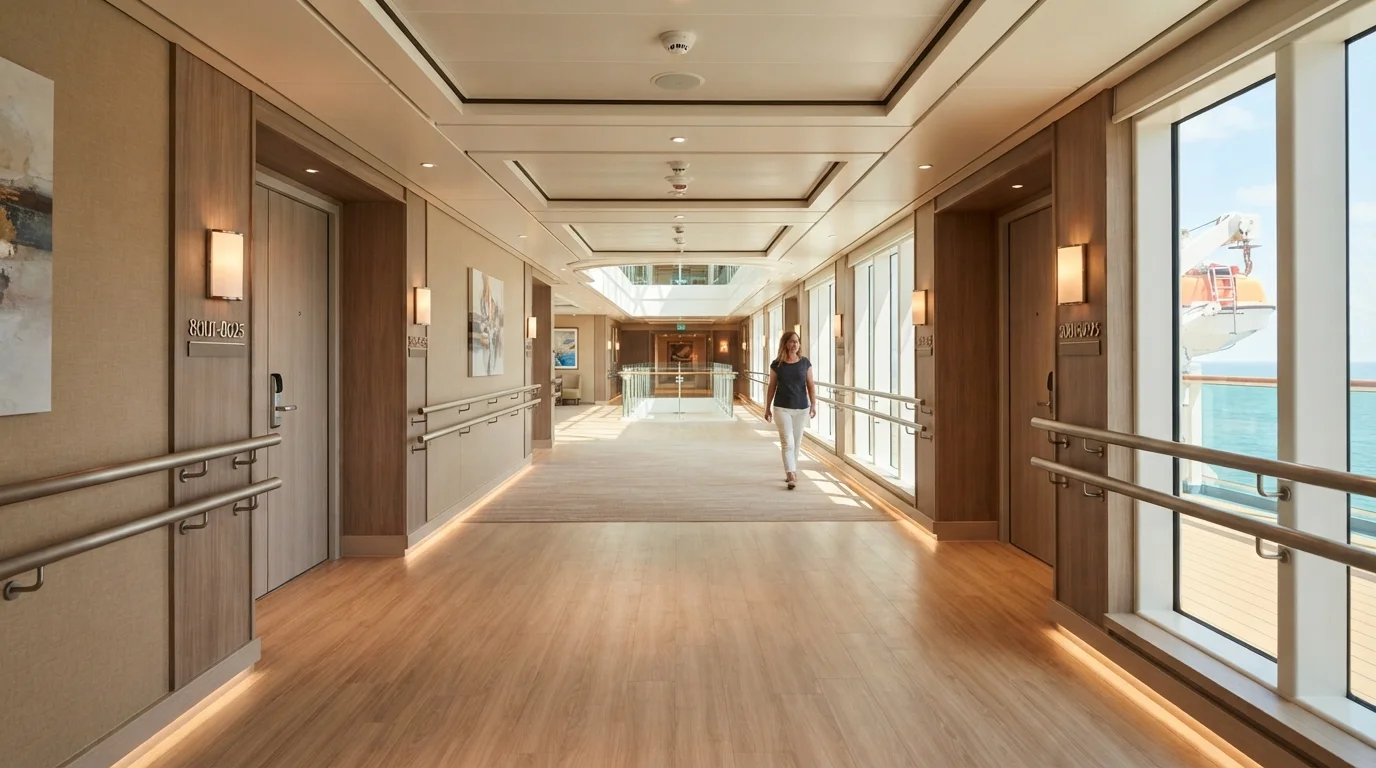
Photo: MyUrbanEscapes.net | Small Escapes. Big Experiences. editorial
—— In This Article
Key Takeaways
- Modern cruise ships include step-free deck access, wide corridors, and elevator placement designed for easy navigation.
- Accessible cabin categories offer grab bars, roll-in showers, and lowered fixtures as standard features.
- Onboard medical centers are staffed around the clock and equipped to handle common senior health needs.
- Dining venues on most major ships can accommodate dietary restrictions including low-sodium and diabetic-friendly meals.
- Special assistance services — from embarkation help to hearing loops — can be arranged before departure.
Why Ship Design Matters for Older Passengers
For many seniors, the appeal of cruising is the ability to travel widely while living out of a single, familiar base. But that base — the ship itself — must be designed to support independent movement, comfortable rest, and reliable access to health services. Older travelers often bring a range of considerations: reduced mobility, balance sensitivity, dietary requirements, or the need to manage medications on schedule.
Unlike land-based hotels, cruise ships are floating environments where layout decisions directly affect whether a passenger feels confident or constrained. The distance from a cabin to the dining room, the presence of a grab rail in a corridor, or the slope of a gangway at port — these details have real consequences. Fortunately, the cruise industry has responded with design changes that benefit older travelers across virtually every ship class.
For a broader view of what to consider before setting sail, the complete overview of cruise health and safety for seniors is a strong starting point.
Accessible Cabins and Stateroom Features
Accessible staterooms on modern cruise ships are purpose-built rather than retrofitted, and the difference shows. Standard accessible cabin features typically include:
- Wider entry doorways (commonly 32 inches or more) to accommodate wheelchairs and walkers
- Roll-in showers with fold-down seating and handheld shower heads
- Grab bars positioned near the toilet, shower, and sometimes the bed
- Lowered closet rails, light switches, and peepholes
- Unobstructed floor space for turning a mobility device
Beyond accessible categories, many standard cabins now feature raised bed heights, improved lighting for nighttime navigation, and lever-style door handles — small refinements with meaningful impact for older passengers. Our detailed article on cruise ship accessibility across cabins, decks, and shore excursions explains what to look for when comparing stateroom options.
Book Accessible Cabins Early
Accessible staterooms are limited on every ship and fill quickly, particularly on popular itineraries. Contact the cruise line directly after booking to confirm the specific features of your assigned accessible cabin — not all accessible categories are identical. Our pre-departure accessibility checklist can help you know the right questions to ask.
Deck Navigation and Public Spaces
A well-designed ship makes it possible to move between venues without encountering unnecessary barriers. Step-free deck transitions, continuous handrails along interior corridors, and non-slip flooring throughout public areas are now common on newer vessels. Elevators are positioned to minimize walking distances from cabins to key amenities, though placement still varies by ship class.
Public areas increasingly include dedicated quiet spaces — reading rooms, garden decks, and adults-only pool areas — that suit travelers who prefer a calmer environment. These spaces are covered in more depth in our guide to quieter onboard spaces for seniors.
Balance is a real concern on moving vessels. Corridors that offer something to hold onto — and flooring designed to minimize slipping when wet — reduce fall risk. For a focused look at this issue, see our article on balance and fall prevention aboard ships.
Over 50%
Cruise passengers aged 50 or older
Industry research from the Cruise Lines International Association (CLIA) has consistently shown that passengers aged 50 and above represent the largest demographic segment in cruise travel.
32+ inches
Typical accessible cabin doorway width
ADA guidelines recommend a minimum 32-inch clear width for doorways serving wheelchair users; many cruise accessible cabins meet or exceed this standard.
24/7
Medical center availability on major ships
Most large ocean-going cruise ships operate medical centers staffed around the clock, according to publicly available cruise line policies.
Onboard Health, Dining, and Assistance Services
Most large ocean cruise ships maintain a medical center staffed by physicians and nurses, available at all hours. These facilities are equipped to handle common medical events and provide stabilizing care before transfer to shore-based facilities when necessary. Passengers managing chronic conditions are encouraged to consult their own healthcare provider well before departure — this is general information, not medical advice tailored to any individual.
Dining has become notably more flexible on modern ships. Many cruise lines can accommodate low-sodium, diabetic-friendly, allergy-aware, and texture-modified meals when requests are made in advance. See our guide on dining flexibility for seniors with dietary needs for specifics on how to submit these requests effectively.
Beyond physical design, cruise lines offer a range of formal assistance services: embarkation wheelchair escort, hearing loop systems in theaters, visual alert systems in cabins, and trained crew for passengers with cognitive or sensory needs. For a full breakdown, our article on special assistance services cruise lines provide outlines what can be formally requested and when to do so.
This Article Is General Information
The accessibility features described here reflect common industry practices and are not guaranteed on every ship or sailing. Features, cabin availability, and service offerings vary by cruise line, vessel, and itinerary. Always verify specific accommodations directly with your cruise line before booking, and consult a qualified healthcare professional regarding any personal medical considerations before travel.
Frequently Asked Questions

Cruise Travel Editorial Team
Cruise Travel Editorial Team is the collective byline for our editorial team and contributor network. Articles published under this byline or an editorial pen name are researched, written, and reviewed according to our editorial standards for clarity, consistency, and independence before publication.
View author profile