
Understanding Special Assistance Services Cruise Lines Provide
Embarkation support, hearing loops, visual aids, and more — a clear breakdown of the assistance services seniors can formally request from cruise lines.
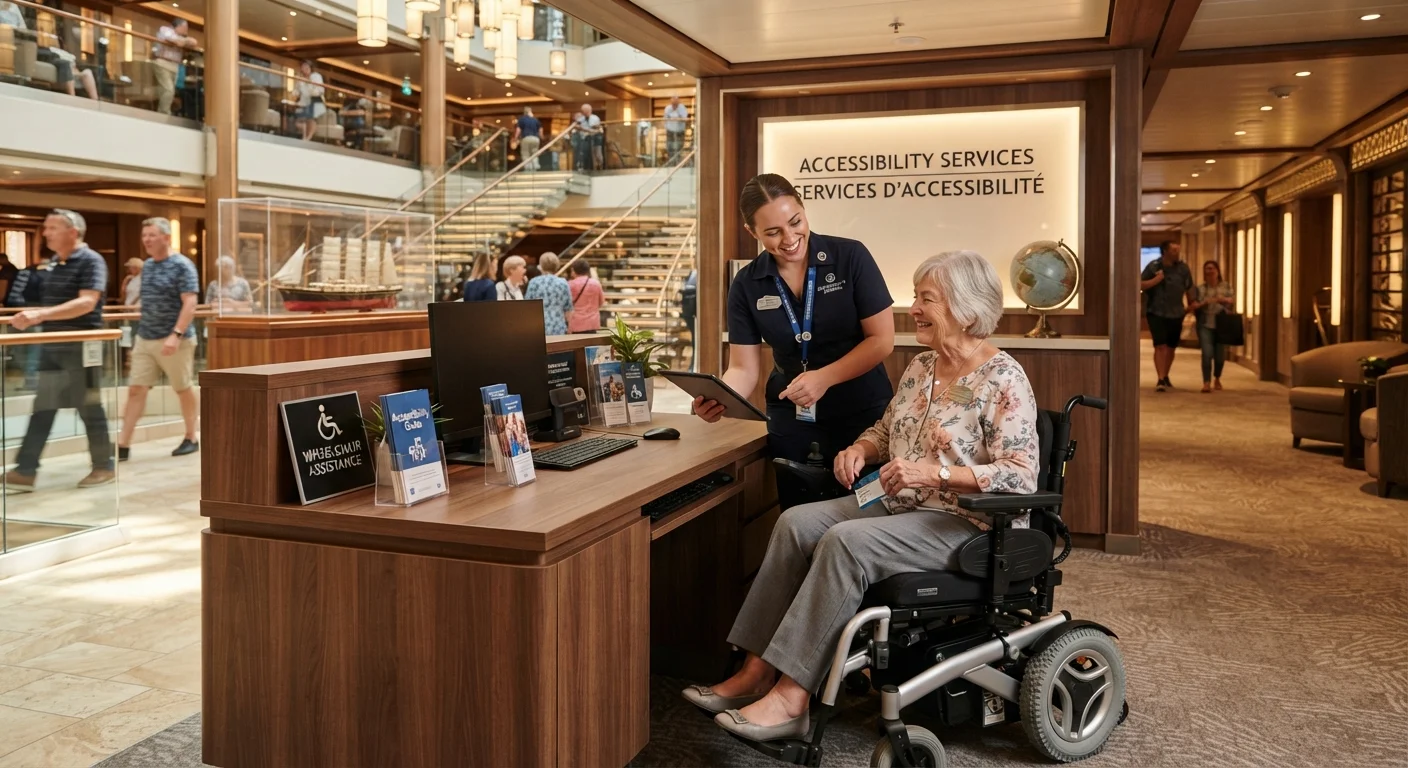
Photo: MyUrbanEscapes.net | Small Escapes. Big Experiences. editorial
—— In This Article
Key Takeaways
- Special assistance services must usually be requested before sailing — not on embarkation day.
- Services cover mobility, hearing, vision, dietary, and cognitive support needs.
- Cruise lines typically have a dedicated accessibility desk or coordinator to manage these requests.
- Passengers should confirm all accommodations in writing before paying a deposit.
- Not every ship in a fleet offers identical accessibility features — always check the specific vessel.
What Special Assistance Services Actually Cover
The term "special assistance" encompasses a broad range of accommodations designed to support passengers who face physical, sensory, or cognitive challenges during travel. Cruise lines generally organize these services into several categories:
- Mobility support: Wheelchair and scooter rentals, accessible cabin assignments, boarding ramp assistance, and priority disembarkation at ports.
- Hearing assistance: Hearing loop systems in entertainment venues, visual alert systems in staterooms, TTY telephones, and closed-captioned TV programming.
- Visual assistance: Large-print daily schedules, Braille menus on request, and verbal safety briefings.
- Dietary accommodations: Low-sodium, diabetic-friendly, allergy-sensitive, or texture-modified meal options prepared with advance notice.
- Cognitive and behavioral support: Simplified orientation materials, consistent staff contacts, and quiet embarkation options for passengers with memory conditions.
Understanding which category your needs fall into helps you ask the right questions when you contact a cruise line's accessibility team. For a broader look at how these services connect to overall safety planning, see our complete overview of cruise health and safety for seniors.
ADA Coverage Varies by Ship Flag
The Americans with Disabilities Act applies to cruise ships operating from U.S. ports, but the scope of coverage differs for foreign-flagged vessels — which includes most major ocean cruise ships. This means accessibility standards can vary between cruise lines and individual ships. Rather than assuming a legal minimum is in place, travelers should ask each cruise line directly about the specific features available on the vessel they plan to board.
How to Formally Request Assistance Before You Sail
The single most important step is to make your request early and in writing. Most major cruise lines maintain a dedicated accessibility services department — separate from general customer service — staffed by coordinators trained to handle complex needs. Here is a practical process to follow:
- Identify your needs in specific terms. Rather than saying "I need help getting around," describe exactly what you use — a power scooter, a rollator walker, or a cane — and whether you can manage stairs independently.
- Contact the accessibility department directly. Email or call the line's accessibility team, not a general travel agent, to ensure documentation is created in the reservation system.
- Request written confirmation. Any accommodation promise should be confirmed in writing before you pay a deposit. See our pre-booking checklist for seniors for a full list of what to verify.
- Reconfirm 30 days before departure. Changes in ship assignment or staffing can affect arrangements, so a second check is worthwhile.
Always Confirm Accessibility Needs in Writing
Verbal promises made during a phone call are difficult to enforce once you are on board. Request that every agreed accommodation — cabin type, equipment, dietary needs, embarkation assistance — be confirmed in a written itinerary addendum or email from the cruise line's accessibility team. Keep a copy accessible on your phone or in your travel folder.
Once on board, locate the guest services desk and introduce yourself to the accessibility coordinator on the first day. Establishing a direct contact early makes it much easier to resolve any issues quickly.
Embarkation and Disembarkation: Where Assistance Matters Most
For many older travelers, the embarkation process — boarding the ship at the start of the cruise — and disembarkation at the end are the most physically demanding moments of the entire journey. Gangways can be steep, terminal distances are often long, and crowds can be disorienting.
Cruise lines typically offer the following embarkation support when requested in advance:
- Wheelchair escorts from the terminal entrance to the ship
- Priority boarding lanes that bypass general queues
- Separate, quieter boarding times for passengers with cognitive impairments
- Assistance transferring from a personal mobility device to a gangway wheelchair if necessary
At ports of call, the logistics become more variable. Ships that anchor offshore require passengers to board small tender boats to reach land — a process that may not be feasible for passengers with significant mobility limitations. Cruise lines are generally required to inform guests in advance which ports use tenders versus direct dockside berthing.
For a detailed look at how accessibility works across the entire ship environment, including deck navigation, cabin configurations, and port visits, review our article on cruise ship accessibility across cabins, decks, and shore excursions.
~26%
U.S. adults aged 65+ with a disability
According to the U.S. Centers for Disease Control and Prevention (CDC), approximately one in four older adults in the United States lives with some form of disability, underscoring the scale of demand for accessible travel options.
45–90 days
Typical advance notice required for accessibility requests
Most major cruise lines recommend that special assistance requests be submitted at least 45 to 90 days before sailing to ensure limited accessible cabins and equipment are available.
Over 50%
Share of cruise passengers aged 50 or older
Industry research consistently shows that travelers aged 50 and above represent the majority of cruise passengers, making accessibility services a central rather than niche concern for cruise lines.
Preparing a Personal Assistance Plan Before Departure
Beyond contacting the cruise line, travelers benefit from assembling their own documentation and plans before sailing. This preparation reduces stress if something goes wrong and ensures crew members have the information they need to help effectively.
Consider preparing the following:
- A one-page summary of your mobility aids, medical devices, dietary restrictions, and any conditions relevant to onboard care — shared with the ship's medical center on embarkation day
- Copies of any equipment certifications (for oxygen concentrators or CPAP machines, for example) that the cruise line requires
- A list of your medications, dosages, and prescribing physician — kept separate from your luggage in case of loss
- Emergency contact information visible on your person and stored with the ship's guest services team
Seniors traveling with companions should brief those individuals on the assistance arrangements in place so they can advocate clearly if an issue arises. Our accessibility checklist for senior first-time cruisers offers a structured format for pulling all of this together before you leave home.
This article provides general travel information and is not a substitute for guidance from your healthcare provider or from the cruise line's own accessibility policies. Always consult qualified professionals regarding your personal medical and mobility needs.
Frequently Asked Questions

Cruise Travel Editorial Team
Cruise Travel Editorial Team is the collective byline for our editorial team and contributor network. Articles published under this byline or an editorial pen name are researched, written, and reviewed according to our editorial standards for clarity, consistency, and independence before publication.
View author profile