
Cruise Health & Safety for Seniors: A Complete Overview
A thorough introduction to health, mobility, and safety considerations for senior cruisers—from embarkation to disembarkation.
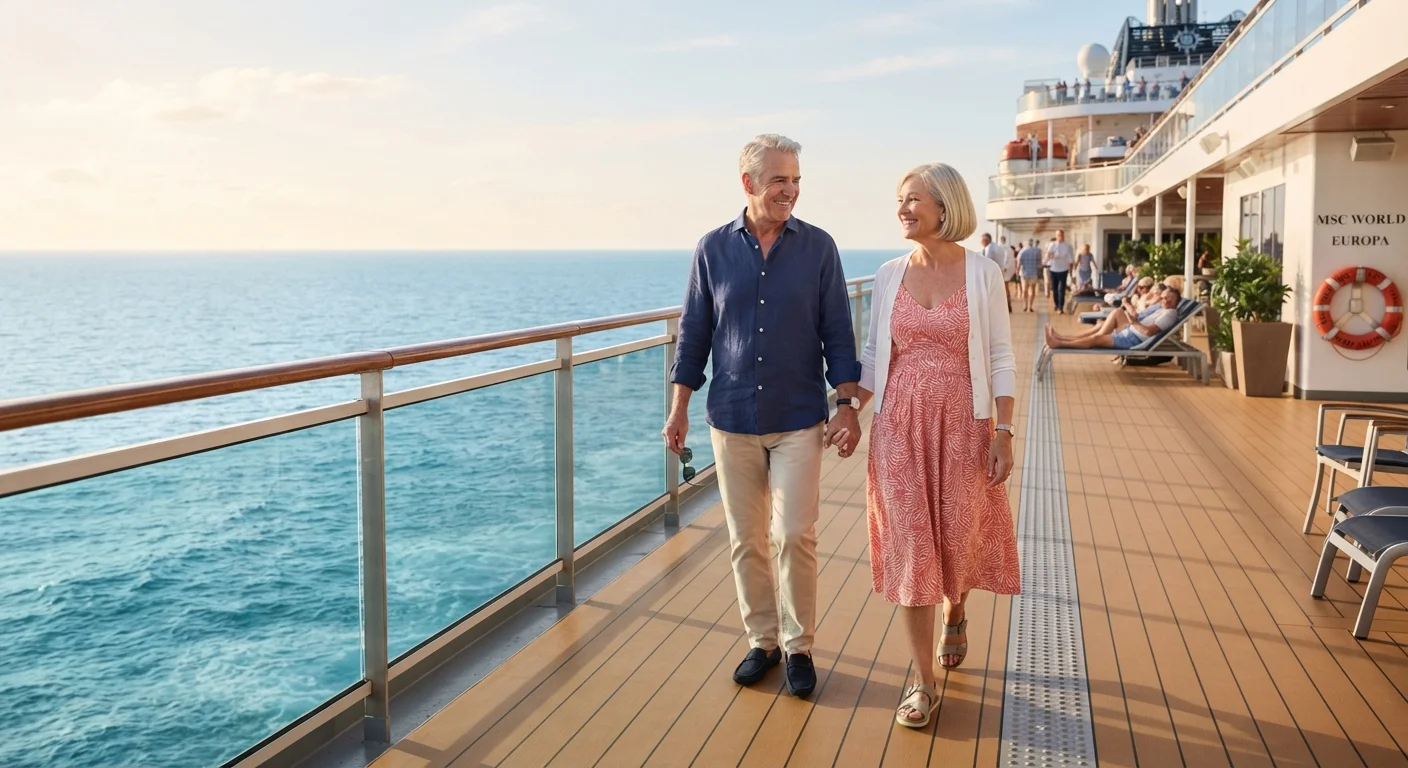
Photo: MyUrbanEscapes.net | Small Escapes. Big Experiences. editorial
—— In This Article
Key Takeaways
- Pre-departure medical consultations are essential for identifying cruise-specific health risks.
- Modern cruise ships offer meaningful accessibility features, but advance requests are critical.
- All major ocean cruise ships carry onboard medical facilities, though capabilities vary by vessel.
- Comprehensive travel insurance—including medical evacuation coverage—is strongly advisable for senior cruisers.
- Proper medication management, including storage and documentation, can prevent serious onboard complications.
- Choosing the right ship size and itinerary directly affects your comfort and safety at sea.
Why Health & Safety Planning Matters for Senior Cruisers
Cruising ranks among the most accessible and enjoyable forms of travel for older adults. Meals, accommodation, entertainment, and transport are all consolidated in one place—removing much of the logistical strain that other trips demand. Yet that convenience does not eliminate the need for careful health and safety planning.
Seniors are statistically more likely to manage chronic conditions, take multiple medications, and require mobility support than younger travelers. On a ship at sea, the stakes of an unplanned health event are higher: medical resources are finite, evacuation is complex, and ports of call may be hours away from specialized hospital care.
This guide walks through every major dimension of cruise health and safety—from what to do before you pack to how to handle an onboard emergency. For a broader look at senior travel health planning beyond the cruise context, see our complete health and safety overview for senior travelers.
~35%
Cruise passengers aged 60 and over
Industry passenger demographic data from the Cruise Lines International Association (CLIA) consistently shows seniors as one of the largest cruising segments.
1+ mile
Daily walking distance on large cruise ships
Passenger surveys and ship deck plan analyses suggest larger vessels can require significant daily walking simply to navigate between amenities.
1 physician minimum
Medical staffing standard per ship
American College of Emergency Physicians guidelines recommend at minimum one physician and two nurses per vessel sailing with 1,000 or more passengers.
Pre-Departure Health Preparation
The single most impactful thing a senior cruiser can do is schedule a medical consultation before departure. A physician familiar with your health history can assess whether your current conditions are stable enough for the itinerary, review vaccinations required or recommended for ports of call, and ensure your medication supply is adequate for the full voyage plus contingency days.
Key pre-departure tasks include obtaining copies of all medical records and prescription documentation, confirming that any required equipment—such as CPAP machines or portable oxygen concentrators—is approved for onboard use, and notifying the cruise line of any special medical or dietary needs.
Start Your Doctor Visit Early
Book your pre-cruise medical consultation at least six to eight weeks before departure. This allows adequate time to update vaccinations, adjust medications if needed, and obtain documentation without a last-minute rush. Many travel health clinics have extended wait times during peak booking seasons.
Our pre-cruise health checklist for seniors offers a structured, item-by-item walkthrough of this preparation phase so nothing is overlooked before embarkation.
This article is for general informational purposes only and does not constitute medical advice. Always consult a qualified healthcare professional regarding your personal health circumstances before traveling.
Mobility, Accessibility, and Ship Design
Modern cruise ships are generally well-designed for passengers with reduced mobility, but the level of accessibility varies considerably by vessel size and age. Accessible staterooms—typically featuring roll-in showers, lower beds, and wider doorways—must be requested at booking, not assumed to be available on arrival.
Large ships tend to offer elevators throughout, ramp-accessible decks, and shore excursion tender assistance. Smaller and older vessels may present more challenges: narrower corridors, higher thresholds, and fewer elevator banks. Walking distances on a large ship can exceed a mile per day simply moving between dining and entertainment areas.
When requesting an accessible cabin, put your specific needs in writing and ask for written confirmation from the cruise line—not just verbal assurance. Cabin availability and accessibility features vary significantly even within the same ship class.
Verbal accessibility assurances at booking are not always honored at embarkation, particularly when stateroom assignments shift. Documentation protects the traveler.
Choose a cabin midship and on a lower deck if motion sensitivity is any concern—this location experiences the least movement during rough seas regardless of ship size.
Cabins at the bow and stern, or on upper decks, amplify the ship's pitching and rolling motion. Midship, lower-deck placement is a simple, cost-free mitigation strategy.
If motion sensitivity is a concern, comparing river and ocean cruising is worthwhile—river ships sail on calm inland waterways and typically have two or three decks, making them inherently more accessible. For more on how ship size shapes the senior experience day-to-day, see our guide to cruise ship size and what it means for senior travelers.
Onboard Medical Facilities and Emergency Protocols
All major ocean cruise ships are required to maintain a medical facility staffed by at least one physician and two nurses, in accordance with guidelines established by organizations such as the American College of Emergency Physicians. These facilities can handle common emergencies—cardiac events, fractures, infections—but are not equipped for complex surgery or extended intensive care.
Emergency evacuation to a shore-based hospital, when necessary, typically involves coast guard helicopter transfer or diversion to the nearest port. These procedures are time-consuming and expensive, reinforcing the importance of robust travel insurance.
Know Your Itinerary's Medical Risk Profile
Not all cruise itineraries carry the same medical risk for seniors. Remote or expedition routes—such as Alaska's inner passage or transatlantic crossings—may place you hours from advanced hospital care. Review the itinerary map with your physician and understand the evacuation logistics for each sailing before committing to a booking.
Passengers with significant cardiac, respiratory, or neurological conditions should discuss the specific itinerary with their physician. Remote ocean crossings, such as transatlantic sailings, spend extended periods far from medical evacuation points. Understanding that limitation in advance allows for informed decision-making rather than unpleasant surprises at sea.
Travel Insurance and Financial Protection
Standard travel insurance policies often exclude or limit coverage for pre-existing conditions—a critical gap for many senior travelers. Policies specifically designed for cruise travel, or those with a pre-existing condition waiver, offer substantially better protection.
At minimum, senior cruisers should seek coverage that includes emergency medical treatment onboard and ashore, medical evacuation (which can cost tens of thousands of dollars without insurance), trip cancellation and interruption, and missed port or itinerary changes due to medical reasons.
For a plain-language breakdown of policy types and what to look for, our article on travel insurance for cruise vacations is a practical starting point. General financial guidance is educational in nature; consult a licensed insurance professional to evaluate policies suited to your specific circumstances.
Read Policy Exclusions Carefully
Pre-existing condition exclusions can void the most essential coverage at exactly the moment you need it. Always read the definition of 'pre-existing condition' in any policy you consider—different insurers use different lookback periods and definitions. Never assume coverage applies without verifying the specific terms in writing.
Managing Medications at Sea
Medication management is one of the most commonly underestimated aspects of cruise preparation. Seniors should carry all medications in their original, labeled containers, bring at least a week's supply beyond the planned voyage length, and keep medications in carry-on luggage rather than checked bags to prevent loss during embarkation.
Temperature-sensitive medications—including certain insulins and biologics—require careful storage. Ships typically have refrigeration available through the medical center or by cabin request, but arrangements should be confirmed before sailing. A written medication list, including dosages, prescribing physician contacts, and generic drug names, is invaluable if a prescription needs to be filled in a foreign port.
Foreign Port Pharmacies Have Limits
While pharmacies exist in most cruise ports, they may not stock your specific medication brand, may require a local prescription, or may carry equivalent drugs under unfamiliar generic names. Relying on port pharmacies as a primary backup strategy is risky. Always carry a sufficient supply from home.
Our pre-boarding health checklist includes a medication documentation template you can adapt for your own voyage preparation.
Staying Well Onboard: Nutrition, Movement, and Rest
The structure of a cruise—regular mealtimes, built-in activities, comfortable surroundings—actually supports healthy habits for many older travelers. Dining rooms can accommodate most dietary restrictions when notified in advance. Walking between decks and exploring ports provides natural, low-intensity movement that suits a wide range of fitness levels.
Cruise ships increasingly offer wellness amenities including pools, gyms, and therapeutic spa services. Our companion guide on onboard wellness facilities for senior cruisers provides a grounded look at what to realistically expect from these resources and how to use them safely.
Seasickness, while a common concern, affects a minority of passengers and is manageable for most through over-the-counter remedies, wristbands, and cabin location choices. If this worry has kept you from considering a cruise, our article on cruise myths that put seniors off sailing addresses this and other misconceptions with evidence-based perspective.
“For older adults with well-managed chronic conditions, cruising can actually offer a more controlled health environment than independent travel—structured routines, onboard medical access, and predictable surroundings reduce many common travel stressors.”
— Cruise Lines International Association, Global cruise industry trade body representing major cruise lines

Cruise Travel Editorial Team
Cruise Travel Editorial Team is the collective byline for our editorial team and contributor network. Articles published under this byline or an editorial pen name are researched, written, and reviewed according to our editorial standards for clarity, consistency, and independence before publication.
View author profile