
Onboard Wellness Facilities: What Senior Cruisers Can Realistically Expect
A grounded look at spas, gyms, pools, and therapeutic services on cruise ships—and how to use them safely as an older adult.
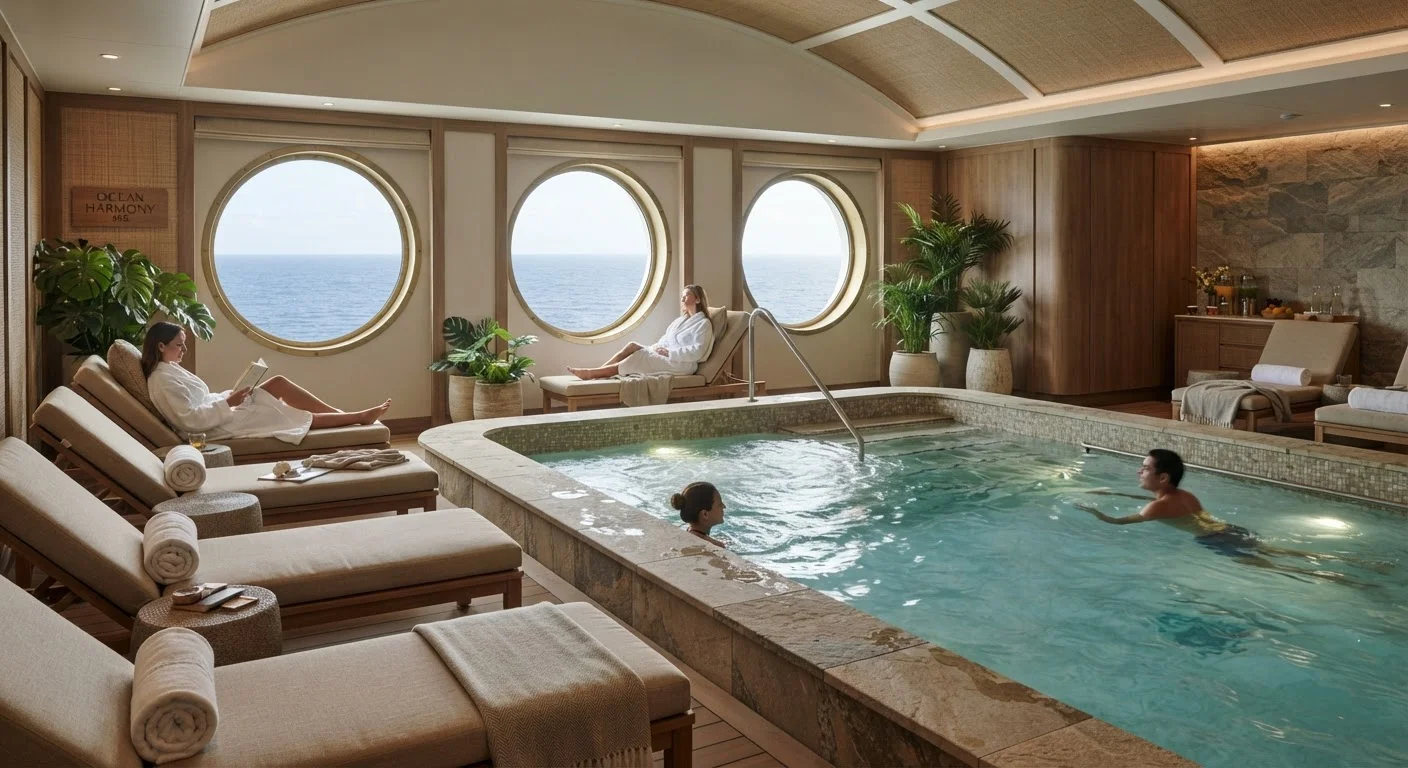
Photo: MyUrbanEscapes.net | Small Escapes. Big Experiences. editorial
—— In This Article
The Wellness Landscape on Modern Cruise Ships
Cruise ship wellness facilities have grown considerably in scope over the past two decades. Most large ocean-going vessels now include a spa, a fitness center, at least one pool, and various therapeutic services. However, the quality, size, and accessibility of these spaces vary widely depending on ship class and cruise line.
For senior travelers, the key is understanding what is realistically available — and whether it suits your mobility, health needs, and comfort preferences. See our overview of cruise fitness and wellness centers for a broader picture of what these spaces generally include.
| Typical fitness center presence | Available on most mid-to-large ships |
| Spa services | Usually operated by third-party contractors; extra cost applies |
| Low-impact exercise classes | Offered on many ships; varies by vessel size |
| Pool accessibility features | Pool lifts not universal; varies by ship and cruise line |
| Thermal suite access | Available on many ships; often a paid add-on |
| Adults-only pool areas | Common on larger ships; quieter alternative to main pool decks |
Fitness Centers: Practical Considerations for Older Adults
Most mid-size to large cruise ships feature a fitness center equipped with treadmills, stationary bikes, resistance machines, and free weights. On newer ships, these spaces can be surprisingly well-appointed. That said, seniors should approach onboard gyms with realistic expectations.
- Equipment stability: Treadmills on ships may have motion-compensating features, but rough seas can still make balance-intensive equipment risky. Stationary bikes and seated resistance machines are generally safer choices.
- Instructor-led classes: Many ships offer low-impact group classes such as yoga, stretching, and chair-based exercise. Availability varies by ship size and itinerary length.
- Hours and crowds: Fitness centers are often most crowded in the morning. Visiting during port days can mean quieter, more comfortable access.
If you have a chronic condition or have recently had surgery, consult your physician before using any onboard exercise equipment. This content is general information, not medical advice.
For a broader understanding of health planning before departure, the Complete Overview of Cruise Health & Safety for Seniors offers essential context.
~70%
Large cruise ships with onboard fitness centers
Industry observers estimate the vast majority of large modern cruise vessels include some form of dedicated fitness facility.
Extra cost
Spa services beyond cruise fare
Spa treatments, thermal suite passes, and specialist wellness sessions are generally priced separately from standard cruise packages.
Spas and Therapeutic Services: What Is Typically Offered
Cruise ship spas typically offer massages, facials, thermal suite access (saunas, steam rooms, heated stone loungers), and occasionally services like acupuncture or hydrotherapy pools. These are operated by contracted third-party providers and come at an additional cost beyond your cruise fare.
Seniors with certain health conditions — including cardiovascular disease, uncontrolled blood pressure, or skin conditions — should check with a healthcare provider before using thermal facilities or receiving deep-tissue treatments. Steam rooms and saunas in particular can place stress on the cardiovascular system.
Verify Wellness Services Before You Book
Spa menus, thermal suite availability, and class schedules are not always listed in detail on cruise booking pages. Contact the cruise line directly — or check the ship-specific deck plan — to confirm which wellness facilities are available on your specific vessel. Older ships may have significantly fewer amenities than newer ones within the same fleet.
Adults-only thermal suites are often one of the more peaceful spaces on the ship — appealing to seniors who prefer a quieter environment. Our guide to quieter onboard spaces for seniors covers additional low-key areas worth knowing about.
Pools and Aquatic Areas: Accessibility Matters
Most cruise ships have multiple pools, but not all are equally accessible to older adults. Key questions to ask when reviewing your ship's layout include whether pool lifts are available, how many steps lead into the water, and whether the pool deck surface is slip-resistant.
Some ships offer dedicated adults-only pools, which tend to be quieter and less congested — a meaningful consideration for travelers who are sensitive to noise or prefer more personal space. Heated pools and whirlpool tubs (hot tubs) are common, but prolonged use in hot water can contribute to dehydration and blood pressure changes. Moderation is advisable.
Staying hydrated onboard is a related consideration — warm pool environments can increase fluid loss without obvious sweating.
Thermal suite
A dedicated spa area featuring heated amenities such as saunas, steam rooms, and heated stone loungers. Access often requires a separate fee and may not be appropriate for travelers with certain health conditions.
Pool lift
A mechanical device that assists passengers with limited mobility to enter and exit a swimming pool safely. Availability varies by ship.
Low-impact exercise class
A group fitness session designed to minimize stress on joints and the cardiovascular system. Examples include chair yoga, gentle stretching, and seated aerobics.
Hydrotherapy pool
A heated pool with water jets used for relaxation or therapeutic purposes. Often located within the spa and subject to an additional charge.

Cruise Travel Editorial Team
Cruise Travel Editorial Team is the collective byline for our editorial team and contributor network. Articles published under this byline or an editorial pen name are researched, written, and reviewed according to our editorial standards for clarity, consistency, and independence before publication.
View author profile