
River Cruising vs. Ocean Cruising: Health and Safety Trade-Offs for Seniors
A side-by-side look at how river and ocean cruises differ in medical access, motion, physical demands, and emergency protocols.
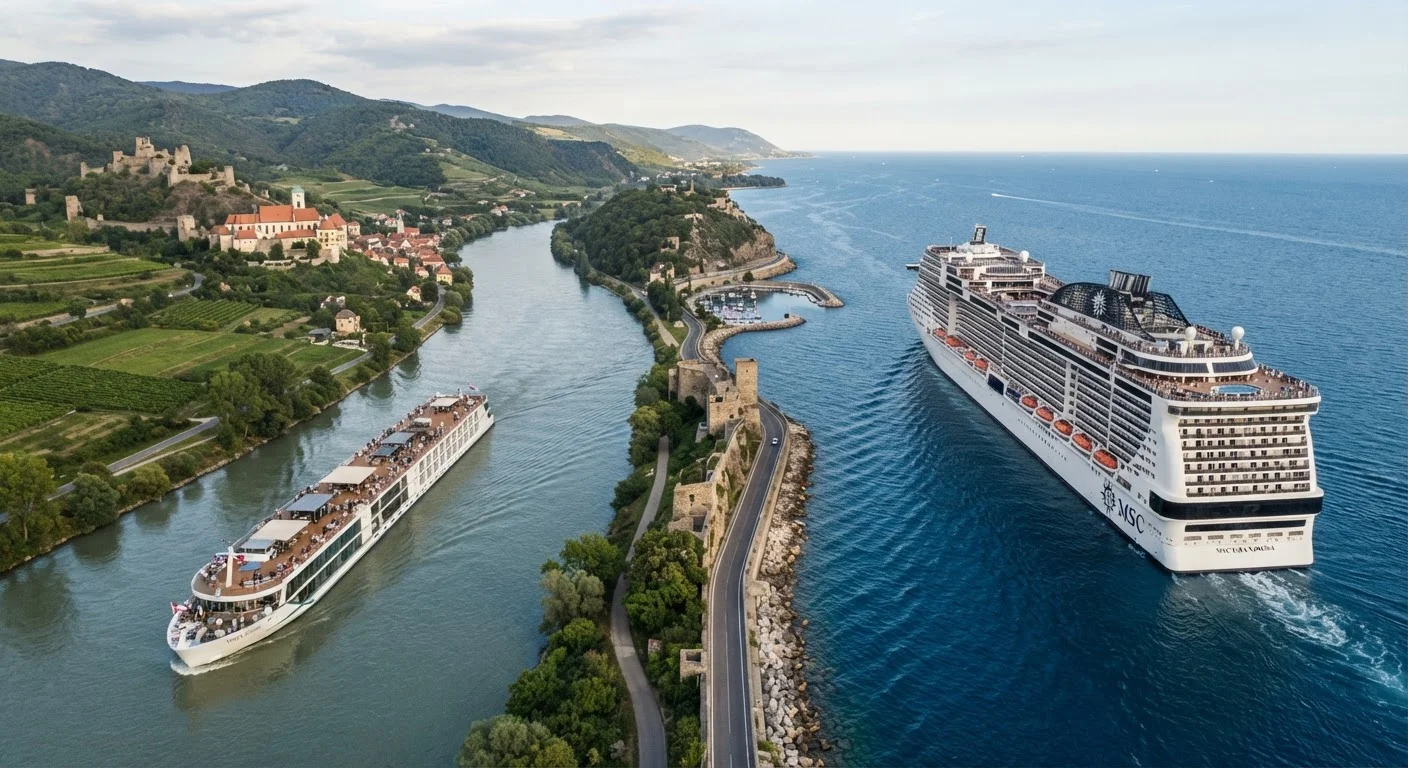
Photo: MyUrbanEscapes.net | Small Escapes. Big Experiences. editorial
—— In This Article
Key Takeaways
- River cruises typically produce less motion, reducing seasickness risk for seniors with balance or inner-ear concerns.
- Ocean ships generally carry more robust onboard medical facilities, including 24-hour infirmaries and defibrillators.
- River itineraries dock frequently in small towns, which may limit emergency medical access compared to major port cities.
- Physical demands differ significantly — gangways, tender boats, and deck distances vary between cruise types.
- Travel insurance with medical evacuation coverage is essential for both river and ocean cruising.
Motion and Seasickness: A Critical Difference
For seniors managing vertigo, inner-ear conditions, or balance challenges, the degree of vessel motion is one of the most consequential health factors to weigh. River cruise ships travel on inland waterways — the Rhine, Danube, Mekong — where currents are mild and wave action is essentially absent. Most passengers report little to no perceivable rocking.
Ocean cruises, by contrast, cross open seas where swells, wind, and weather can produce significant ship movement. Modern large ships use stabilizers to dampen roll, but motion remains a real variable, particularly on transatlantic or repositioning voyages. Seniors with Ménière's disease, post-stroke balance issues, or those taking medications that affect equilibrium should discuss this factor directly with their physician before choosing an itinerary.
For a broader look at how to separate cruise misconceptions from reality, see our article on common cruise myths seniors believe.
Discuss Your Itinerary With Your Doctor
Before booking either type of cruise, share the planned itinerary and duration with your primary care physician or specialist. Factors such as altitude at certain river ports, climate changes along ocean routes, or distance from major hospitals along rural waterways can all affect your personal risk profile. This is especially important for seniors managing cardiovascular, respiratory, or neurological conditions.
Onboard Medical Facilities: Scope and Limitations
Ocean cruise ships — particularly larger vessels carrying 2,000 or more passengers — typically operate infirmaries staffed by licensed physicians and registered nurses around the clock. These facilities commonly hold defibrillators, oxygen, diagnostic equipment, and a pharmacy with a range of common medications. Some ships are equipped for minor surgical procedures.
River cruise ships, which carry between 100 and 200 passengers on average, rarely have dedicated medical staff onboard. A ship's manager or purser may have first-aid training, but these vessels are not equipped as medical facilities. The proximity to shore is the compensating factor: river ships dock in towns almost daily, and passengers can often reach a local clinic or hospital by car within a short time.
However, rural stretches of some rivers — particularly in Southeast Asia or Eastern Europe — may pass through areas where advanced medical care is hours away. Seniors with complex cardiac, respiratory, or neurological conditions should map the itinerary's medical infrastructure before booking. Our complete overview of cruise health and safety for seniors covers this in greater depth.
| River Cruising | Ocean Cruising | |
|---|---|---|
| Motion / Seasickness Risk | Very low — calm inland waterways | Moderate to higher — open sea swells |
| Onboard Medical Facilities | Minimal — first aid only on most ships | Robust — staffed infirmary, 24/7 physicians |
| Proximity to Shore Medical Care | Daily docking — often near towns | Port calls vary; mid-voyage access limited |
| Physical Accessibility | Compact ships; steep gangways possible | Larger ships; elevators, wider corridors |
| Tender Boat Requirement | Rarely required | Common at some ports — fall risk |
| Emergency Evacuation | Shore access faster in most regions | Coast Guard / maritime authority coordination |
Physical Demands: Gangways, Distances, and Shore Access
River cruise ships are compact by design. Corridors are narrower, cabins may be smaller, and the gangways connecting ship to shore can be steep or floating, depending on water level. On busy rivers, ships sometimes moor side-by-side, requiring passengers to walk through neighboring vessels to reach the dock — a maneuver that involves several steps and uneven surfaces.
Ocean ships present different challenges. Their sheer scale means significant walking distances between cabins, dining venues, and activity spaces. Some ports require passengers to board a smaller tender boat to reach shore, which involves stepping across a moving gap between vessels — a genuine fall risk for seniors with mobility limitations. Ports that accommodate large ships directly at the pier eliminate this concern.
Wheelchair users and passengers with walkers will generally find large ocean ships more accessible overall, with elevators, wider corridors, and dedicated accessible cabins. Purpose-built accessible accommodations on river ships exist but are more limited in number and design. Always confirm specific accessibility features directly with the cruise line before booking. See our related guide on river vs. ocean cruising for older travelers for further comparison.
For a detailed look at wellness amenities available onboard, explore what senior cruisers can realistically expect from onboard wellness facilities.
100–200
Typical passenger capacity on river cruise ships
River ships carry far fewer passengers than ocean vessels, which affects both onboard staffing and available medical resources.
2,000+
Passengers on large ocean cruise ships
Larger ocean ships typically justify the cost of 24-hour medical staffing and more comprehensive onboard health infrastructure.
Emergency Protocols and Evacuation Considerations
In a medical emergency at sea, ocean cruise ships coordinate with the U.S. Coast Guard or international maritime authorities for air or sea evacuation — a process that can take hours depending on the vessel's position. Comprehensive travel insurance that includes medical evacuation coverage is not optional for senior cruisers; it is a practical necessity.
River cruise emergencies benefit from faster access to shore-based services in many cases, but the quality of emergency response varies substantially by country and region. In Western Europe, emergency services are generally reliable and rapid. In more remote regions, response times and hospital capabilities may be significantly more limited.
Seniors should review their existing health insurance coverage for international travel exclusions, and consult with a licensed insurance professional about appropriate supplemental travel medical coverage. The senior travel health and safety hub provides additional guidance on planning for medical contingencies abroad.
This article is for general informational purposes only and does not constitute medical or insurance advice. Always consult a qualified healthcare provider and a licensed insurance professional before making decisions based on your personal health circumstances.

Cruise Travel Editorial Team
Cruise Travel Editorial Team is the collective byline for our editorial team and contributor network. Articles published under this byline or an editorial pen name are researched, written, and reviewed according to our editorial standards for clarity, consistency, and independence before publication.
View author profile