
River Cruising vs. Ocean Cruising: Which Suits Senior Travelers Better?
Smaller ships, calmer waters, and more intimate ports — a clear comparison of river and ocean cruising for older travelers.
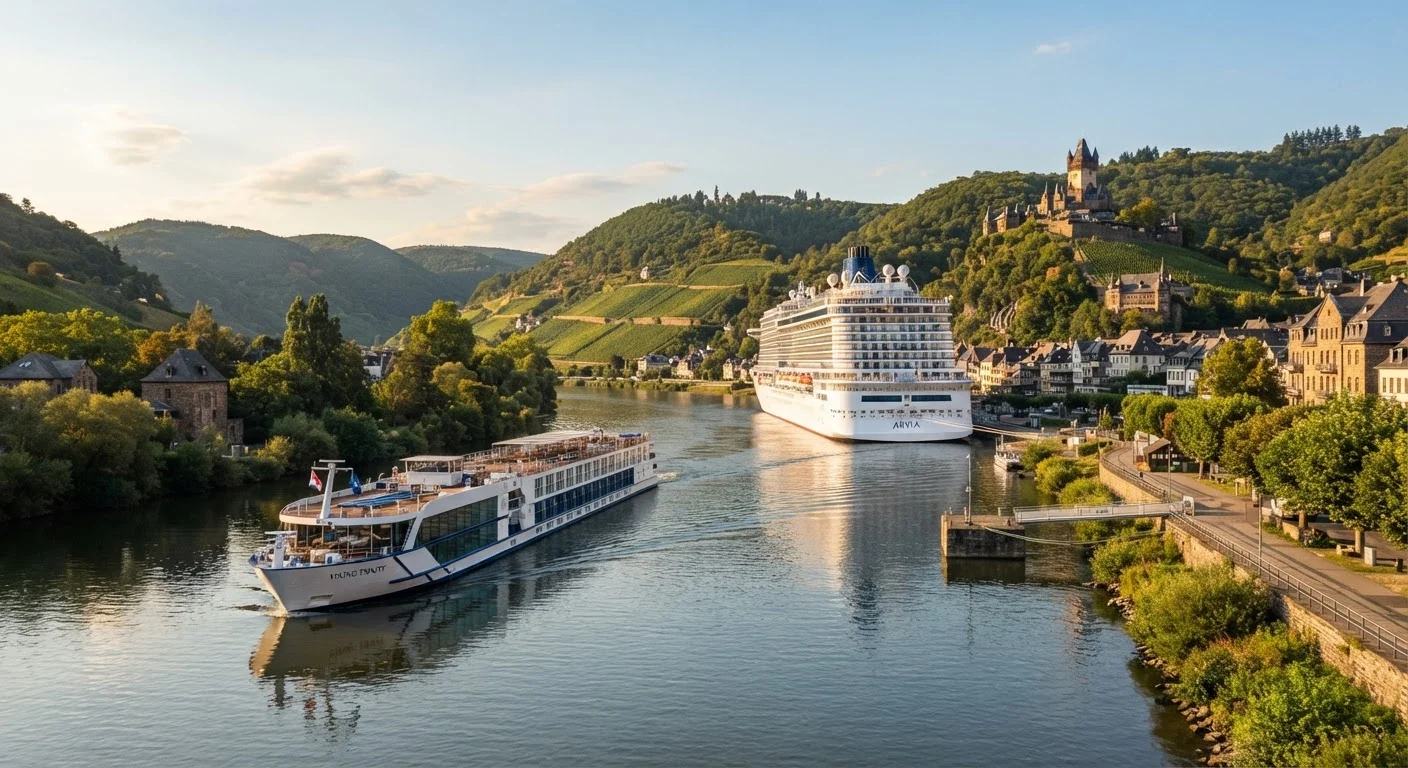
Photo: MyUrbanEscapes.net | Small Escapes. Big Experiences. editorial
—— In This Article
Key Takeaways
- River cruises offer calmer waters and smaller ships, reducing motion sickness and physical strain.
- Ocean cruises provide more onboard amenities, medical facilities, and entertainment variety.
- Accessibility features vary significantly between river and ocean vessels — always verify before booking.
- River itineraries tend to dock in city centers, reducing the distance seniors must travel from ship to sights.
- Budget, health considerations, and travel style should all guide which cruise format suits you best.
Ship Size, Motion, and Physical Comfort
For many older travelers, physical comfort is the starting point for any cruise decision. River cruise ships — often called longships or river vessels — typically carry between 100 and 200 passengers. Their compact size means navigation through narrow waterways is smooth and steady, with virtually no wave motion. This is a meaningful advantage for seniors who experience motion sickness or who have balance concerns that could be worsened by a rolling deck.
Ocean cruise ships range from mid-size vessels carrying a few hundred guests to massive ships accommodating thousands. While modern stabilization technology has improved considerably, open-water sailing still introduces more movement — particularly on transatlantic routes or in choppy seasonal seas. Seniors who are prone to vertigo or have inner-ear sensitivities may find this a significant drawback.
That said, larger ocean ships often offer more spacious cabins designed with accessibility in mind, including roll-in showers, wider doorways, and grab bars. Always confirm specific accessibility features directly with the cruise line before booking, as standards vary widely. For a broader look at how these two formats compare on health and safety dimensions, see our health and safety comparison.
| River Cruising | Ocean Cruising | |
|---|---|---|
| Ship Size | 100–200 passengers | Hundreds to thousands of passengers |
| Motion / Seasickness Risk | Very low — calm inland waterways | Moderate — varies by route and season |
| Port Access | City-center docking, walkable | Terminal or tender, may require transfers |
| Onboard Amenities | Limited but curated | Extensive — pools, spas, theaters, multiple restaurants |
| Medical Facilities | Typically minimal or none | Usually a physician and medical center onboard |
| Pricing Model | Often all-inclusive | Varies widely; many add-ons possible |
| Social Atmosphere | Intimate, quieter, older demographic | Varied and active, broad age range |
| Destination Range | Europe, Asia, select river routes | Worldwide — islands, fjords, continents |
Port Access and Shore Day Experience
One of the most practical distinctions for senior travelers is how each cruise type handles port days. River cruise ships dock directly in city centers or historic town harbors. Passengers typically step off the gangway and find themselves within walking distance of cathedrals, markets, and museums. This eliminates the need for tender boats — small vessels used to ferry passengers from a large ship anchored offshore — which can require a degree of mobility and balance that some seniors may find challenging.
Ocean cruises, depending on the port, may dock at purpose-built cruise terminals located some distance from city attractions, requiring a bus transfer or taxi. Tender situations at smaller ports add another layer of physical effort. However, ocean itineraries do provide access to a much wider range of destinations — from Caribbean islands to Norwegian fjords to Southeast Asian ports — that river routes simply cannot reach.
Deciding how to spend time ashore is its own question. Whether you prefer organized shore excursions or independent exploration, understanding your options ahead of time helps considerably. Our guide to shore excursions vs. independent port exploration covers that decision in detail.
Onboard Amenities, Medical Support, and Social Environment
Ocean cruise ships, by virtue of their scale, offer considerably more onboard amenities: multiple restaurants, spas, fitness centers, pools, theaters, and often dedicated adults-only areas that many senior travelers find appealing. For those who want quiet retreats away from busier public areas, our guide to quieter onboard spaces identifies where to find calm on larger ships.
Medical support is another important difference. Large ocean ships typically carry at least one physician and nursing staff, along with a small onboard medical center. River ships generally have limited or no dedicated medical staff — a relevant consideration for seniors managing chronic conditions or who may need prompt medical attention. Travel insurance with strong medical evacuation coverage is widely recommended for both cruise types, but this consideration carries more weight on river voyages.
Socially, river cruises tend to attract a slightly older, quieter demographic, and the smaller passenger count naturally creates a more intimate atmosphere. Ocean cruises offer more variety — both in fellow travelers and in organized activities. Solo senior travelers may find particular value in the social programming ocean ships provide. What the onboard experience looks like for solo senior cruisers is a useful resource for those traveling independently.
Always Verify Accessibility Before You Book
Accessibility features on both river and ocean ships vary considerably by vessel age and cruise line. Request specific details in writing — such as cabin door widths, shower configurations, and elevator availability — rather than relying on general descriptions. If you use a mobility aid, confirm that gangway configurations at planned ports can accommodate it. A travel agent with cruise expertise can help you ask the right questions.
Cost Considerations and Choosing What Fits
River cruises are generally priced at a premium compared to entry-level ocean cruises, partly because most meals, excursions, and beverages are included in the fare. This all-inclusive model can simplify budgeting and reduce unexpected costs during travel. Ocean cruises can range from budget-friendly to ultra-luxury, with a wide spectrum of what's included in the base price — excursions, specialty dining, and drinks may be add-ons.
When evaluating overall value, consider what matters most to you: destination variety, onboard facilities, or the peace of a smaller, culturally focused journey. The Choosing a Cruise hub offers structured guidance on matching ship size and itinerary to your travel priorities. General information on travel savings available to older travelers can also be found through resources like the Senior Discounts hub.
Ultimately, neither format is universally superior for senior travelers. The right choice depends on your health, mobility, budget, and the kind of experiences you want most from time at sea — or on the river.
This article is for general informational purposes only. Consult a qualified healthcare professional regarding any health or mobility considerations before booking travel.

Cruise Travel Editorial Team
Cruise Travel Editorial Team is the collective byline for our editorial team and contributor network. Articles published under this byline or an editorial pen name are researched, written, and reviewed according to our editorial standards for clarity, consistency, and independence before publication.
View author profile