
Solo Senior Cruisers: What the Onboard Experience Really Looks Like
From solo dining arrangements to group activities and safety considerations, here's what older travelers can expect cruising on their own.
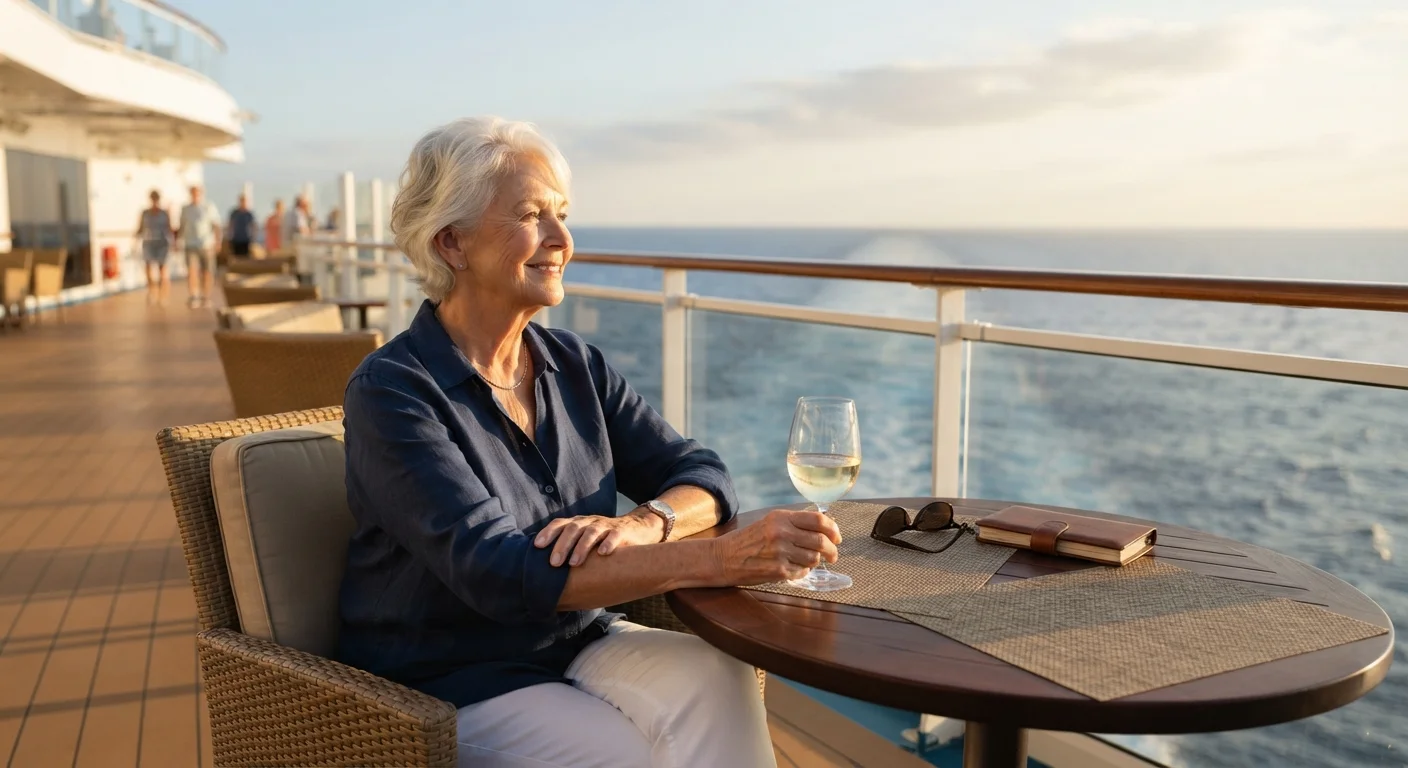
Photo: MyUrbanEscapes.net | Small Escapes. Big Experiences. editorial
—— In This Article
Key Takeaways
- Solo senior cruisers benefit from built-in social structures that make meeting fellow travelers easier than in most other travel formats.
- Single supplements — an extra fee for occupying a cabin alone — remain the most significant financial consideration for solo cruisers.
- Many cruise lines offer structured solo dining options, including communal tables and hosted group dinners.
- Onboard safety systems and medical facilities provide a meaningful layer of reassurance for older travelers going it alone.
- Ship size directly affects how easy solo travel feels — smaller vessels tend to foster community more quickly.
Built-in social structure reduces isolation
Unlike hotels or independent travel, cruise ships offer scheduled group activities, communal dining options, and hosted gatherings that make meeting other travelers a natural part of the experience rather than an effort.
Medical care is accessible around the clock
Ocean-going cruise ships are required to maintain onboard medical facilities. For older solo travelers without a companion to respond in an emergency, having trained medical staff aboard provides meaningful peace of mind.
Logistics are largely managed for you
Accommodation, meals, and transportation between ports are handled by the cruise line. This significantly reduces the cognitive and physical burden of solo travel planning compared with independent land-based trips.
Safe, contained environment at each port
Shore excursions organized through the ship offer a supervised way to explore ports without navigating unfamiliar transport systems alone. The ship itself is a secure home base to return to each evening.
Flexible solitude on your own terms
Solo cruisers can participate in activities when they choose and retreat to their cabin without social obligation. This balance of community access and privacy suits many older travelers who value independence.
Single supplements add significant cost
Most cruise lines charge solo travelers a single supplement — typically 50% to 100% of the per-person double-occupancy rate — to occupy a cabin alone. This can make solo cruising noticeably more expensive than traveling with a companion.
Large ships can feel impersonal and tiring
Megaships may require long walks between venues, and their scale can make it harder to form the connections that make solo travel rewarding. Seniors with mobility considerations should factor walking distances into ship selection.
No companion for shore excursions or emergencies
While ships provide a safe base, going ashore alone does carry real considerations. Solo travelers have no immediate companion to assist if they experience a medical event, get separated, or face an unexpected situation in port.
Social integration takes genuine effort
Communal dining and solo events help, but building meaningful connections onboard still requires initiative. Travelers who find social engagement difficult may find the experience lonelier than anticipated.
The Solo Senior Cruiser: More Common Than You Might Think
Solo travel among older adults has grown steadily in recent years, and cruising has become one of the most popular formats for that demographic. The structured nature of a cruise — fixed itineraries, onboard dining, organized activities — removes a great deal of the planning burden that independent land travel requires. For seniors traveling alone, that structure often translates directly into comfort and confidence.
If you're weighing this option, it helps to understand what life actually looks like onboard as a solo traveler — beyond the brochure. See our guide to cabins, costs, and social considerations for a fuller picture of the financial and logistical side before you book.
Built-in social structure reduces isolation
Unlike hotels or independent travel, cruise ships offer scheduled group activities, communal dining options, and hosted gatherings that make meeting other travelers a natural part of the experience rather than an effort.
Medical care is accessible around the clock
Ocean-going cruise ships are required to maintain onboard medical facilities. For older solo travelers without a companion to respond in an emergency, having trained medical staff aboard provides meaningful peace of mind.
Logistics are largely managed for you
Accommodation, meals, and transportation between ports are handled by the cruise line. This significantly reduces the cognitive and physical burden of solo travel planning compared with independent land-based trips.
Safe, contained environment at each port
Shore excursions organized through the ship offer a supervised way to explore ports without navigating unfamiliar transport systems alone. The ship itself is a secure home base to return to each evening.
Flexible solitude on your own terms
Solo cruisers can participate in activities when they choose and retreat to their cabin without social obligation. This balance of community access and privacy suits many older travelers who value independence.
The Real Challenges Solo Senior Cruisers Face
Cruising solo isn't without friction. Understanding the disadvantages upfront allows travelers to prepare or seek alternatives where needed. The single supplement issue, in particular, catches many first-time solo cruisers off guard.
Single supplements add significant cost
Most cruise lines charge solo travelers a single supplement — typically 50% to 100% of the per-person double-occupancy rate — to occupy a cabin alone. This can make solo cruising noticeably more expensive than traveling with a companion.
Large ships can feel impersonal and tiring
Megaships may require long walks between venues, and their scale can make it harder to form the connections that make solo travel rewarding. Seniors with mobility considerations should factor walking distances into ship selection.
No companion for shore excursions or emergencies
While ships provide a safe base, going ashore alone does carry real considerations. Solo travelers have no immediate companion to assist if they experience a medical event, get separated, or face an unexpected situation in port.
Social integration takes genuine effort
Communal dining and solo events help, but building meaningful connections onboard still requires initiative. Travelers who find social engagement difficult may find the experience lonelier than anticipated.
25%+
Solo traveler share of cruise bookings
Industry observers have noted that solo travelers — including a significant proportion of older adults — now account for a growing share of cruise bookings, prompting more lines to introduce solo-specific cabin categories and events.
50–100%
Typical single supplement range
Solo cruisers are commonly charged a single supplement of 50% to 100% above the per-person double-occupancy cabin rate, making this the primary financial consideration when budgeting for a solo voyage.
Dining, Socializing, and Finding Your Rhythm Onboard
Mealtimes are often where solo travelers feel most self-conscious, and cruise lines have largely adapted to address this. Many ships now offer communal dining tables in main dining rooms — sometimes called social tables or hosted tables — where solo guests are seated with other passengers. Some lines schedule dedicated solo traveler gatherings early in a voyage, which can ease the awkward first days significantly.
Outside of dining, structured activities like trivia, cooking demonstrations, and shore excursion briefings serve as natural gathering points. Quieter onboard spaces — libraries, garden decks, adults-only areas — also offer low-pressure environments for conversation to develop organically.
Ship size plays a meaningful role here. Smaller vessels tend to generate familiarity faster; you encounter the same faces repeatedly and community forms more naturally. Larger ships offer more amenity variety but can feel anonymous. Our overview of how ship size shapes the senior experience goes into this in more detail.
Solo Cabins: An Expanding Option
A growing number of cruise lines have introduced purpose-built solo cabins — smaller staterooms priced without a supplement — specifically in response to demand from solo travelers. These cabins are typically more compact than standard staterooms but offer a cost-effective alternative. Availability varies widely by ship and line, so it's worth researching this category specifically when comparing itineraries. Check directly with providers for current options, as offerings change.
Safety and Health: The Solo Cruiser's Practical Edge
One underappreciated advantage of solo cruising for older adults is the safety infrastructure already built into cruise ships. Medical centers staffed by doctors and nurses are standard on ocean-going vessels. Staff are trained to assist passengers with mobility limitations, and emergency protocols are well-practiced. This matters significantly when traveling alone — there is no travel companion to intervene if something goes wrong, but there are trained professionals and a responsive crew nearby at all times.
That said, solo travelers should be proactive before departure. Informing the cruise line of any medical needs, completing special assistance requests in advance, and confirming cabin accessibility are all important steps. Our accessibility checklist for senior first-time cruisers covers these pre-departure essentials thoroughly. For wellness facilities specifically, see our guide to onboard wellness facilities for a grounded look at what ships actually offer older adults.
This article is for general informational purposes. Readers with specific health conditions or mobility needs should consult a qualified healthcare professional before traveling, and verify current vessel facilities and policies directly with cruise providers.

Cruise Travel Editorial Team
Cruise Travel Editorial Team is the collective byline for our editorial team and contributor network. Articles published under this byline or an editorial pen name are researched, written, and reviewed according to our editorial standards for clarity, consistency, and independence before publication.
View author profile