
Solo Cruising as a Senior: Cabins, Costs, and Social Considerations
Traveling alone doesn't mean being isolated. Explore how solo senior cruisers can navigate single supplements, cabin options, and onboard community.
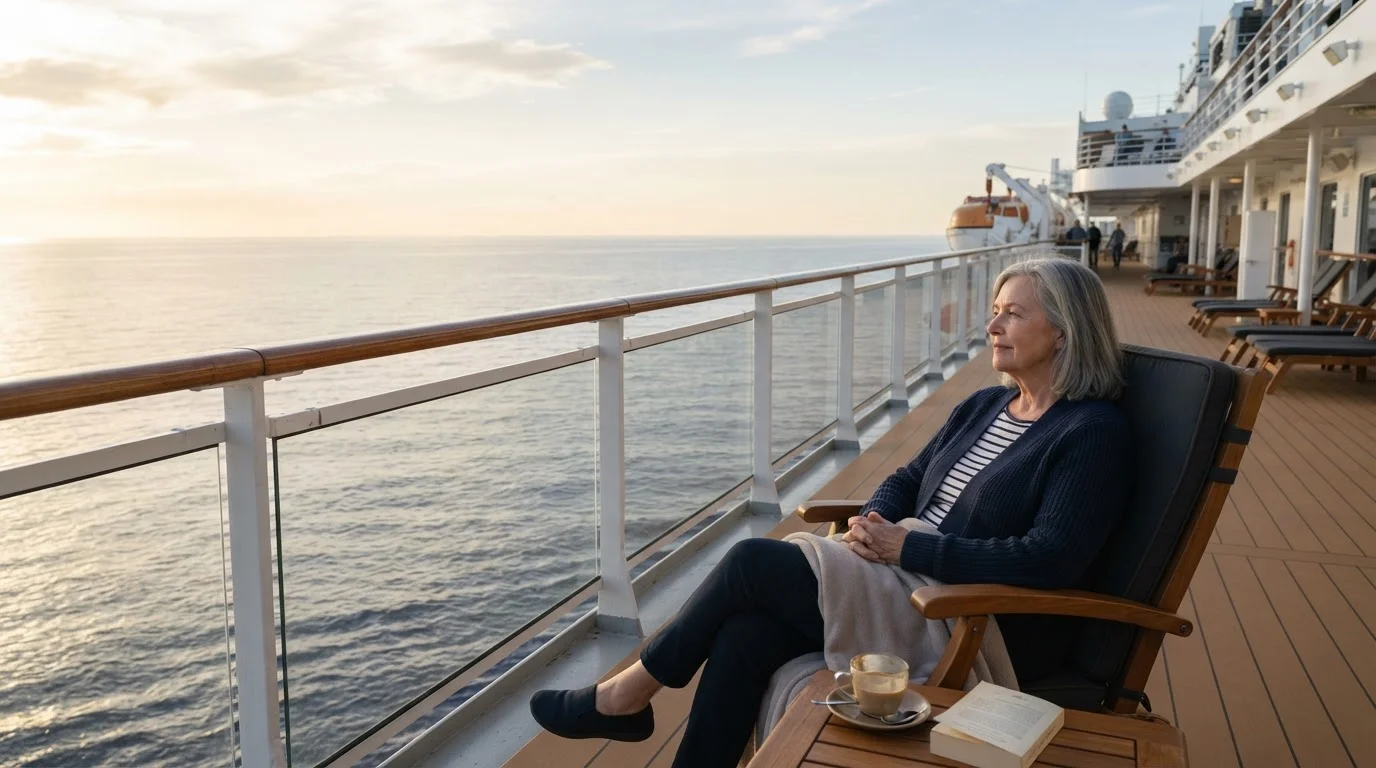
Photo: MyUrbanEscapes.net | Small Escapes. Big Experiences. editorial
—— In This Article
Key Takeaways
- The single supplement fee is the most significant financial hurdle for solo senior cruisers.
- Some cruise lines offer single-occupancy cabins or reduced supplements, lowering the cost barrier.
- Solo travelers often find cruises more socially accessible than land-based solo travel.
- Accessibility features and onboard structure make cruising a practical choice for independent older travelers.
- Comparing pricing models before booking helps solo seniors avoid budget surprises.
Complete control over your itinerary and pace
Solo travelers make every decision — when to dine, which excursions to join, how much time to spend ashore. There's no negotiating with a travel companion over activities or rest time.
Built-in social opportunities without pressure
Cruise ships offer communal dining, group excursions, and organized activities that make it easy to meet people without the awkward logistics of solo land travel. Participation is always optional.
Safety and structure of a managed environment
Ships provide 24-hour medical staff, accessible design, structured daily schedules, and staff assistance — a reassuring framework for seniors traveling without a companion.
Single-occupancy cabins increasingly available
A growing number of ships now include purpose-built solo cabins, designed for one person and priced without a double-occupancy penalty. This has meaningfully changed the economics of solo cruising.
All essential services in one place
Meals, entertainment, medical care, and transportation between ports are handled onboard. This consolidation reduces the planning burden that can make solo land travel feel exhausting.
Single supplement can significantly inflate costs
Most cruise fares are calculated per person based on two people sharing a cabin. Solo travelers are often charged a supplement — commonly 50–100% of the per-person fare — to cover the unused berth.
Solo cabin inventory is limited on many ships
Dedicated single cabins sell out early and exist on only a fraction of the fleet. Travelers who don't plan well in advance may find no solo options available on their preferred sailing.
Dining arrangements can feel awkward initially
Traditional main dining rooms often seat guests at shared tables, which suits some solo travelers but can feel uncomfortable for others. Many ships now offer flexible dining that helps, but it varies by line.
Excursion costs don't scale with solo travel
Shore excursions, private transfers, and specialty dining are typically priced per person regardless of group size, so there are no savings from splitting costs with a companion.
No travel companion for emergencies or support
Without a companion, handling a health issue, missed port, or lost document requires relying entirely on ship staff or personal preparation. Seniors with complex medical needs should plan accordingly.
Understanding the Single Supplement
The single supplement is the defining financial reality of solo cruising. Because cruise fares are structured around two passengers per cabin, a solo traveler occupying a double room is billed for the "missing" second passenger — a surcharge that typically adds 50% to 100% to the base fare. On a longer voyage, this can add hundreds of dollars to the total cost.
That said, the supplement is not universal or fixed. Policies vary considerably between cruise lines, sailing dates, and cabin categories. Repositioning sailings — voyages where a ship moves between seasonal deployment regions — sometimes carry reduced or waived supplements to fill inventory. Traveling during shoulder season can also affect pricing. For a plain-language breakdown of how cruise fares are structured more broadly, see The Real Cost of a Cruise.
50–100%
Typical single supplement range on cruise bookings
Industry pricing practices generally add this surcharge to the per-person fare when only one guest occupies a double cabin.
~25%
Share of cruise passengers traveling solo (estimated)
Solo travel demand has grown steadily, prompting many cruise lines to expand single-occupancy cabin inventories and solo-specific programming.
Cabin Options Built for One
The growth of purpose-built solo cabins is one of the most meaningful developments for independent senior travelers. These staterooms are designed for single occupancy and priced without a supplement penalty. They're generally compact — expect a smaller footprint than a standard double — but typically include the same core amenities: private bathroom, storage, and climate control.
Solo cabins are most commonly found on newer ships from contemporary and premium cruise lines. Because supply is limited and demand is growing, booking several months ahead is advisable. For travelers weighing the overall onboard environment, Quieter Corners: Onboard Spaces That Suit Seniors offers useful context on how ship layout affects the solo experience.
Complete control over your itinerary and pace
Solo travelers make every decision — when to dine, which excursions to join, how much time to spend ashore. There's no negotiating with a travel companion over activities or rest time.
Built-in social opportunities without pressure
Cruise ships offer communal dining, group excursions, and organized activities that make it easy to meet people without the awkward logistics of solo land travel. Participation is always optional.
Safety and structure of a managed environment
Ships provide 24-hour medical staff, accessible design, structured daily schedules, and staff assistance — a reassuring framework for seniors traveling without a companion.
Single-occupancy cabins increasingly available
A growing number of ships now include purpose-built solo cabins, designed for one person and priced without a double-occupancy penalty. This has meaningfully changed the economics of solo cruising.
All essential services in one place
Meals, entertainment, medical care, and transportation between ports are handled onboard. This consolidation reduces the planning burden that can make solo land travel feel exhausting.
Social Life Onboard: More Accessible Than You Might Expect
One of the most common concerns among first-time solo cruisers is isolation — and in practice, it's usually less of a problem than anticipated. Cruise ships are structured environments where social interaction is woven into the daily schedule. Shared dining, enrichment lectures, dance classes, trivia nights, and group shore excursions all create natural opportunities to connect with other travelers without any forced effort.
Many ships also host hosted tables or "solo traveler meetups" — informal gatherings coordinated by cruise staff specifically for passengers traveling alone. These events are particularly common on lines that actively market to solo travelers. For a deeper look at what the day-to-day experience actually looks like, Solo Senior Cruisers: What the Onboard Experience Really Looks Like walks through dining, activities, and practical considerations in detail.
Single supplement can significantly inflate costs
Most cruise fares are calculated per person based on two people sharing a cabin. Solo travelers are often charged a supplement — commonly 50–100% of the per-person fare — to cover the unused berth.
Solo cabin inventory is limited on many ships
Dedicated single cabins sell out early and exist on only a fraction of the fleet. Travelers who don't plan well in advance may find no solo options available on their preferred sailing.
Dining arrangements can feel awkward initially
Traditional main dining rooms often seat guests at shared tables, which suits some solo travelers but can feel uncomfortable for others. Many ships now offer flexible dining that helps, but it varies by line.
Excursion costs don't scale with solo travel
Shore excursions, private transfers, and specialty dining are typically priced per person regardless of group size, so there are no savings from splitting costs with a companion.
No travel companion for emergencies or support
Without a companion, handling a health issue, missed port, or lost document requires relying entirely on ship staff or personal preparation. Seniors with complex medical needs should plan accordingly.
Safety, Independence, and Planning Ahead
Cruising provides a level of managed safety that is genuinely advantageous for solo senior travelers. Ships carry medical staff, maintain accessible design standards on modern vessels, and have protocols for passenger welfare. That said, traveling without a companion does require additional personal preparation — particularly around health documentation, emergency contacts, and communication plans.
Before departure, carry copies of essential documents in a secure location separate from originals, share your itinerary with a trusted contact at home, and familiarize yourself with the ship's medical facilities. Seniors with ongoing health needs should consult their healthcare provider before booking. For broader guidance on independent travel safety, Solo Travel After 65: Safety Habits That Make Independence Possible covers practical routines applicable to cruise and land travel alike.
A Note on Medical Preparedness at Sea
Ship medical centers can handle many common health situations, but they are not full hospitals. Solo travelers — particularly those managing chronic conditions — should carry a complete medication list, insurance documentation, and an emergency contact card. Always consult a qualified healthcare provider before any extended trip to discuss whether cruising is appropriate for your individual health situation. This article provides general travel information, not medical advice.
If this is your first cruise as a solo traveler, Cruising for the First Time After 60 provides a grounding overview of what to expect before you board.

Cruise Travel Editorial Team
Cruise Travel Editorial Team is the collective byline for our editorial team and contributor network. Articles published under this byline or an editorial pen name are researched, written, and reviewed according to our editorial standards for clarity, consistency, and independence before publication.
View author profile