
What 'Accessible Cabin' Actually Means on a Cruise Ship
The term 'accessible cabin' varies widely between cruise lines. Learn what features to look for and what questions to ask before booking.
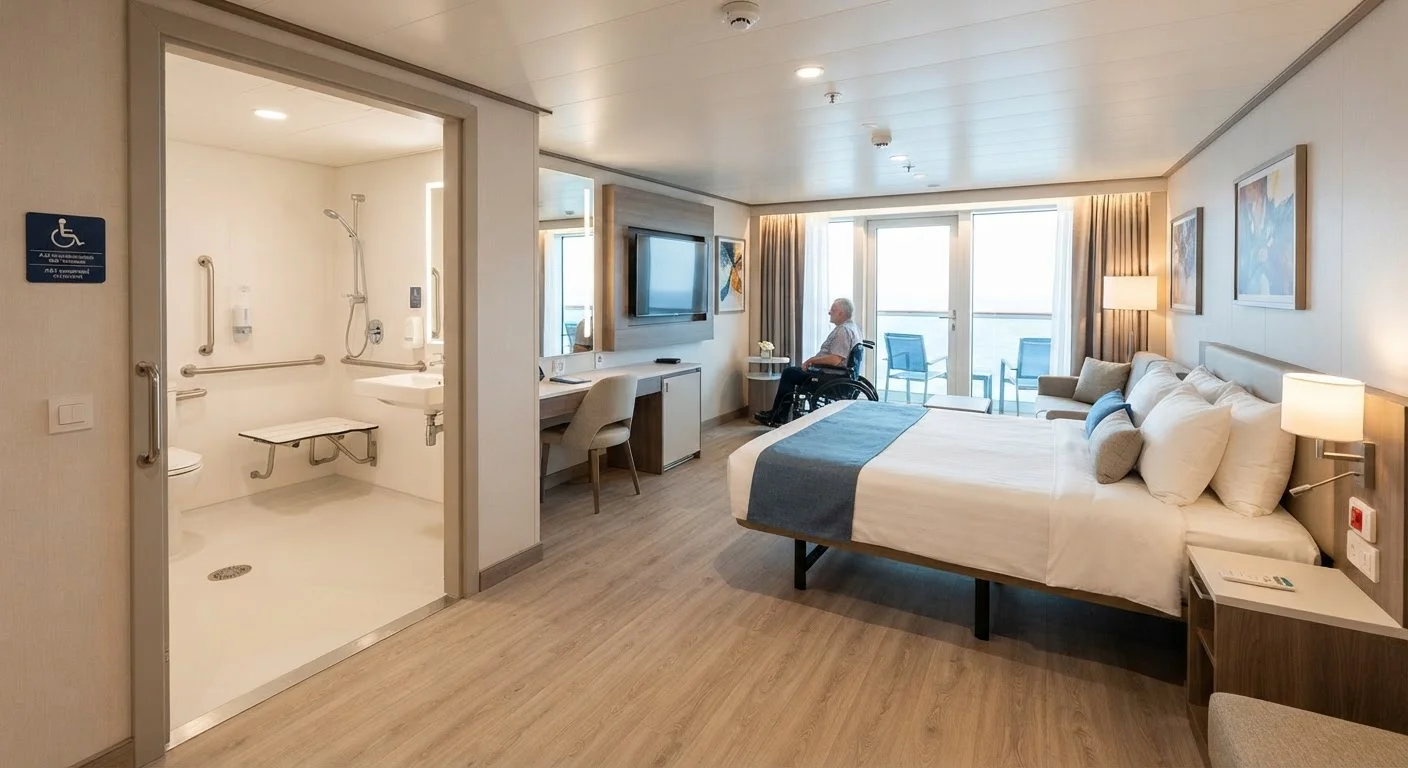
Photo: MyUrbanEscapes.net | Small Escapes. Big Experiences. editorial
—— In This Article
Key Takeaways
- The label 'accessible cabin' has no universal definition across all cruise lines.
- ADA-compliant cabins offer the broadest accessibility features, including roll-in showers and turning radius space.
- Ambulatory accessible cabins suit passengers who walk with some assistance but don't use a wheelchair.
- Always request the cruise line's accessibility document or cabin specification sheet before booking.
- Accessible cabins are limited in number — booking early significantly increases your options.
- Consult your physician about your mobility needs before selecting a cabin category.
Why the Label Alone Isn't Enough
When a cruise line lists a cabin as 'accessible,' it signals that the room has been modified in some way for passengers with disabilities or mobility challenges. But that label alone tells you very little about what you'll actually find when you open the cabin door. Unlike hotel accessibility standards, which are governed by well-known building codes in most U.S. jurisdictions, cruise ship accessibility features can vary significantly depending on the vessel's age, the cruise line's internal standards, and whether the ship sails from U.S. ports.
For senior travelers — particularly those managing mobility changes, using assistive devices, or recovering from joint procedures — understanding exactly what a cabin includes before booking is not a minor detail. It's a foundational part of trip planning. The right cabin can make the difference between a comfortable, independent voyage and one filled with daily frustration.
How cruise ships are designed with older travelers in mind gives helpful context on broader ship-wide accessibility, but the cabin itself deserves its own careful scrutiny.
ADA Rules Apply to U.S.-Flagged Itineraries
Cruise ships calling on U.S. ports are generally required to comply with ADA accessibility standards for passenger vessel accommodations. However, ships that sail exclusively in international waters or under foreign flags may follow different — or less prescriptive — accessibility frameworks. If consistent ADA-level accessibility is important to you, confirm that your chosen itinerary includes U.S. port calls and that the ship was built or refitted to current standards.
The Main Accessible Cabin Categories Explained
Most cruise lines use two primary categories for accessible staterooms, though their terminology differs:
- Fully accessible (ADA-compliant): Designed for passengers who use a wheelchair or scooter. These cabins feature a wider doorway (typically 32 inches or more), open floor space with adequate turning radius, a roll-in shower, grab bars throughout the bathroom, a handheld showerhead, a fold-down shower bench, and a raised or adjustable toilet. Beds are usually at a specified height, and in-room controls (thermostat, light switches) may be positioned at a lower level.
- Ambulatory accessible: Intended for passengers who walk independently or with a cane but may have difficulty with standard shower entry or balance. These cabins typically include grab bars and a shower seat but may not have the wider doorways or full turning radius of a fully accessible room. The shower is often a step-in or low-threshold design rather than a roll-in.
Some ships also offer a third option — a standard cabin with minor modifications such as a shower chair and basic grab bars — though these are less reliably documented. For a deeper breakdown of these categories, see accessible cabin types on cruise ships explained.
2–5%
Share of cruise ship cabins that are accessible
Industry estimates suggest accessible staterooms represent a small minority of total inventory across most cruise fleets, making early booking essential for travelers who need these accommodations.
32 in.
Minimum ADA doorway width for accessible cabins
The ADA sets 32 inches as a minimum clear doorway width for accessible spaces on ships subject to U.S. law, though some accessible cabins exceed this standard.
Features That Are Often Assumed but Not Guaranteed
Even within the same cabin category, there are features that passengers commonly expect but don't always receive. Before confirming any booking, it's worth asking specifically about the following:
- Shower configuration: Is it a true roll-in shower, or does it have a low lip? Some ships describe both as 'accessible.' If you use a shower wheelchair, a lip — even a small one — can be a significant obstacle.
- Bed height: A standard cruise bed may not accommodate easy transfer from a wheelchair. Confirm the height in inches if this matters to your situation.
- Bathroom door width: The cabin entrance may be wide, but the bathroom door is sometimes narrower. Ask for both measurements.
- Proximity to elevators: Accessible cabins are not always located near elevators. A cabin at the end of a long corridor may be technically accessible but functionally inconvenient.
- Balcony access: Balcony cabins with accessible features sometimes have a raised threshold at the balcony door. If outdoor space matters to you, confirm this detail.
These comparisons are also useful when considering land-based options — how accessible hotel rooms differ from standard ones applies the same scrutiny to hotel stays.
Book Accessible Cabins as Early as Possible
Accessible staterooms are among the first cabins to sell out on popular sailings. If you or your travel companion requires an accessible configuration, begin your search well in advance — ideally as soon as the sailing opens for bookings. Waiting until a few weeks before departure significantly limits your options across all cabin classes.
How to Get the Information You Actually Need
The most reliable approach is to contact the cruise line's accessibility services team directly — a specialized department that most major lines maintain separately from general reservations. Request a written specification sheet or accessibility document for the exact cabin number you are considering. These documents typically list doorway widths, shower type, grab bar placement, and bed height.
If you are working with a travel agent, ensure they have direct experience arranging accessible cruises and know which questions to ask on your behalf. A general travel agent may not be familiar with the distinctions between ambulatory and fully accessible configurations.
It's also worth reviewing the cruise line's accessibility policy before booking, including its process for bringing mobility equipment such as scooters or power wheelchairs onboard — storage space and charging access are practical concerns that affect daily comfort. The full picture of cruise ship accessibility — cabins, decks, and shore excursions covers these logistics in detail.
This article provides general travel information for educational purposes. Readers with specific medical or mobility needs should consult a qualified healthcare professional before making travel plans.
Frequently Asked Questions

Cruise Travel Editorial Team
Cruise Travel Editorial Team is the collective byline for our editorial team and contributor network. Articles published under this byline or an editorial pen name are researched, written, and reviewed according to our editorial standards for clarity, consistency, and independence before publication.
View author profile