
The Hidden Logistics of Cruise Embarkation Days
What actually happens on embarkation day—check-in timelines, luggage transfers, boarding queues, and how seniors can navigate it with less stress.
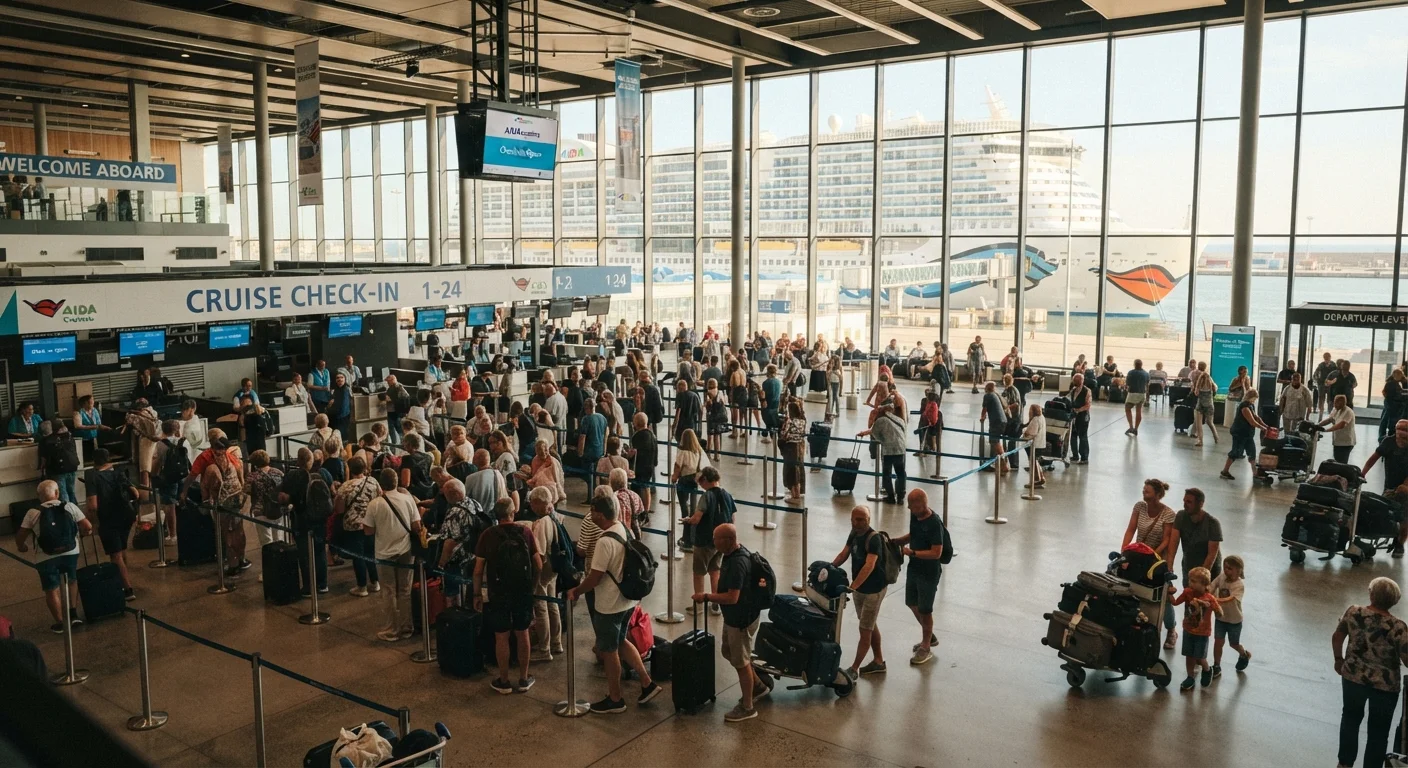
Photo: MyUrbanEscapes.net | Small Escapes. Big Experiences. editorial
—— In This Article
Key Takeaways
- Embarkation day has multiple distinct stages — check-in, security, boarding, and cabin access — each with its own wait time.
- Luggage is handled separately from passengers and typically arrives at your cabin several hours after you board.
- Staggered arrival windows are designed to reduce crowding; honoring your assigned time usually means shorter queues.
- Carrying a small personal bag with essentials ensures you're comfortable during the hours before your cabin opens.
- Special assistance services — wheelchair escorts, priority boarding — must be arranged in advance, not on the day.
- Ships typically sail within six to eight hours of the terminal opening, so the entire embarkation sequence has a firm endpoint.
What Embarkation Day Actually Looks Like, Step by Step
Many first-time cruisers picture embarkation day as a simple walk-up-and-board experience. In reality, it's a multi-stage process that unfolds over several hours — and each stage has its own pace. Understanding the sequence ahead of time makes the whole day feel far more manageable.
Here's the general flow at most major cruise ports:
- Luggage drop-off: Before entering the terminal building, porters at the curb collect your large checked bags. You'll attach cruise-line luggage tags (usually sent with your documents) so bags can be routed to your cabin. Do not hand over medications, valuables, or anything you'll need before evening.
- Terminal entry and security screening: Similar to an airport, you'll pass through a security checkpoint — bags on the X-ray belt, photo ID ready. This is often the first place queues form, especially mid-morning.
- Check-in desk: Staff verify your passport or ID, boarding pass, and any health forms. You'll receive your cruise card (your key, ID, and onboard payment method all in one). This step usually takes 10–20 minutes per person at a staffed counter.
- Boarding lounge wait: After check-in, you move to a waiting area until your boarding group is called. Seating is available, though terminals vary in comfort.
- Gangway boarding: When your group is called, you walk the gangway onto the ship — often the most exciting moment of the day. Staff greet you and direct you to elevators or your muster station.
- Cabin access: Cabins are typically accessible from 1 p.m. to 2 p.m., even if you boarded earlier. Use the time to explore public areas, have lunch in the buffet, or attend the ship's safety briefing.
For a broader look at accessibility considerations throughout this journey, see our guide to cruise ship accessibility.
Arrive Rested the Night Before
If your embarkation port is more than two hours from home, strongly consider staying at a nearby hotel the night before. Port hotels often offer early-morning shuttle service to the terminal. Arriving at the port already rested — rather than after a long same-day drive or flight — makes the multi-hour embarkation process noticeably easier to navigate.
Managing the Wait: Practical Advice for Seniors
The honest reality of embarkation day is that waiting is unavoidable — but it's manageable with a little preparation. The total time from curb to cabin can easily run three to four hours, and standing in multiple queues can be tiring, particularly for travelers with joint pain, fatigue, or mobility concerns.
A few strategies make a meaningful difference:
- Pack a carry-on day bag. Include prescription medications, a snack and water, a light jacket (terminals can be cool), your travel documents, and a phone charger. You won't see your checked luggage until mid-afternoon at the earliest.
- Honor your arrival window. Cruise lines stagger boarding times specifically to reduce crowding. Arriving at your assigned time — rather than at the earliest possible moment — often means shorter queues at every stage.
- Request special assistance in advance. Wheelchair escorts, priority boarding for mobility-limited passengers, and other accessibility services are available at most major ports, but they must be arranged ahead of time. Contact your cruise line's accessibility team before your sail date. See our pre-departure accessibility checklist for what to request and when.
- Use the early boarding time wisely. If you're on the ship before your cabin opens, the buffet restaurant is almost always available. A relaxed lunch is a far better use of that time than standing near your cabin door.
Your Cruise Card Is Your Lifeline Onboard
The plastic card issued at check-in serves as your cabin key, your onboard identification, and your payment method for purchases made at sea. Keep it with you at all times and know where it is before you board. Most ships can replace a lost card, but the process takes time and requires a visit to Guest Services — an avoidable hassle on a busy first day.
For a more complete picture of what to expect once you're aboard, our introduction to life onboard a cruise ship covers muster drills, mealtimes, and the rhythms of daily life at sea.
Health, Documents, and Safety Considerations
Embarkation day involves more health and safety checkpoints than most travelers anticipate. Cruise lines take passenger wellness seriously from the moment you arrive, and senior travelers benefit from knowing what to expect.
3–5 hrs
Typical embarkation day duration, curb to cabin
Based on general cruise industry timelines reported by major port operators and cruise line documentation.
60–90 min
Typical all-aboard deadline before departure
Most cruise lines enforce a strict all-aboard cutoff; missing it means the ship will sail without you regardless of circumstances.
1–2 p.m.
Typical earliest cabin access time
Cabin readiness is staggered by cruise lines to allow housekeeping staff to prepare rooms after the previous voyage.
Health screening: Many itineraries — particularly those visiting international ports — require passengers to complete a health questionnaire before or at check-in. Some routes still require proof of vaccination or a negative test result; check official government and cruise-line sources for current requirements, as these can change. This article provides general travel information only. Consult your healthcare provider about any health considerations specific to your situation before sailing.
Muster drills: Shortly after boarding — or sometimes before departure — you'll be required to participate in a safety briefing covering life jacket use and assembly station locations. Modern cruise lines often allow passengers to complete this via an app or stateroom TV rather than gathering on deck, which is easier for those with mobility limitations.
Medication management: Because checked luggage can take hours to reach your cabin, always carry at least one day's worth of any prescription medication in your day bag. Never pack essential medications in checked luggage. For more guidance on health planning before your cruise, see our complete overview of cruise health and safety for seniors.
The senior travel logistics guide also covers document organization and pre-trip health preparation in useful detail.
Frequently Asked Questions

Senior Trip Planning Editorial Team
Senior Trip Planning Editorial Team is the collective byline for our editorial team and contributor network. Articles published under this byline or an editorial pen name are researched, written, and reviewed according to our editorial standards for clarity, consistency, and independence before publication.
View author profile