
A First-Timer's Complete Introduction to Life Onboard a Cruise Ship
Everything older travelers new to cruising need to know — from muster drills and mealtimes to tipping customs and getting off at ports.
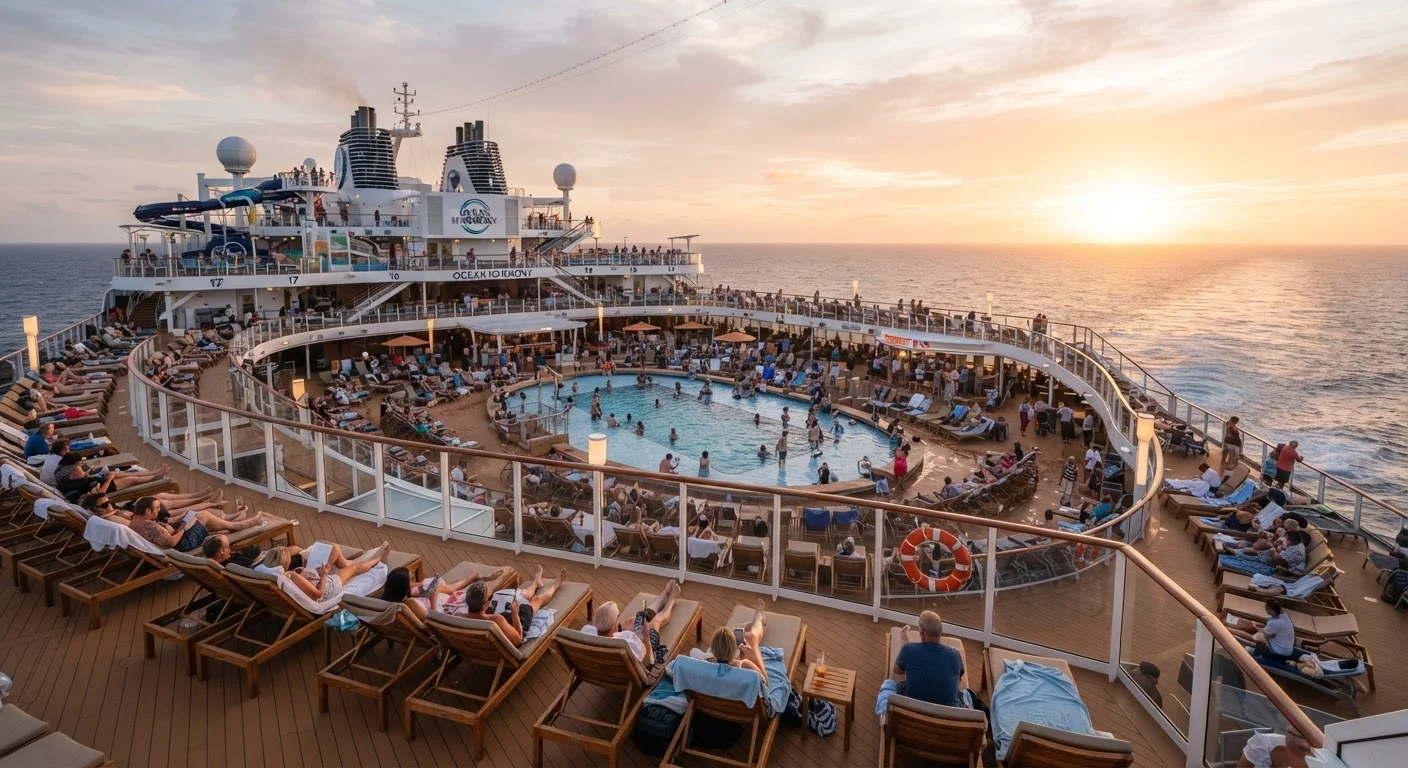
Photo: MyUrbanEscapes.net | Small Escapes. Big Experiences. editorial
—— In This Article
Key Takeaways
- Muster drills are mandatory safety briefings held before or shortly after departure — attendance is required.
- Most ships offer multiple dining venues with flexible hours, accommodating a range of dietary needs.
- Gratuities are often charged automatically to your onboard account and can be adjusted at guest services.
- Shore excursions booked through the ship offer extra logistical support and reliability at ports.
- Cruise ships carry medical staff and accessible facilities, but consulting your doctor before sailing is essential.
Your First Day Onboard
The first hours on a cruise ship can feel overwhelming — a floating city with thousands of passengers, multiple decks, and a schedule already in motion. Knowing what to expect transforms that feeling into excitement.
After boarding, your cabin key card (often called a sea pass or stateroom card) serves as your room key, onboard payment method, and ship ID all in one. Luggage is delivered to your cabin, typically by mid-afternoon. Use the time before cabin access to tour the ship, grab lunch at the buffet, and locate key areas: the medical center, guest services desk, and your assigned dining room.
The most important first-day obligation is the muster drill — a mandatory safety briefing covering life jacket use and evacuation routes. Many lines now offer a digital check-in version via their app, so you can complete parts of it at your own pace. Participation is required by law before or shortly after departure.
See our guide on what actually happens on embarkation day for a step-by-step breakdown of check-in and boarding.
Arrive Early to Avoid Boarding Rush
If your embarkation window allows, aim to board closer to the start of your check-in period rather than peak afternoon hours. Early boarders often find shorter queues at the buffet and have more time to explore the ship before the muster drill. Arriving with a plan — knowing where your dining room and medical center are located — reduces first-day stress significantly.
Dining, Mealtimes, and Food Options
One of cruising's great pleasures is the variety of dining available around the clock. Most ships offer a main dining room with set dinner seatings (early and late) or flexible open-seating arrangements. A buffet-style venue typically serves breakfast, lunch, and snacks throughout the day.
Specialty restaurants — think Italian, Asian, or steakhouse concepts — are usually available for an additional per-person fee and require advance reservations. Room service is widely available, though hours and fees vary by ship and line.
If you have dietary needs — low-sodium, diabetic-friendly, gluten-free, or others — notify the cruise line before departure. Dining staff are generally well-equipped to accommodate these requests, particularly in the main dining room where menus are planned in advance.
Muster drill
A mandatory safety briefing held before or shortly after a cruise ship departs, covering life jacket use and emergency evacuation procedures.
Sea pass / stateroom card
A key card issued at check-in that functions as your cabin key, onboard payment method, and identification while aboard the ship.
Tender port
A destination where the ship anchors offshore and passengers are ferried to land in smaller boats, rather than docking directly at a pier.
Shore excursion
An organized tour or activity at a port of call, typically booked through the cruise line or a local operator, that takes passengers off the ship to explore the destination.
Onboard account
A running tab linked to your stateroom card that accumulates all purchases made on the ship, settled against your registered payment method at voyage end.
Daily program
A printed or digital schedule delivered to passengers each day listing all onboard activities, entertainment times, and important announcements for the following day.
Onboard Activities and Amenities
Modern cruise ships are designed for passengers who want to stay busy and those who prefer to do very little. The daily activities schedule — called the daily program or cruise compass — is delivered to your cabin each evening and lists everything happening the next day.
Common offerings include fitness classes, lectures, live music, trivia, cooking demonstrations, and movies under the stars. Spas, pools, and libraries round out the quieter options. Many ships now offer enrichment programming specifically appealing to older travelers, such as health talks, art classes, and gentle yoga.
Entertainment in the main theater — Broadway-style shows, comedy acts, or classical performances — typically requires no reservation and no additional charge. Evening performances often have two or three showings to suit different dinner seatings.
Port Days: Getting On and Off the Ship
When the ship docks or anchors at a destination, passengers disembark to explore independently or join organized excursions. Shore excursions booked through the cruise line are generally more structured and guarantee return transportation — the ship will wait if the excursion is delayed, which is not the case with independent arrangements.
In some ports, the ship anchors offshore and passengers travel to land via small boats called tenders. This process requires some physical agility and may be challenging for travelers with limited mobility. Check your itinerary in advance to identify tender ports and plan accordingly.
Always note the all-aboard time — posted prominently on ship screens and in the daily program. Missing the ship is a real possibility if you lose track of time ashore, and the financial and logistical consequences are significant.
Never Miss Your All-Aboard Time
Cruise ships operate on strict schedules and will depart without passengers who are late returning from shore. If you miss the ship, you are responsible for arranging and funding your own travel to the next port. Always build in extra time, especially at tender ports where the return boat ride adds to your transit time.
Tipping, Payments, and Onboard Accounts
Your stateroom card is linked to a shipboard account where all charges accumulate — drinks, specialty dining, spa treatments, shore excursions, and gratuities. At the end of the voyage, the total is charged to the credit or debit card you registered at check-in.
Most cruise lines add an automatic daily gratuity per person to cover cabin stewards and dining staff. This amount is disclosed when you book and can typically be reviewed or adjusted at guest services before the final billing day. Additional cash tips for exceptional service are always welcome but never expected.
Onboard currency is US dollars on most ships sailing from American ports. Wi-Fi packages, if you want internet access at sea, are purchased separately and can add meaningfully to your overall costs — review options before departure.
To learn more about planning your first cruise experience from a senior's perspective, explore the choosing a cruise hub for itinerary and ship selection guidance.
Health, Comfort, and Accessibility at Sea
Every ocean-going cruise ship is required to carry trained medical personnel and operate a medical center. These facilities can handle common issues — seasickness, minor injuries, and prescription refills in some cases — but are not free. Travel insurance that covers medical evacuation is strongly recommended for all travelers, and particularly important for older passengers with pre-existing conditions.
If you use a wheelchair, walker, or other mobility aid, request an accessible cabin configuration before booking is finalized. Accessible cabins include features like roll-in showers, grab bars, and wider doorways. Many ships also offer priority boarding and disembarkation for travelers who need extra time or assistance.
Motion sickness is a concern for some first-timers. Cabins on lower decks and toward the middle of the ship tend to experience less movement. Over-the-counter remedies and prescription options exist, but speak with your physician about what suits your health profile before sailing.
For a thorough look at staying safe and healthy at sea, our comprehensive guide on cruise health and safety for seniors covers everything from embarkation to disembarkation. You can also review the full cruise health and safety hub for ongoing guidance.
Before you sail, consider working through our accessibility checklist for senior first-time cruisers to ensure your cabin, medical prep, and special assistance requests are in order.
This article is for general informational purposes only. It is not a substitute for advice from a licensed healthcare professional. Consult your doctor before traveling, particularly if you have ongoing health conditions or mobility considerations.
Frequently Asked Questions

Cruise Travel Editorial Team
Cruise Travel Editorial Team is the collective byline for our editorial team and contributor network. Articles published under this byline or an editorial pen name are researched, written, and reviewed according to our editorial standards for clarity, consistency, and independence before publication.
View author profile