
Solo RV Travel as a Senior: Real Considerations for Traveling Alone
A balanced look at the independence and challenges of solo RV travel for older adults, including safety planning and communication strategies.
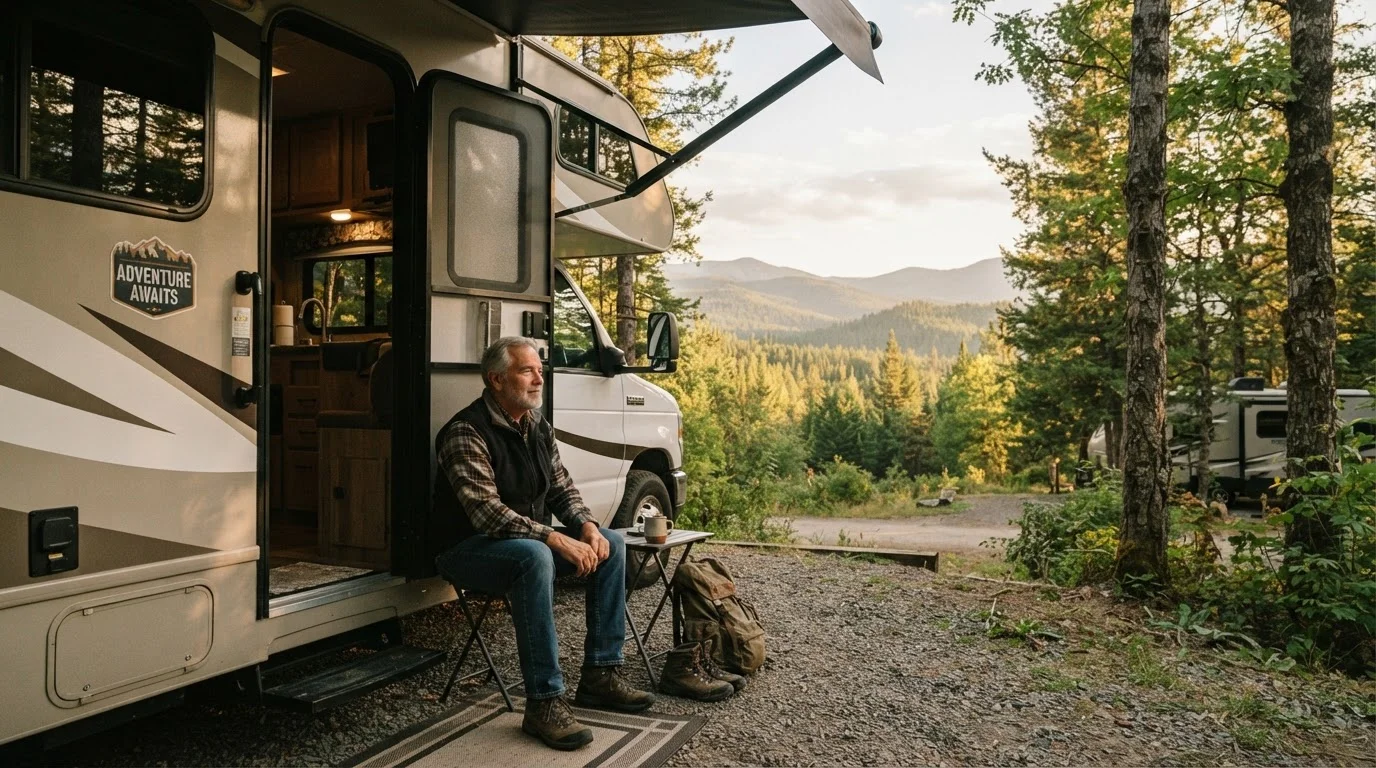
Photo: MyUrbanEscapes.net | Small Escapes. Big Experiences. editorial
—— In This Article
Key Takeaways
- Solo RV travel gives seniors complete schedule control and deep personal independence on the road.
- Safety planning — including check-in routines and emergency contacts — is more critical when traveling alone.
- Physical tasks like leveling, hookups, and roadside issues are harder without a partner to assist.
- Many solo senior RVers find rich social connection through campground communities and RV clubs.
- Honest self-assessment of health, mobility, and driving confidence is essential before setting out alone.
Complete autonomy over schedule and destinations
Solo travelers set departure times, choose stops, and change plans without compromise. This flexibility is particularly valuable for seniors who prefer a slower pace or need to respond to how they feel on a given day.
Travel at a pace that suits your body
Without a partner's preferences to balance, you can drive shorter daily distances, build in rest days freely, and linger longer in places that feel comfortable and restorative.
Deep personal satisfaction and confidence
Many solo senior RVers describe a significant sense of accomplishment from managing trips independently. Successfully navigating challenges alone tends to reinforce confidence for future travel.
Campground communities provide organic social connection
RV parks and campgrounds are naturally social environments. Solo seniors often find neighbors, RV clubs, and organized campground events more than offset the absence of a travel companion.
Simplified decision-making for everyday logistics
Meals, activities, and day-to-day routines are entirely your own to determine. Many solo travelers find the simplicity of single-person logistics less stressful than coordinating with others.
Physical RV tasks are harder without a partner
Leveling, connecting utility hookups, and managing slides or awnings can be physically demanding and awkward alone. Tasks designed for two people require extra time, planning, and sometimes assistive tools.
No immediate help in an emergency or breakdown
A mechanical issue, medical episode, or weather event is far more stressful when there is no one present to assist or seek help. This risk increases in remote areas with limited cell coverage.
Driving fatigue accumulates faster without a co-pilot
Solo drivers handle all navigation and road decisions themselves, with no one to share wheel time or catch errors. This makes strict daily mileage limits and planned rest stops essential.
Loneliness can develop on longer trips
Extended stretches without meaningful in-person connection can affect mood and motivation. This is a real consideration for seniors traveling solo for weeks or months at a time.
Higher baseline responsibility for maintenance and safety
Routine checks — tire pressure, fluid levels, propane, water — fall entirely to one person. Missing a step due to fatigue or distraction has consequences with no one to catch the oversight.
Trip costs are not shared
Campground fees, fuel, and maintenance costs are borne by a single traveler. While solo travel avoids partner compromises, it does not offer the financial offset that two people sharing costs provides.
Why Seniors Choose to RV Solo
Not every senior traveler has a willing partner, and not every trip calls for one. Some travel alone after the loss of a spouse. Others simply prefer setting their own pace without negotiating destinations, departure times, or how long to linger at a trailhead. Still others are re-entering RV travel independently after years away from the road.
Whatever the reason, solo senior RVing is far more common than many assume. RV campground communities tend to be welcoming, and the culture of self-sufficiency that defines RV travel suits independent-minded older adults well. That said, traveling alone removes the built-in safety net and shared workload that a partner provides — and that has real implications worth thinking through before you go. See our complete first-timer's roadmap for a full planning framework.
The Real Advantages of Solo RV Travel
Solo travel offers a quality of freedom that is genuinely difficult to replicate when coordinating with others. The advantages below are ones solo senior RVers consistently report.
Complete autonomy over schedule and destinations
Solo travelers set departure times, choose stops, and change plans without compromise. This flexibility is particularly valuable for seniors who prefer a slower pace or need to respond to how they feel on a given day.
Travel at a pace that suits your body
Without a partner's preferences to balance, you can drive shorter daily distances, build in rest days freely, and linger longer in places that feel comfortable and restorative.
Deep personal satisfaction and confidence
Many solo senior RVers describe a significant sense of accomplishment from managing trips independently. Successfully navigating challenges alone tends to reinforce confidence for future travel.
Campground communities provide organic social connection
RV parks and campgrounds are naturally social environments. Solo seniors often find neighbors, RV clubs, and organized campground events more than offset the absence of a travel companion.
Simplified decision-making for everyday logistics
Meals, activities, and day-to-day routines are entirely your own to determine. Many solo travelers find the simplicity of single-person logistics less stressful than coordinating with others.
Social isolation is often less of a concern than newcomers expect. Campgrounds — especially those with longer-stay options — tend to foster organic neighborly connection. Many solo seniors also find that traveling at a slower pace, spending more nights in fewer places, supports both their social and physical wellbeing. Our guide to slow travel by RV explores why fewer miles often suits seniors best.
The Genuine Challenges You Should Plan For
Solo travel places the full weight of every decision, task, and emergency on one person. For older adults, some of those tasks carry physical and logistical stakes that should not be minimized.
Physical RV tasks are harder without a partner
Leveling, connecting utility hookups, and managing slides or awnings can be physically demanding and awkward alone. Tasks designed for two people require extra time, planning, and sometimes assistive tools.
No immediate help in an emergency or breakdown
A mechanical issue, medical episode, or weather event is far more stressful when there is no one present to assist or seek help. This risk increases in remote areas with limited cell coverage.
Driving fatigue accumulates faster without a co-pilot
Solo drivers handle all navigation and road decisions themselves, with no one to share wheel time or catch errors. This makes strict daily mileage limits and planned rest stops essential.
Loneliness can develop on longer trips
Extended stretches without meaningful in-person connection can affect mood and motivation. This is a real consideration for seniors traveling solo for weeks or months at a time.
Higher baseline responsibility for maintenance and safety
Routine checks — tire pressure, fluid levels, propane, water — fall entirely to one person. Missing a step due to fatigue or distraction has consequences with no one to catch the oversight.
Trip costs are not shared
Campground fees, fuel, and maintenance costs are borne by a single traveler. While solo travel avoids partner compromises, it does not offer the financial offset that two people sharing costs provides.
Driving fatigue deserves particular attention. Without a co-pilot to share long stretches or catch navigation errors, solo drivers need stricter daily mileage limits and more deliberate rest stops. If you are managing any ongoing health considerations, review our article on RV travel with a chronic condition before finalizing your plans — and always consult your healthcare provider about travel readiness.
Safety Communication: The Non-Negotiable Foundation
The single most important difference between solo and partnered RV travel is your safety communication structure. When no one is traveling with you, someone reliable must always know where you are.
Build Your Check-In System Before You Leave
A check-in protocol is only effective if it is agreed upon and tested before your first solo trip. Confirm with your contact person exactly what action they will take — and at what time — if they do not hear from you. Many solo senior RVers also register their itinerary with a trusted family member or friend digitally, making it easy to update in real time as plans evolve.
Practical steps that experienced solo senior RVers rely on include:
- Daily check-in calls or texts to a designated contact at home, with a clear protocol for what happens if you miss one.
- Sharing your itinerary in advance — planned routes, campground names, and expected arrival times — so a contact can act quickly if something goes wrong.
- A satellite communicator or personal locator beacon for travel in areas with limited cellular coverage. These devices allow two-way messaging and emergency SOS even without a cell signal.
- Campground neighbor awareness. Introducing yourself to neighbors when you arrive creates an informal local safety net.
For a thorough look at remote campground safety practices, see staying connected and safe at remote campgrounds. The safety habits for solo travelers after 65 article also covers digital check-in routines in useful detail.
~30%
RV travelers who travel solo
Industry surveys have consistently found that a meaningful share of RV travelers — estimated at roughly a quarter to a third — take trips alone, with older adults representing a significant portion of that group.
70%+
Seniors reporting independence as key travel motivator
AARP travel research has found that autonomy and the ability to set one's own schedule rank among the top motivators for older adults who choose independent over group travel formats.
Assessing Whether Solo RV Travel Is Right for You
The honest self-assessment that solo RV travel requires is not about age — it is about current capability and preparation. Ask yourself whether you can reliably manage hookups, leveling, and minor mechanical issues on your own. Consider how you would handle a flat tire, a propane issue, or a medical episode at a campground 90 minutes from the nearest town.
For some seniors, a motorhome is easier to manage solo than a towing setup. Our piece on towing versus driving a motorhome compares the setup demands of each. Those with reduced mobility should also explore driving adaptations for reduced mobility before ruling out solo travel.
If the thought of managing everything alone feels genuinely overwhelming rather than simply unfamiliar, a group RV trip or organized tour might be a better starting point. Our group tour versus independent travel guide offers a balanced comparison. Solo travel is not the right fit for everyone — and knowing that honestly is its own form of good planning.
This article provides general travel planning information and is not a substitute for professional medical, safety, or legal advice. Always consult qualified professionals for guidance specific to your personal health and circumstances.

Rv Travel Editorial Team
RV Travel Editorial Team is the collective byline for our editorial team and contributor network. Articles published under this byline or an editorial pen name are researched, written, and reviewed according to our editorial standards for clarity, consistency, and independence before publication.
View author profile