
Towing a Travel Trailer vs. Driving a Motorhome: What Senior RVers Should Know
A side-by-side look at towing vs. driving your home on wheels — covering setup effort, manoeuvrability, and comfort for older travelers.
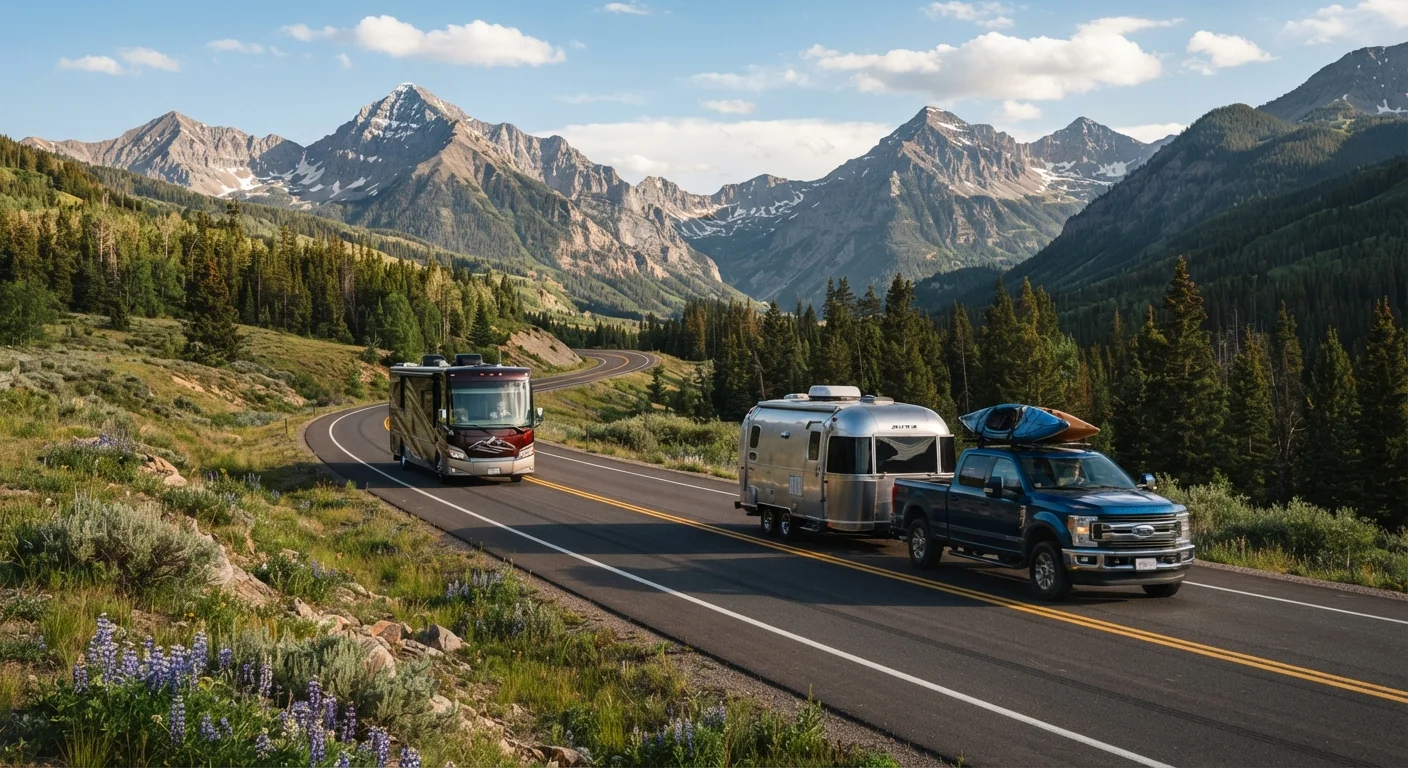
Photo: MyUrbanEscapes.net | Small Escapes. Big Experiences. editorial
—— In This Article
Key Takeaways
- Travel trailers require hitching and backing skills; motorhomes offer a simpler setup routine.
- Motorhomes allow access to the living area while parked en route; trailers do not.
- Towing separates your tow vehicle from the trailer, giving you a free car at camp.
- Motorhomes generally have a higher entry cost but consolidate living and driving in one unit.
- Physical demands — hitching, leveling, and backing — differ significantly between the two setups.
- Either choice can work well for seniors; the right fit depends on driving comfort, physical ability, and travel style.
Setup and Daily Logistics: Where Real Differences Emerge
For senior RVers, the daily effort of setting up and breaking down camp is often the deciding factor between these two configurations. A travel trailer requires you to hitch and unhitch the trailer each time you move — a process that involves connecting a ball hitch, safety chains, electrical connectors, and often a weight-distribution bar. Backing a trailer precisely into a campsite adds another layer of skill that takes real practice to develop.
Motorhomes sidestep that process entirely. You pull in, deploy the leveling jacks (many modern units do this automatically), and you're home. There's no separate vehicle to align or couple. For seniors managing arthritis, balance issues, or reduced strength, this difference is genuinely significant. See our guide to driving adaptations for seniors with reduced mobility for more on how physical limitations affect rig choice.
| Criterion | Travel Trailer | Motorhome |
|---|---|---|
| Setup complexity | Hitching, leveling, stabilizing required | Park, level, done |
| Driving familiarity | Familiar truck/SUV handling | Large vehicle, bus-like driving |
| Access while traveling | No access during transit | Full interior access en route |
| Camp vehicle flexibility | Unhitch tow vehicle for errands | Tow a small car ('toad') separately |
| Typical purchase cost | Generally lower entry price | Higher initial investment |
| Maintenance scope | Two separate vehicles to maintain | Single unit; repair affects both home and transport |
| Physical demands at camp | Ground-level hitching; bending required | Minimal; button-operated leveling common |
Driving Dynamics and Road Comfort
Driving a motorhome feels more like piloting a large bus — wide, stable, and with your living area accessible from the driver's seat. Passengers can use the restroom or grab a snack without a rest stop. The tradeoff is that the motorhome is your only vehicle; many seniors tow a small car (called a "toad") behind a larger motorhome to maintain local mobility at camp, which adds its own learning curve.
Towing a travel trailer means your tow vehicle handles like a regular truck or large SUV — familiar to most drivers — but trailer sway in crosswinds and the challenge of braking with added weight require adjustment. Longer combinations also limit which campgrounds, roads, and tunnels are accessible. If you're weighing which motorhome class might suit you, our comparison of Class A, B, and C motorhomes offers useful context.
~11M
US households that own an RV
According to the RV Industry Association, RV ownership has grown steadily, with a significant share of owners over age 55.
55+
Age group driving RV ownership growth
Industry surveys consistently identify adults aged 55 and older as among the most active and growing segments of the RV market.
65%
RVers who cite ease of use as a top purchase factor
Surveys of RV buyers, particularly those 55 and older, regularly rank simplified setup and operation as a primary decision driver.
Cost, Maintenance, and Ownership Considerations
Travel trailers generally carry a lower purchase price than motorhomes of comparable living space. Because the trailer has no engine, mechanical maintenance is simpler — though you're maintaining two vehicles (the tow truck and the trailer) rather than one. A motorhome integrates the engine and chassis into the living unit, which means a major repair can strand you without both transportation and shelter simultaneously.
Insurance, registration, and campground fees also differ. Motorhomes are typically registered and insured as a single vehicle. A trailer requires its own registration and, in many states, its own brake controller and safety chain inspection. Neither approach is inherently cheaper over a decade of ownership — your usage pattern matters most. For a broader perspective on how RV travel evolves as you age, see RV Travel After 60: What Changes and What to Plan For.
Tow Vehicle Ratings Matter
Not every truck or SUV can safely tow a travel trailer. Each vehicle has a manufacturer-specified tow rating that must not be exceeded. Before purchasing a trailer, verify your vehicle's tow capacity — including payload and tongue weight limits — in the owner's manual or by contacting the manufacturer. Exceeding these ratings creates serious safety risks and may void warranties.

Rv Travel Editorial Team
RV Travel Editorial Team is the collective byline for our editorial team and contributor network. Articles published under this byline or an editorial pen name are researched, written, and reviewed according to our editorial standards for clarity, consistency, and independence before publication.
View author profile