
Driving an RV With Reduced Mobility: Adaptations Worth Knowing
Explore driving aids, seating adjustments, and route-planning strategies that support seniors with limited mobility behind the wheel.
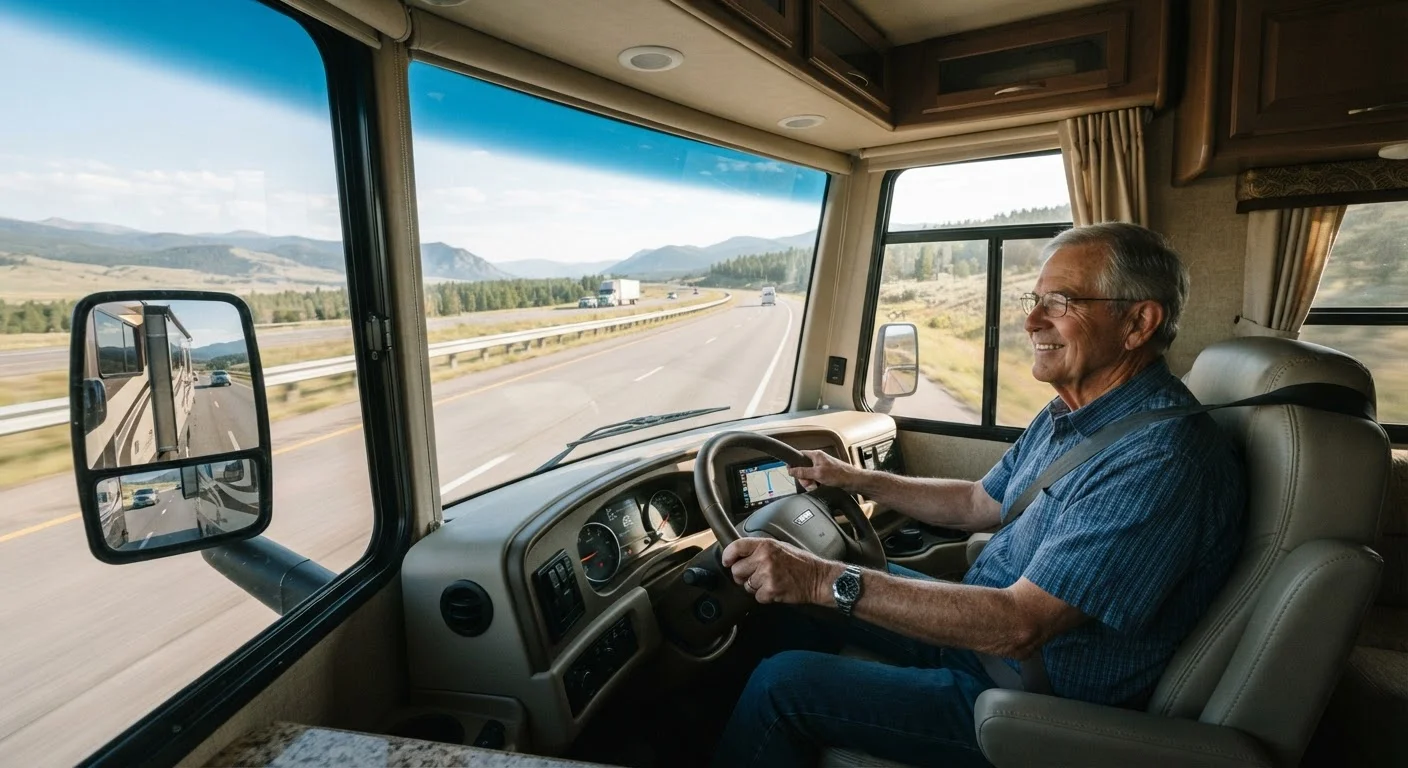
Photo: MyUrbanEscapes.net | Small Escapes. Big Experiences. editorial
—— In This Article
Key Takeaways
- Steering and pedal adaptations can significantly reduce physical strain for seniors with limited mobility.
- Seat positioning and cushioning adjustments improve both comfort and driving control over long distances.
- Route planning that avoids high-traffic areas and difficult terrain reduces physical and mental demand.
- Consulting a certified driver rehabilitation specialist can help match adaptations to your specific needs.
- Choosing the right motorhome class can make a meaningful difference in driving accessibility.
Staying Behind the Wheel on Your Own Terms
Reduced mobility — whether from arthritis, joint replacement, reduced grip strength, or other age-related changes — doesn't automatically disqualify someone from driving an RV. What it does require is a thoughtful look at whether the vehicle and driving setup match your current physical capabilities. The good news is that a growing range of adaptive equipment and planning strategies can help seniors continue traveling safely and confidently.
This article focuses specifically on the driving side of the equation. For a broader look at how aging affects RV travel overall, see our guide on what changes after 60 and what to plan for. And if you're weighing which type of motorhome best suits your mobility needs, our comparison of motorhome classes for aging travelers is a practical starting point.
Adaptive Equipment and Vehicle Compatibility
Not all adaptive driving aids are compatible with every RV model or chassis. Before purchasing or installing any modification, confirm compatibility with your specific vehicle — ideally through a certified adaptive equipment dealer or your vehicle manufacturer's service department. Improper installation of steering or braking modifications can create safety risks and may affect your vehicle's warranty.
Adaptations Worth Considering
Get a Driver Rehabilitation Assessment First
Before investing in any adaptive equipment, consider working with a certified driver rehabilitation specialist (CDRS). These professionals — often occupational therapists with additional training — assess your specific physical limitations and recommend targeted solutions rather than a one-size-fits-all approach. They can evaluate grip strength, range of motion, reaction time, and visual fields, then suggest adaptations that genuinely match your needs. Your physician or a local hospital rehabilitation department can often provide a referral.
A professional assessment ensures adaptations actually match your specific physical limitations.
Steering Aids for Limited Grip or Arm Strength
For drivers with arthritis, limited grip strength, or reduced arm range of motion, steering can become tiring or painful over long stretches. Spinner knobs — devices that attach to the steering wheel rim and allow one-handed steering — are one widely used option. Steering wheel covers with additional padding or ergonomic shaping can also reduce joint strain. If one arm or hand has significantly less function than the other, discuss this specifically with a CDRS, as more substantial modifications may be appropriate. Always ensure any steering accessory is compatible with your vehicle's airbag system before installation.
Spinner knobs and ergonomic wheel covers can meaningfully reduce fatigue for drivers with grip limitations.
Seat Positioning and Cushioning Adjustments
The factory driver's seat in many motorhomes is not optimized for smaller frames, hip conditions, or lumbar sensitivities common among older adults. Wedge cushions can tilt the pelvis forward, reducing lower back strain. Coccyx-relief cushions help those with tailbone discomfort. For drivers who struggle to reach the pedals comfortably, a qualified mechanic may be able to adjust or extend pedal placement — always have this done professionally to avoid interfering with braking response. Proper seat height also affects mirror sightlines, which is critical in a large vehicle. Take time to dial in your full seating position before every trip, not just the first one.
Proper seat positioning affects not just comfort but also mirror visibility and pedal control.
Mirror and Camera Systems for Reduced Range of Motion
Turning the neck and upper body to check blind spots becomes harder with age-related stiffness or conditions like cervical stenosis. Extended tow mirrors, which swing further out from the vehicle's sides, increase the field of view without requiring as much head movement. Backup cameras are now standard on many newer motorhomes, but additional side-view cameras or a 360-degree camera system can fill gaps for drivers with limited neck rotation. If your current RV lacks adequate camera coverage, aftermarket systems are widely available and can typically be installed by a qualified technician.
Extended mirrors and camera systems reduce how much you need to turn your head while driving.
Hand Controls for Pedal-Related Limitations
Drivers with lower-limb weakness, neuropathy, or conditions affecting foot or ankle function may benefit from hand-operated brake and accelerator controls. These systems transfer pedal functions to levers or push-pull mechanisms near the steering column. Hand controls for motor vehicles are regulated and must be installed by a certified adaptive equipment dealer — this is not a DIY modification. A CDRS assessment is generally required before installation, and some states may require a driving test with the new setup before your license is updated. Check with your state's department of motor vehicles for applicable requirements.
Hand controls must be installed by certified professionals and may require a license update in your state.
Route Planning Strategies That Reduce Physical Demand
Adaptive equipment helps, but smart routing reduces how hard your body has to work in the first place. Limit daily driving to two to four hours when possible, scheduling rest breaks every 90 minutes or so. Use GPS routing tools that allow you to filter for RV-friendly roads, avoiding low bridges, steep grades, and roads too narrow for your rig. Plan fuel and rest stops in advance so you're not making rushed decisions while fatigued. Pull-through campsites eliminate backing up entirely — worth searching for specifically if reversing your rig puts strain on your neck or shoulders. For a full planning framework, our senior RV trip planning roadmap covers these logistics step by step.
Limiting daily drive time and selecting pull-through sites reduces cumulative physical strain significantly.
Trial Drives Before a Long Trip
After any seating, mirror, or control modification, do a series of short local drives before committing to a long journey. This lets you identify discomfort or visibility issues in low-stakes conditions. Aim for at least two or three practice drives of increasing duration to build confidence with your adjusted setup.
Planning the Journey Around Your Abilities
Equipment adaptations are only part of the picture. How and where you drive matters just as much. Seniors with reduced mobility often benefit most from route planning that reduces overall physical demand — keeping driving segments shorter, avoiding dense urban areas, and selecting campgrounds with pull-through sites that eliminate the need for tight reversing maneuvers.
Pair these strategies with realistic self-assessment. If you're managing an ongoing health condition that affects your driving, our article on RV travel with a chronic condition offers structured guidance on setting appropriate limits. Solo travelers should also review the real considerations for senior solo RV travel, including communication and emergency planning strategies that matter when you're the only driver.
No adaptation eliminates the need for honest self-evaluation. If driving a large RV feels unsafe even with modifications, exploring a smaller Class B van-style unit may be the better choice. Our comparison of towing versus driving a motorhome can help clarify which format suits your current abilities.
This article is for general informational purposes only and does not constitute medical or driving-fitness advice. If you have concerns about your ability to drive safely, consult your healthcare provider and a certified driver rehabilitation specialist.

Rv Travel Editorial Team
RV Travel Editorial Team is the collective byline for our editorial team and contributor network. Articles published under this byline or an editorial pen name are researched, written, and reviewed according to our editorial standards for clarity, consistency, and independence before publication.
View author profile