
RV Travel With a Chronic Condition: Planning, Preparation, and Knowing Your Limits
General guidance on how seniors managing ongoing health conditions can approach RV travel safely. Always consult your healthcare provider first.
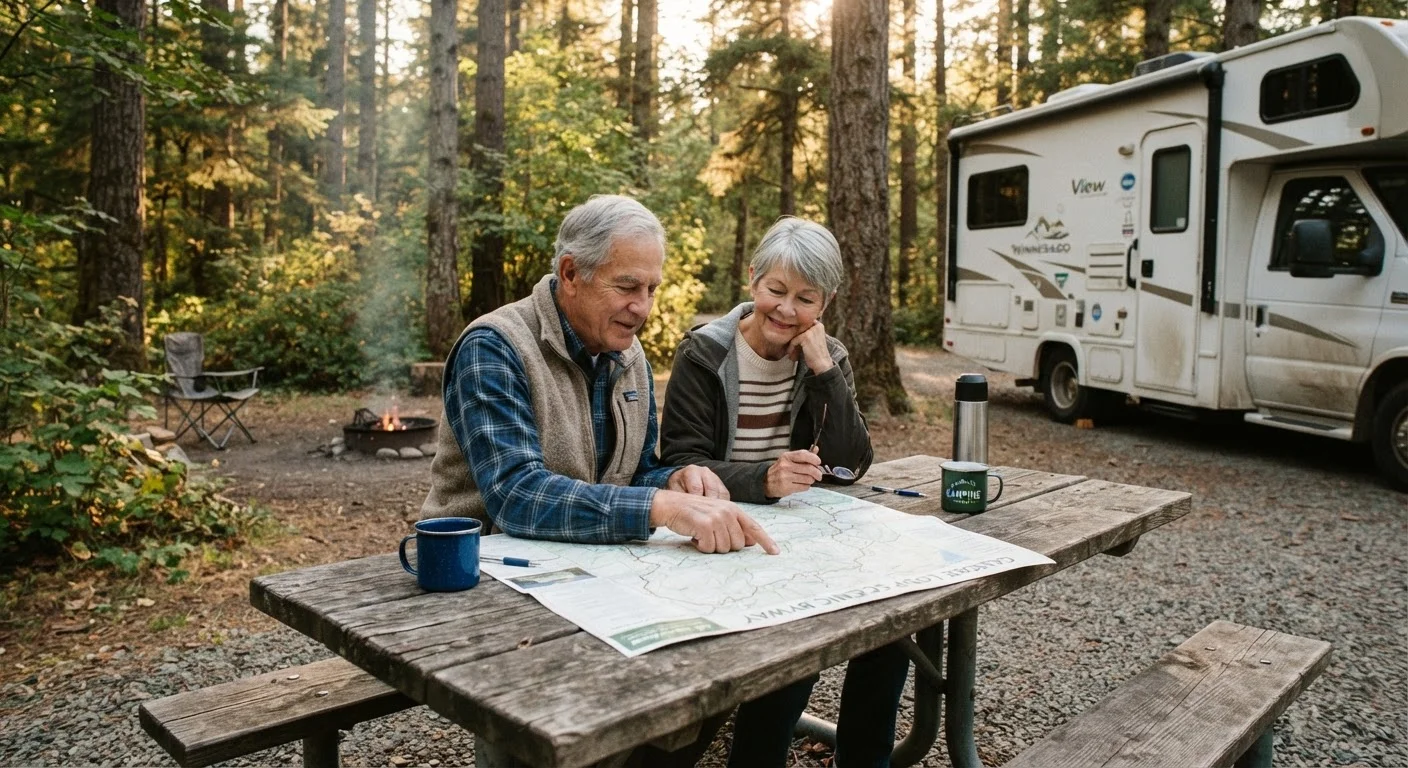
Photo: MyUrbanEscapes.net | Small Escapes. Big Experiences. editorial
—— In This Article
Key Takeaways
- Consult your doctor before any RV trip to review your condition's travel implications.
- Plan routes with regular medical facility access and manageable daily driving distances.
- Organize medications carefully, including surplus supply and proper storage conditions.
- Build rest days and flexible itineraries that allow adjustment without disruption.
- Communicate your health needs clearly to travel companions and know your emergency plan.
Start With Your Healthcare Provider
Before mapping a single mile, seniors managing a chronic condition should schedule a dedicated pre-trip appointment with their primary care provider. This is not a formality — it is a foundational step. Your physician can assess whether your current health status is stable enough for extended travel, flag any condition-specific risks that RV travel introduces, and help you build a practical action plan.
Topics worth raising in that appointment include how long periods of sitting may affect circulation, how altitude or heat exposure might interact with your condition, and whether your current medication regimen needs adjustment for a travel context. For a broader picture of how aging intersects with RV travel, RV travel after 60 covers the physical changes that often influence planning decisions.
Medical Clearance Comes First
No amount of logistical preparation replaces a direct conversation with your healthcare provider. Before booking sites or planning routes, ensure your condition is stable and your physician is aware of — and supportive of — your travel plans. Travel readiness is a medical determination, not just a personal one.
This article provides general educational information only and is not a substitute for personalized medical advice. Always consult a qualified healthcare provider before making decisions about travel with a chronic health condition.
Medication and Medical Supply Management
Reliable access to medications is one of the most critical logistical challenges for RV travelers with ongoing health needs. A common-sense starting point is carrying more supply than you expect to need — most providers recommend at least a two-week buffer beyond your planned trip length, though confirm the right amount with your doctor and pharmacist.
Storage matters as much as quantity. Some medications require refrigeration or protection from heat, which demands a dedicated cooler or a reliable RV refrigeration unit on hot travel days. Keep medications in their original labeled containers, and carry a written list of every prescription, dosage, and prescribing provider in case you need to access care in an unfamiliar location.
Build a Medication Buffer Into Every Trip
Always carry more medication than your trip length requires. Ask your pharmacist about early refill options and confirm storage requirements for each prescription. A written medication list kept separate from your supply ensures you can access care quickly if something is lost or damaged.
For a thorough walkthrough of organizing prescriptions and health supplies for longer trips, the article managing medications during extended RV trips offers practical structure worth reviewing before you depart.
Route Planning Around Health Needs
Your route is not just about scenery — for travelers with chronic conditions, it is a health infrastructure decision. Planning with medical access in mind means identifying hospitals, urgent care centers, and pharmacies along your intended path, particularly in rural stretches where services can be sparse.
Consider keeping daily driving segments to distances that feel genuinely comfortable rather than ambitious. Long uninterrupted drives increase DVT risk and physical fatigue; DVT and long-haul travel is worth reading with your doctor to understand the general precautions relevant to your situation. Build stopping points into your day — not just for fuel, but to stand, stretch, and reset.
133M
Americans living with at least one chronic condition
According to the Centers for Disease Control and Prevention, roughly 6 in 10 American adults have a chronic disease — underscoring how common this planning challenge is.
2–3x
Higher DVT risk with prolonged sitting
General medical guidance indicates that long periods of immobility — such as extended drives — can meaningfully elevate clot risk, particularly in older adults.
Seniors with conditions affecting mobility should also research campground accessibility before booking. Not all sites offer level ground, paved access, or proximity to restrooms — factors that matter significantly when fatigue or mobility limitations are part of your daily reality. Driving an RV with reduced mobility covers route-planning strategies specifically for those with physical limitations behind the wheel.
Physical Comfort and Pacing on the Road
RV life involves more physical activity than many newcomers anticipate — setting up camp, connecting utilities, climbing in and out of the vehicle, and walking across campgrounds all add up. For seniors managing conditions like arthritis, heart disease, or respiratory issues, pacing these activities thoughtfully is essential.
Rest days are not a concession to limitation; they are smart planning. Itineraries that allow one or two lower-activity days per week give your body time to recover and reduce the cumulative fatigue that can quietly erode a long trip. Staying active without overdoing it offers guidance on gentle movement routines that support physical health without overextending.
Keep a one-page health summary — listing your conditions, medications, allergies, and emergency contacts — in a visible spot inside the RV and on your person when away from the vehicle.
In an emergency, first responders unfamiliar with your history can act more quickly and accurately when this information is immediately available.
Schedule campsite arrivals earlier in the day to avoid rushing setup when energy levels are lower in the evening.
Setup fatigue is a real factor for seniors with chronic conditions; arriving with daylight and energy to spare reduces physical stress and the risk of rushing or skipping safety steps.
Sleep quality is another underappreciated factor. Disrupted sleep can destabilize many chronic conditions, and RV environments introduce new variables — noise, temperature swings, and an unfamiliar mattress. The article sleep quality in an RV outlines what older travelers can do to rest more consistently on the road.
Knowing Your Limits and When to Adjust
Perhaps the most valuable skill for any RV traveler managing a chronic condition is honest self-assessment. That means recognizing when a planned activity exceeds what your body can handle that day, when a destination should be skipped in favor of rest, and when symptoms warrant medical attention rather than a wait-and-see approach.
Communicate your health situation clearly to any travel companions before departure. They should know your condition, where your medications are stored, what symptoms warrant immediate action, and how to contact your healthcare provider. Traveling solo requires additional preparation — solo RV travel as a senior addresses safety planning and communication strategies relevant to those traveling without a companion.
A flexible itinerary is one of the greatest assets a senior traveler with a chronic condition can have. The goal is not to minimize your travel — it is to protect your ability to keep going. For a complete planning framework that integrates these health considerations from the start, RV trip planning for seniors walks through every stage of preparation.
Recognize When to Seek Care Immediately
New or worsening symptoms should never be dismissed as travel fatigue. Establish in advance which symptoms constitute an emergency for your specific condition and locate the nearest hospital or urgent care when you arrive at each new destination. Do not delay seeking help to avoid interrupting the trip.
This article is for general informational and educational purposes only. It does not constitute medical advice. Seniors with chronic health conditions should consult a qualified healthcare provider before planning or undertaking RV travel.

Rv Travel Editorial Team
RV Travel Editorial Team is the collective byline for our editorial team and contributor network. Articles published under this byline or an editorial pen name are researched, written, and reviewed according to our editorial standards for clarity, consistency, and independence before publication.
View author profile