
Sleep Quality in an RV: What Disrupts It and What Helps
Noise, temperature, mattress quality, and irregular schedules all affect sleep. Here's what older RV travelers can do to rest better.
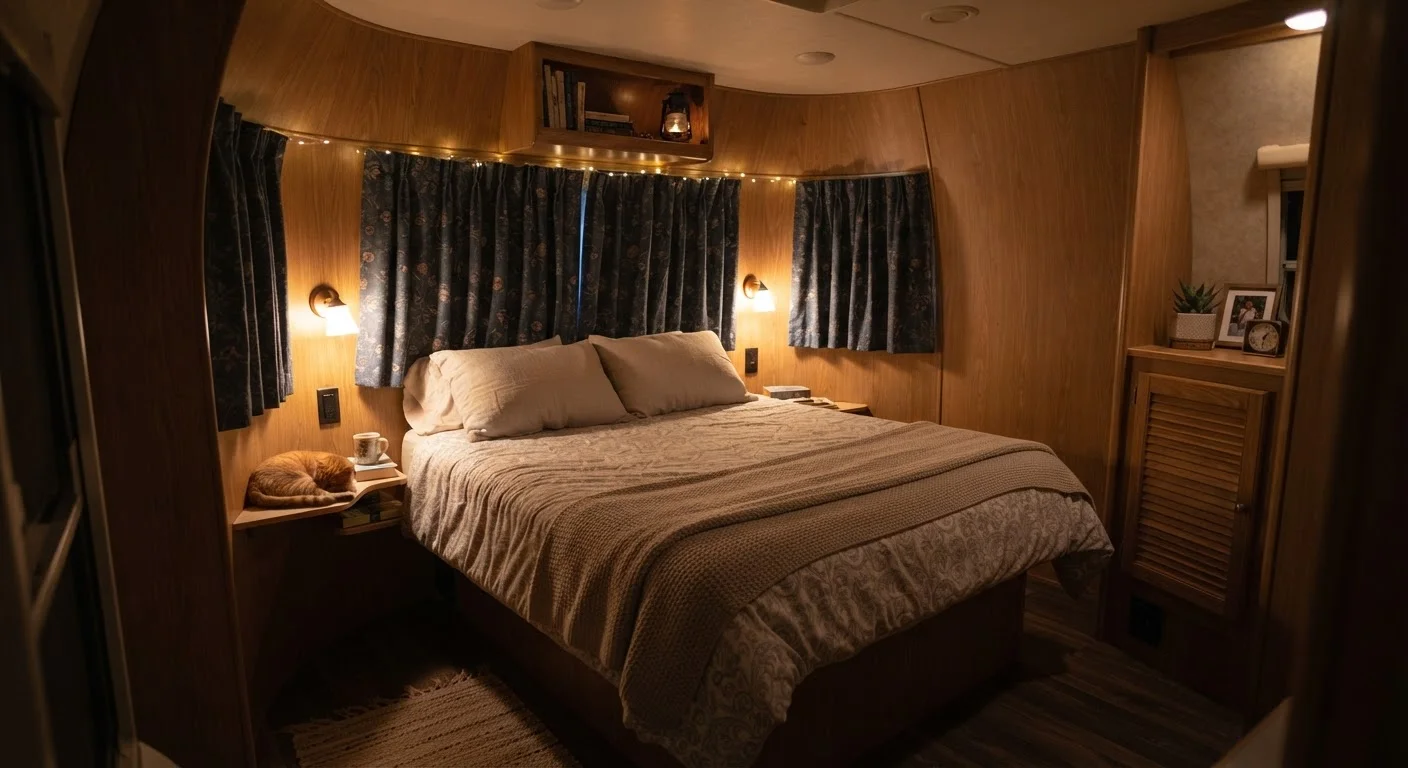
Photo: MyUrbanEscapes.net | Small Escapes. Big Experiences. editorial
—— In This Article
Key Takeaways
- Noise, temperature swings, and unfamiliar surroundings are the most common sleep disruptors in an RV.
- Older adults are more sensitive to sleep disruption, making proactive planning especially important.
- Simple adjustments — from blackout curtains to consistent bedtimes — can meaningfully improve RV sleep quality.
- Mattress upgrades and supportive bedding are among the highest-impact changes senior RVers can make.
- Consult your healthcare provider if sleep problems persist or worsen during extended RV travel.
Why Sleep Is Harder on the Road
Sleep quality often declines with age — and the RV environment can compound that challenge in ways travelers don't anticipate until they're already on the road. Campground noise, temperature fluctuations, an unfamiliar mattress, and a shifting daily schedule all signal the brain to stay alert rather than wind down. For older adults, whose sleep architecture is already lighter and more fragmented than in younger years, these disruptions hit harder and take longer to recover from.
Understanding what specifically undermines rest — and having a practical plan to address it — is one of the most underrated parts of senior RV trip planning. The list below covers the most common culprits and what you can realistically do about each one. For a broader look at how aging reshapes the RV experience, see our guide on RV travel after 60.
Campground noise you can't control
Generators, traffic on nearby roads, neighboring campers, and early-morning activity are routine at most campgrounds — and often arrive at unpredictable hours. Unlike a home where you know the soundscape, RVs offer thin walls and little acoustic buffering.
What helps: Foam or silicone earplugs remain one of the simplest and most effective tools. A white noise machine or a fan set to low can mask irregular sounds better than silence. When choosing sites, request spots away from bathhouses, playground areas, and entry roads — loop ends and back rows are often quieter. Checking campground reviews for noise mentions before booking is also worth the few extra minutes.
Requesting a site away from entry roads and bathhouses can make a noticeable difference in overnight quiet.
Temperature swings through the night
RV insulation is thinner than a stick-built home, and interior temperatures can drop or climb sharply as outside temperatures change overnight. Older adults are generally more sensitive to temperature extremes and may wake repeatedly when uncomfortable without fully understanding why.
What helps: Run your RV's heating or cooling system on a low, consistent setting rather than turning it off at bedtime. A quality programmable thermostat — if your RV has one — can hold a steady overnight temperature without you needing to adjust anything. Layer bedding so you can easily add or remove a blanket. In humid climates, a small dehumidifier in the sleeping area can reduce that damp, stuffy sensation that disrupts rest. For more on managing environmental conditions during travel, see our piece on heat, altitude, and humidity risks.
A consistent overnight thermostat setting prevents the temperature swings that fragment older adults' lighter sleep.
An inadequate or unfamiliar mattress
Many stock RV mattresses are thinner and firmer than what most people sleep on at home. For older travelers dealing with back pain, joint stiffness, or pressure-point sensitivity, this mismatch alone can derail sleep throughout a trip.
What helps: A quality mattress topper — memory foam or latex, typically two to four inches thick — can substantially improve comfort without the cost or complexity of a full replacement. If you're doing extended travel, a purpose-made RV mattress sized for your specific floor plan may be worth considering. Pack your own pillow from home; pillow familiarity matters more than most people expect. Our senior RV packing guide covers how to balance comfort essentials against weight and storage limits.
A mattress topper is one of the simplest, highest-impact upgrades a senior RVer can bring on any trip.
Light intrusion at unexpected hours
Campgrounds rarely go fully dark. Security lighting, neighboring rigs, and early sunrise can flood an RV interior well before you're ready to wake. Light suppresses melatonin production and can cut sleep short by an hour or more.
What helps: Blackout curtains or thermal shades for the bedroom area are a practical and relatively inexpensive fix. Many RV owners add a simple tension rod and a lightweight blackout panel behind existing curtains. A sleep mask is a compact backup that takes up almost no packing space. When reserving sites, note which direction they face — east-facing windows will receive full morning sun first.
Blackout curtains address one of the most overlooked causes of early waking in campground settings.
Disrupted routines and irregular schedules
Travel naturally breaks routine — different driving days, new destinations, late arrivals, and social evenings all shift when you eat, move, and wind down. Without structure, your circadian rhythm loses its anchor, and sleep becomes lighter and harder to initiate.
What helps: Set a consistent target bedtime and wake time and hold to it even on driving days. Avoid large meals within two to three hours of sleep. If you have a regular wind-down practice at home — reading, a warm shower, gentle stretching — replicate it as closely as you can on the road. Many experienced senior RVers note that keeping a predictable evening routine matters more than almost any gear upgrade. See what senior RVers learn on the road for more firsthand insights.
Replicating your home wind-down routine — even imperfectly — helps your brain recognize when it's time to rest.
Stress and unfamiliarity with the environment
First nights in a new place are often the worst for sleep — a phenomenon sometimes called the "first-night effect," where the brain stays partially alert in an unfamiliar environment. For newer RVers or those returning after years away, this can stretch across the first several nights of a trip.
What helps: Allow an adjustment period without overscheduling the first few days. Familiar objects in the sleeping space — your own pillow, a photo, a familiar scent — can reduce the brain's novelty response. Minimize driving-day stress by planning shorter legs and arriving at campsites well before dark. Keeping setup procedures consistent each time you arrive helps the space feel routine more quickly.
Planning shorter driving days and arriving before dark gives your nervous system time to settle before sleep.
Building a Rest-Friendly Routine on the Road
Even with the right gear and campsite, sleep won't improve without consistency. Keeping a roughly fixed wake and sleep window — even when crossing time zones or switching campgrounds — helps your internal clock stay anchored. Limit screens in the hour before bed, step outside briefly in the morning to get natural light, and avoid heavy meals close to bedtime. Small, repeatable habits compound quickly over a multi-week trip.
Stick to Your Home Bedtime — Even on Travel Days
One of the most practical strategies experienced RVers use is treating bedtime as non-negotiable regardless of what the day looked like. Even arriving late to a campground, resist the urge to stay up later — your body's clock doesn't reset easily on the road. A consistent wake time is equally important: it anchors your rhythm and helps you feel rested faster as the trip progresses.
If you're managing a chronic condition that already affects your sleep, review your travel plan with your healthcare provider before departure. Our article on RV travel with a chronic condition offers additional planning guidance. And if temperature regulation is a concern in your destination, understanding environmental risks can help you prepare ahead of time.
This article is for general informational purposes only and is not medical advice. If sleep difficulties are persistent or affecting your health, consult a qualified healthcare professional.

Rv Travel Editorial Team
RV Travel Editorial Team is the collective byline for our editorial team and contributor network. Articles published under this byline or an editorial pen name are researched, written, and reviewed according to our editorial standards for clarity, consistency, and independence before publication.
View author profile