
Staying Active Without Overdoing It: Exercise Habits for Life on the Road
Gentle movement routines, campground walks, and stretching habits that help senior RV travelers maintain physical health between drives.
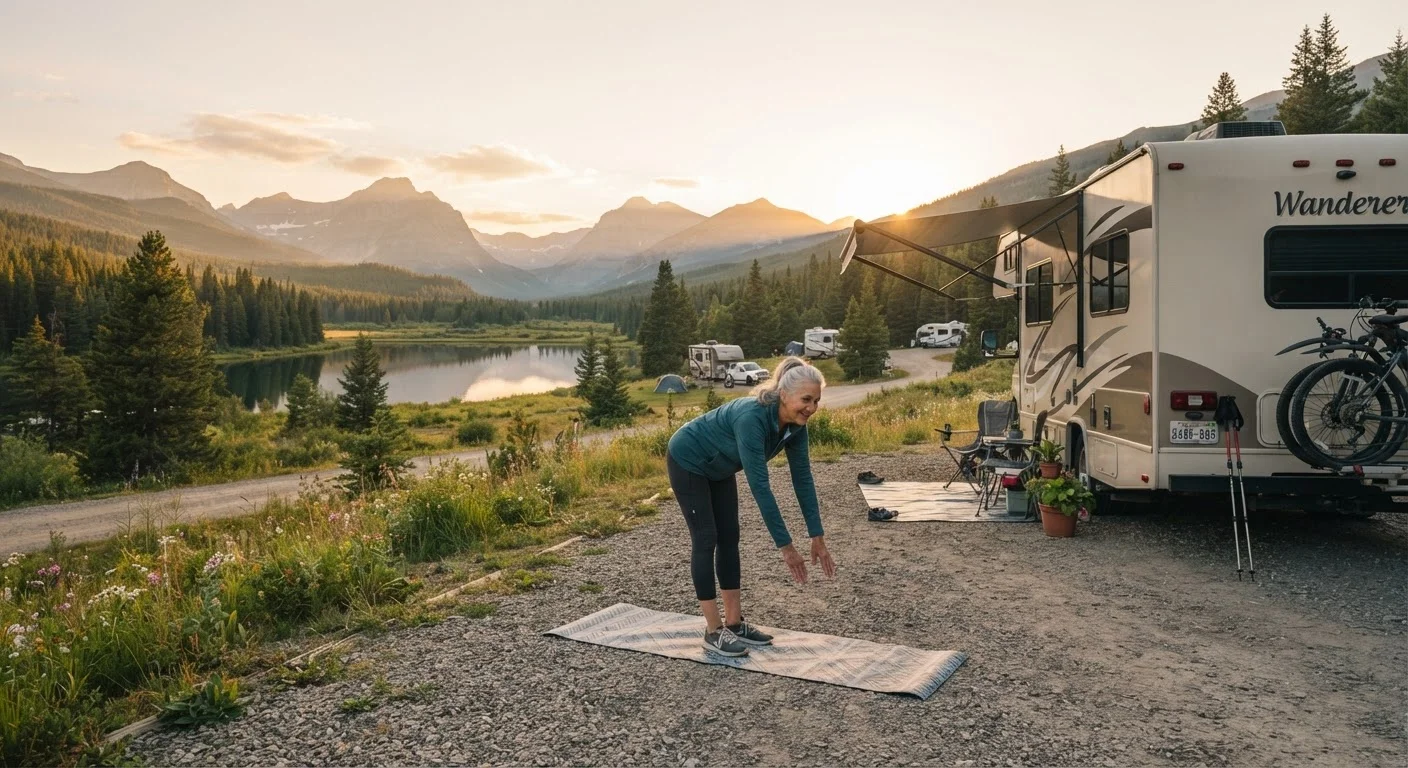
Photo: MyUrbanEscapes.net | Small Escapes. Big Experiences. editorial
—— In This Article
Key Takeaways
- Short, consistent movement sessions are more effective and safer than occasional intense activity for senior RVers.
- Campground walks, seated stretches, and gentle resistance exercises require no equipment and fit any schedule.
- Listening to your body and adjusting activity based on heat, terrain, and fatigue helps prevent injury.
- Consulting your healthcare provider before establishing a new exercise routine while traveling is essential.
Why Staying Active Matters More on the Road
Long drives are one of the great pleasures of RV travel — but sitting for hours at a time takes a real physical toll. Prolonged sedentary periods can contribute to stiffness, circulation problems, and increased joint discomfort, issues that tend to be more pronounced for older travelers. The good news is that modest, consistent movement throughout the day can meaningfully offset these effects.
This isn't about fitness goals or performance benchmarks. It's about maintaining the mobility and energy you need to actually enjoy your trip — exploring a state park trail, walking a local farmers market, or simply stepping outside to take in the view. For more on how aging shapes RV travel overall, see our guide to RV travel after 60.
150 min
Recommended weekly moderate activity for adults
The U.S. Department of Health and Human Services Physical Activity Guidelines for Americans recommend at least 150 minutes of moderate-intensity aerobic activity per week for adults, including older adults.
28%
Reduced fall risk with regular balance and strength exercise
Research reviewed by the Centers for Disease Control and Prevention suggests that structured exercise programs targeting balance and lower-body strength can reduce older adults' fall risk by roughly 23–28%.
Best Practices for Staying Active Between Drives
The following habits are designed specifically for the rhythms of RV life — adaptable to campground layouts, varying weather, and the physical realities of traveling in your 60s, 70s, and beyond. Always consult your healthcare provider before starting or significantly changing a physical activity routine, especially if you manage any ongoing health conditions.
Stop and move every 90 to 120 minutes during driving days.
Extended sitting restricts circulation, stiffens joints, and increases fatigue. Brief movement breaks help maintain blood flow and reduce the physical cost of long drives. Building stops into your route rather than treating them as delays makes this habit sustainable.
Begin each morning with five to ten minutes of gentle stretching before leaving the RV.
Sleep in a smaller sleeping environment can leave muscles tight and joints stiff, particularly in the lower back, hips, and neck. A short stretching routine before you start the day improves range of motion and reduces the chance of strain during normal camp activities.
Use campground walks as your primary daily exercise.
Most campgrounds offer flat, well-maintained loops that are ideal for low-impact walking. Walking is one of the most effective forms of exercise for older adults — it supports cardiovascular health, joint mobility, and balance without requiring special gear or prior fitness level.
Incorporate seated or standing resistance exercises using your own body weight.
Muscle strength naturally declines with age, and RV travel reduces opportunities for incidental strength-building activity. Simple resistance movements help maintain functional strength for tasks like climbing steps, lifting gear, and maintaining balance on uneven terrain.
Adjust your activity level based on terrain, altitude, and temperature.
Environmental conditions significantly affect how much effort physical activity requires. Higher altitudes reduce oxygen availability; heat increases cardiovascular demand; uneven terrain increases fall risk. Matching your activity intensity to actual conditions — rather than what you planned at home — is an important safety habit.
Quick Wins You Can Start Today
You don't need to overhaul your routine to feel better on the road. These small, immediately actionable steps can reduce stiffness, boost energy, and build a sustainable movement habit — one stop at a time.
Pair Movement With Something You Enjoy
Tying your walks or stretches to something you already look forward to — morning coffee, a sunset, or exploring a new campground — makes the habit stick. You're far more likely to move consistently when it feels like part of the experience rather than a chore. Even ten minutes of purposeful movement each morning builds a meaningful pattern over a weeks-long trip.
Knowing When to Scale Back
One of the most important skills for active senior travelers is recognizing when your body is asking for rest rather than movement. Fatigue after a long drive, soreness from an unfamiliar terrain, or exercising in unexpected heat are all signals to adjust — not push through. Overexertion is a genuine risk, not a sign of weakness to ignore.
Pay attention to how heat affects your capacity for movement. Hot and humid conditions reduce your tolerance for exertion more quickly than most people expect. Our article on staying comfortable in warm weather covers practical precautions in detail.
If you manage a chronic condition such as arthritis, heart disease, or diabetes, physical activity on the road requires additional planning. The guide to managing chronic conditions on the road offers condition-specific guidance to help you stay safe. More broadly, the safety while traveling hub is a useful reference for senior travelers navigating physical activity decisions away from home.
Exercise and Chronic Conditions: Plan Ahead
If you're managing a condition such as heart disease, diabetes, or osteoarthritis, physical activity on the road requires some advance planning. Discuss your travel exercise intentions with your healthcare provider before departing. Our guide to RV travel with a chronic condition offers a useful starting framework, but it is not a substitute for individualized medical guidance.
This article provides general health and wellness information for educational purposes only. It is not a substitute for personalized medical advice. Always consult a qualified healthcare professional before starting, modifying, or stopping any exercise routine, particularly if you have existing health conditions.

Rv Travel Editorial Team
RV Travel Editorial Team is the collective byline for our editorial team and contributor network. Articles published under this byline or an editorial pen name are researched, written, and reviewed according to our editorial standards for clarity, consistency, and independence before publication.
View author profile