
Choosing Between a Class A, Class B, and Class C Motorhome
Understand the real differences between motorhome classes and how each one suits different senior lifestyles, budgets, and driving comfort levels.
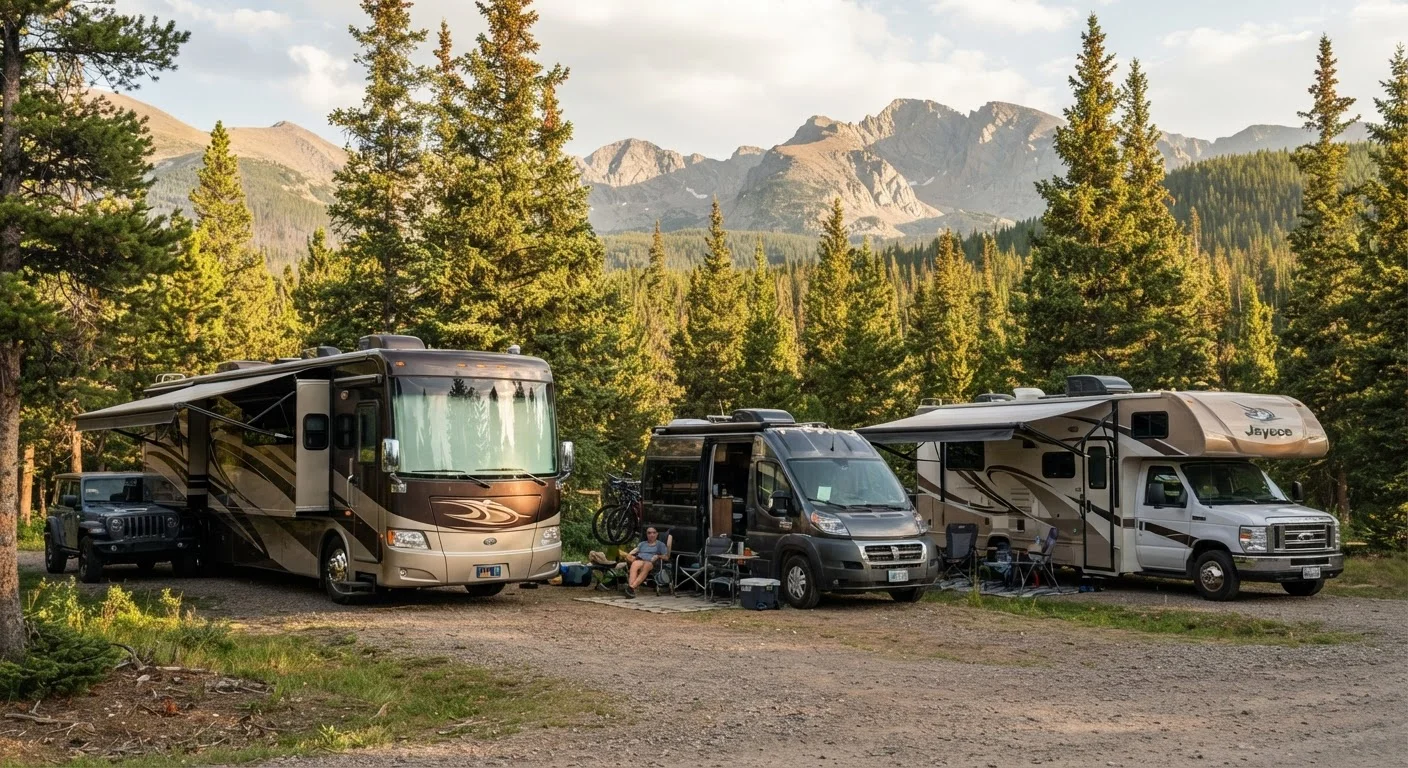
Photo: MyUrbanEscapes.net | Small Escapes. Big Experiences. editorial
—— In This Article
Key Takeaways
- Class A motorhomes offer the most living space but require more driving confidence and maneuvering skill.
- Class B campervans are the easiest to drive and park, making them well-suited for solo seniors or couples.
- Class C motorhomes strike a middle ground with generous sleeping space and a familiar truck-cab feel.
- Driving comfort, campground accessibility, and physical ease of setup should guide your class decision.
- No single motorhome class suits every senior traveler — lifestyle and trip style matter most.
What Sets Each Motorhome Class Apart
Motorhomes are grouped into three main classes — A, B, and C — based primarily on their chassis type, size, and interior layout. For senior travelers, these differences translate directly into how comfortable, confident, and capable you'll feel on the road.
Class A motorhomes are the largest, typically ranging from 26 to 45 feet. They're built on a dedicated bus or commercial truck chassis and offer hotel-like amenities: full kitchens, residential-style bathrooms, multiple slide-outs, and generous storage. They're ideal for extended or full-time travel but demand practice and comfort with large-vehicle driving.
Class B motorhomes — also called campervans — are compact, usually 18 to 24 feet long, built on a standard cargo van chassis. They're the easiest to drive, park in regular spaces, and navigate through city streets or national park roads. Trade-offs include limited sleeping arrangements and tighter living quarters.
Class C motorhomes fall between the two. Built on a truck or van cutaway chassis, they typically run 20 to 33 feet and are recognizable by the over-cab sleeping area. They handle like a large truck — manageable for most seniors without prior RV experience — while offering significantly more living space than a Class B.
For a broader look at how these classes compare specifically for older adults, see this practical size comparison guide covering maneuverability and ease of use.
| Class A | Class B | Class C | |
|---|---|---|---|
| Typical Length | 26–45 feet | 18–24 feet | 20–33 feet |
| Driving Difficulty | High — requires practice | Low — drives like a van | Moderate — truck-cab feel |
| Interior Living Space | Spacious, apartment-like | Compact, efficient | Mid-range, functional |
| Entry Accessibility | Multiple steps required | Low or single step | Multiple steps required |
| Fuel Economy | 7–10 MPG (diesel) | 18–24 MPG (gas) | 10–16 MPG (gas) |
| Best Trip Style | Extended or full-time | Short trips, urban travel | Weekend to extended trips |
| Parking & Campsite Fit | Requires larger pull-through sites | Fits almost anywhere | Fits most standard sites |
Driving Comfort and Physical Demands
Driving comfort is one of the most consequential factors for senior RVers, and it varies considerably across the three classes.
Class A vehicles sit high off the ground with a wide, flat front — some drivers find the visibility excellent, while others feel unsettled without a traditional hood in view. Turning radius and highway lane changes require deliberate attention. These rigs are also the heaviest, meaning braking distances are longer.
Class C motorhomes use a cab-over design that many seniors find intuitive, especially those accustomed to driving pickup trucks or large vans. Backup cameras are standard on most models, and the chassis dimensions are more predictable than Class A.
Class B vans drive closest to a standard passenger vehicle — you sit in a normal driver's seat, use regular mirrors, and can park in most commercial lots without issue. For seniors managing joint stiffness or fatigue, the lower stress of driving a Class B often outweighs the space trade-off.
Take a Driving Course Before You Commit
Many RV dealers and campground associations offer driving clinics specifically for first-time motorhome owners. Spending a few hours in a rented Class C or Class A before purchasing can clarify which size you're genuinely comfortable handling. This is especially useful for seniors returning to RV travel after a long break.
If mobility behind the wheel is a concern, driving adaptations for seniors with reduced mobility covers seat adjustments, steering aids, and route strategies worth exploring before you commit to a class.
Living Space, Accessibility, and Daily Comfort
Day-to-day livability differs sharply across classes, especially for seniors who spend more time stationary at a campsite.
Class A interiors feel closer to a small apartment, with room to move, full-height ceilings, and layouts that can accommodate walkers, wider aisles, and accessible bathroom designs. Slide-outs dramatically expand floor space when parked. However, entry typically requires climbing several steps, which may not suit everyone.
Class C units offer practical sleeping capacity — the over-cab bunk is popular with grandchildren on family trips — but interior headroom and floor space fall short of Class A. Entry steps are similar in number to Class A, though some models offer lower first-step heights.
Class B campervans are the most limiting in terms of interior space, but many newer models are thoughtfully designed with convertible furniture, wet baths, and efficient storage. Entry is often a single step or none, making them more accessible for those with knee or hip concerns.
Whatever class you choose, understanding campground infrastructure matters. Full-hookup camping options can significantly improve comfort, especially for longer stays.
Cost, Maintenance, and Practical Logistics
Budget and ongoing costs deserve careful consideration beyond the initial purchase or rental price.
Class A motorhomes carry the highest upfront cost and typically the highest fuel consumption — diesel pushers can average 7–10 miles per gallon. Maintenance, tire replacement, and storage fees reflect their size. That said, for full-time or extended travelers, the per-day cost of living on the road can compare favorably to other options.
Class C motorhomes sit in a mid-range cost bracket. They're generally less expensive to purchase and insure than Class A, and fuel economy tends to be modestly better. They're also easier to find at RV rental outlets if you'd like to try before buying.
Class B vans carry lower fuel costs and are simpler to maintain, given their standard van chassis. Insurance is often lower, and storing them at home in a driveway or garage is far more practical than storing a 35-foot coach.
~1M
Americans live in RVs full-time
Industry estimates suggest around one million Americans live in RVs full-time, a figure that has grown steadily alongside the popularity of extended travel retirement.
55+
Age group driving RV ownership growth
According to the RV Industry Association, adults aged 55 and older represent one of the fastest-growing segments of RV ownership in the United States.
If you're weighing a motorhome against the option of towing a separate trailer, this comparison of towing vs. driving a motorhome lays out what each approach means for setup effort and day-to-day logistics. And if you're new to the RV lifestyle altogether, common myths about senior RV travel can help set realistic expectations before you hit the road.

Rv Travel Editorial Team
RV Travel Editorial Team is the collective byline for our editorial team and contributor network. Articles published under this byline or an editorial pen name are researched, written, and reviewed according to our editorial standards for clarity, consistency, and independence before publication.
View author profile