
Slow Travel by RV: The Case for Fewer Miles and Longer Stays
Explore the growing approach of spending more time in fewer places — and why a slower RV pace often suits senior travelers best.
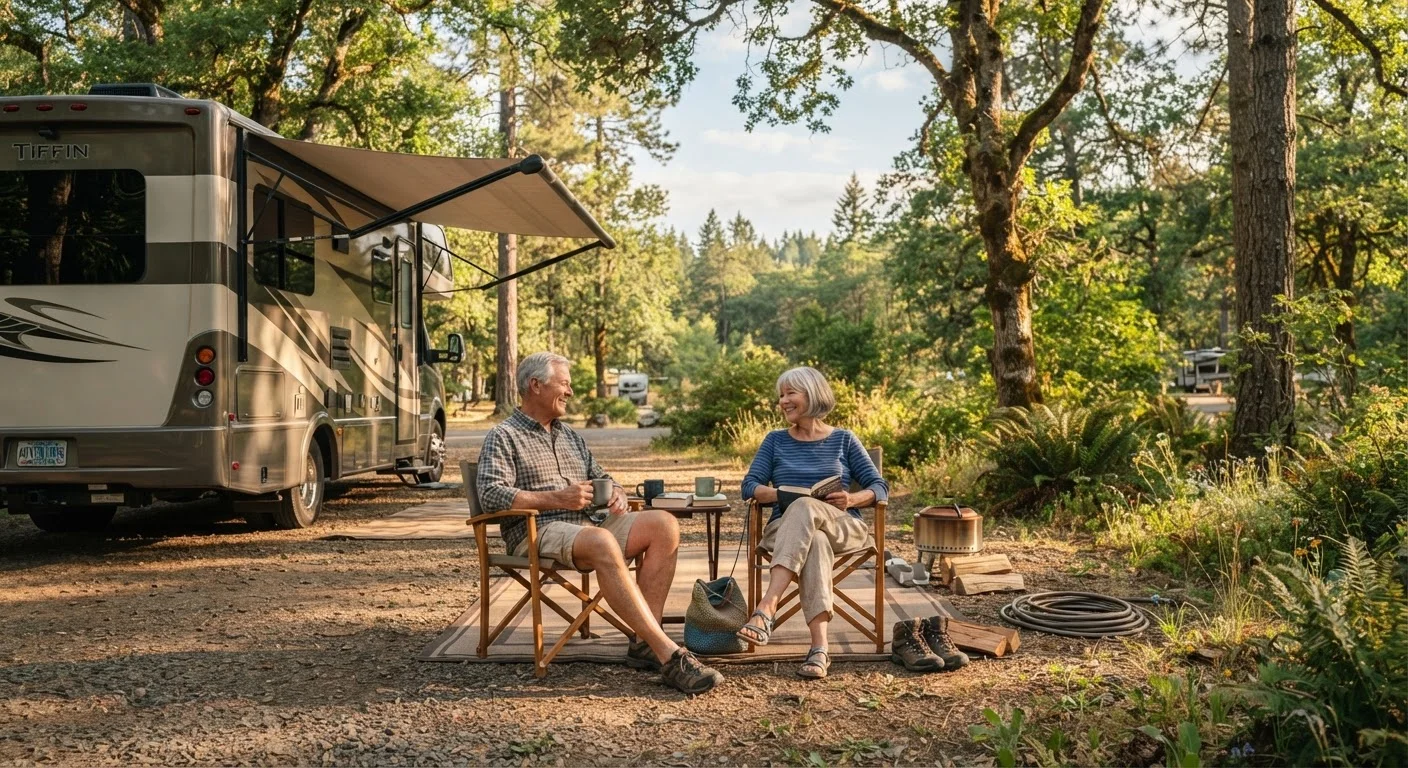
Photo: MyUrbanEscapes.net | Small Escapes. Big Experiences. editorial
—— In This Article
Key Takeaways
- Slow RV travel means spending more days in fewer locations rather than pushing miles daily.
- Longer stays reduce driving fatigue and setup frequency — two key stress points for senior RVers.
- Extended stays often lower daily costs through weekly or monthly campsite rates.
- The approach trades breadth of destinations for depth of experience at each location.
- Physical energy and health management become easier when itineraries aren't packed tight.
Significantly reduces driving fatigue between stops
Long driving days are a leading source of exhaustion for senior RVers. Staying in one place for a week or more means far fewer hours behind the wheel and more energy for actually enjoying a destination.
Lowers daily campsite costs through extended rates
Most campgrounds offer weekly and monthly rates that represent meaningful savings over nightly pricing. For RVers on a fixed income, this makes the travel budget more predictable and sustainable.
Reduces physical strain of repeated setup and breakdown
Leveling, running hookups, deploying slides and awnings, and reversing all of that on departure takes real effort. Doing it every night versus once a week is a substantial difference in cumulative physical demand.
Easier to maintain health routines and medical access
Staying in one area allows seniors to keep medical appointments, fill prescriptions locally, and establish a reliable daily routine — all of which become harder when the campground changes every two nights.
Deeper connection to each place visited
A week in one location gives time to explore beyond the obvious — local trails, farmers markets, diners, and community events that a one-night visitor would never discover.
Covers fewer destinations per trip
Extended stays inevitably mean fewer places visited overall. For travelers with long bucket lists or limited travel windows, this geographic trade-off can feel like a real constraint.
Less flexibility to chase favorable weather
Committing to a two-week site means riding out any unexpected weather rather than repositioning. This requires more acceptance of conditions and better contingency planning.
Social spontaneity can decrease at fixed sites
The casual campground connections that come with nightly movement — meeting neighbors at a new site each evening — happen less naturally when you're settled in one spot for an extended period.
Booking popular sites well in advance is essential
Securing week-long or monthly spots at well-located campgrounds during peak seasons requires earlier reservations than nightly stays, which limits last-minute flexibility.
What Slow RV Travel Actually Means
Slow RV travel isn't a formal program or a specific mileage rule — it's a philosophy that prioritizes depth over distance. Rather than moving to a new campground every one or two nights, slow travelers stay in a single location for several days, a full week, or even a month at a time before relocating. The rig becomes a genuine base camp rather than a vehicle perpetually in transit.
For senior RVers especially, this shift in thinking can change the entire character of a trip. RV travel after 60 involves real physical adjustments, and a slower pace aligns naturally with the need to manage energy, maintain health routines, and avoid accumulated road fatigue. Staying put also creates space to actually explore a region — its back roads, local markets, walking trails, and communities — rather than glimpsing it through a windshield.
The contrast with traditional RV touring is stark. A traveler covering 200 miles a day to reach a new stop every other night might see a dozen states in three weeks. A slow traveler might see three states in the same time — but know each one far better.
The Advantages of Fewer Miles
Significantly reduces driving fatigue between stops
Long driving days are a leading source of exhaustion for senior RVers. Staying in one place for a week or more means far fewer hours behind the wheel and more energy for actually enjoying a destination.
Lowers daily campsite costs through extended rates
Most campgrounds offer weekly and monthly rates that represent meaningful savings over nightly pricing. For RVers on a fixed income, this makes the travel budget more predictable and sustainable.
Reduces physical strain of repeated setup and breakdown
Leveling, running hookups, deploying slides and awnings, and reversing all of that on departure takes real effort. Doing it every night versus once a week is a substantial difference in cumulative physical demand.
Easier to maintain health routines and medical access
Staying in one area allows seniors to keep medical appointments, fill prescriptions locally, and establish a reliable daily routine — all of which become harder when the campground changes every two nights.
Deeper connection to each place visited
A week in one location gives time to explore beyond the obvious — local trails, farmers markets, diners, and community events that a one-night visitor would never discover.
The benefits of slowing down compound quickly. Campground setup and breakdown — leveling, hookups, slide-outs, awnings — takes real physical effort. Doing that every day or two adds up in ways that aren't always obvious until fatigue sets in. Weekly or monthly rates at campgrounds frequently reduce daily costs by 20–40% compared to nightly pricing, which matters on a fixed income. Budget-conscious trip planning becomes significantly easier when you're not recalculating a moving cost every night.
Slower travel also helps with practical logistics: finding reliable healthcare access, filling prescriptions, and maintaining medical appointments are all easier when you stay in one area longer. Some US regions are especially well-suited to this unhurried approach, offering manageable terrain, accessible services, and scenic rewards that reveal themselves gradually rather than all at once.
The Real Trade-Offs to Consider
Covers fewer destinations per trip
Extended stays inevitably mean fewer places visited overall. For travelers with long bucket lists or limited travel windows, this geographic trade-off can feel like a real constraint.
Less flexibility to chase favorable weather
Committing to a two-week site means riding out any unexpected weather rather than repositioning. This requires more acceptance of conditions and better contingency planning.
Social spontaneity can decrease at fixed sites
The casual campground connections that come with nightly movement — meeting neighbors at a new site each evening — happen less naturally when you're settled in one spot for an extended period.
Booking popular sites well in advance is essential
Securing week-long or monthly spots at well-located campgrounds during peak seasons requires earlier reservations than nightly stays, which limits last-minute flexibility.
No travel style is without compromise. Slow travel means accepting a smaller geographic footprint per trip. If your list of must-see places is long and your available travel seasons are short, staying ten nights in one spot will inevitably mean skipping others. For some seniors, that trade-off feels frustrating rather than freeing.
There's also a social dimension worth considering. Solo senior RVers in particular may find that extended stays in a single location require more intentional effort to connect with fellow travelers or locals — the spontaneous campground conversations that come with constant movement happen less naturally when you're settled in.
Weather and Seasonal Timing Matter
Committing to a longer stay in one location increases exposure to that area's weather variability. Researching seasonal patterns for your chosen region before booking can prevent unpleasant surprises. Flexible cancellation policies, where available, offer a useful safety net when committing to extended reservations.
Weather dependency is another variable. Committing to a longer stay means you're less able to chase good weather across regions. Booking a two-week site in a location that turns rainy or unseasonably cold requires more flexibility and backup planning than a one-night stop would.
Planning a Slow-Travel Itinerary That Works
A practical slow-travel itinerary starts with honest self-assessment. How many driving days per week feel sustainable? What's your minimum comfort threshold for campground amenities? Are there medical or pharmacy needs that require staying within a certain distance of services?
Once those parameters are clear, select two or three anchor locations per month rather than plotting a point-to-point route. Choose campgrounds with weekly or monthly rates, full hookups, and proximity to a town large enough to handle most practical needs. Leave at least one or two unplanned days per week — the exploratory drives and unhurried mornings that define slow travel rarely happen when every day is scheduled.
For those drawn to warmth and extended stays, slow travel in warm climates offers a particularly well-matched template. Regions with mild winters allow multi-week stays without the pressure of beating weather windows, and affordable campground options are often more plentiful in these areas.
30–40%
Typical savings with weekly vs. nightly campsite rates
Many US campgrounds offer discounted weekly rates in this range, though actual savings vary by location, season, and amenity level.
~2 hours
Recommended maximum daily driving time for senior RVers
Many experienced senior RV travelers and travel health professionals suggest limiting daily driving to around two hours to manage fatigue effectively.
Finally, resist the instinct to overload the itinerary just because you have more time. The goal is fewer decisions per day, not more activities squeezed into a longer stay. That mental decompression — unhurried mornings, no agenda for the afternoon — is often what senior travelers say they value most about the slow approach.

Rv Travel Editorial Team
RV Travel Editorial Team is the collective byline for our editorial team and contributor network. Articles published under this byline or an editorial pen name are researched, written, and reviewed according to our editorial standards for clarity, consistency, and independence before publication.
View author profile