
Traveling with Prescription Medications: Rules, Storage, and Documentation
What seniors need to know about carrying medications across borders, keeping them stored safely, and having the right paperwork on hand.
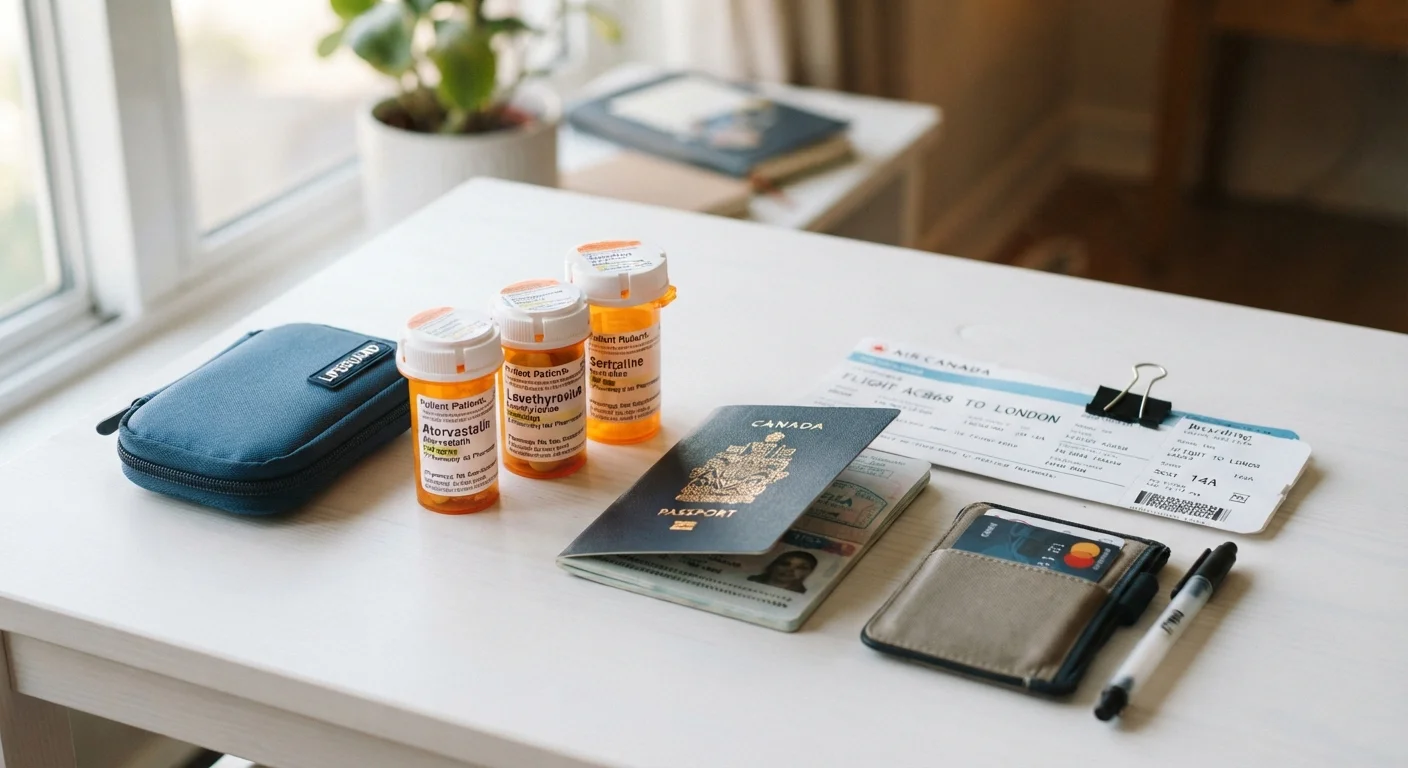
Photo: MyUrbanEscapes.net | Small Escapes. Big Experiences. editorial
—— In This Article
What to Know Before You Pack
Traveling with prescription medications is manageable with a little advance preparation. The three areas that matter most are documentation, storage conditions, and customs or border rules — each of which can vary depending on where you're going and how you're traveling.
| Recommended supply to carry | Full trip supply plus a buffer of several extra days |
| Where to keep medications during flights | Carry-on bag, not checked luggage (TSA and major travel health guidelines) |
| Controlled substance verification | Check destination country's embassy or U.S. Embassy website |
| Documentation recommended | Physician letter, labeled bottles, prescription copies |
| Safe room temperature range (general) | 59°F–77°F (15°C–25°C) for most oral medications (Check individual medication labeling for specifics) |
| Copies of documentation | Keep one on your person, one stored separately |
Start by checking whether any of your medications are considered controlled substances in your destination country. A drug legally prescribed in the United States may be restricted or outright prohibited abroad. The U.S. Embassy website for your destination, or the destination country's embassy in Washington, D.C., can provide this information. Always verify entry requirements through official government sources before you travel, as rules change.
For domestic trips — including long RV journeys — regulations are less complex, but storage and supply planning still deserve attention. See our guide to managing medications on a long RV trip for state-by-state supply tips.
This article provides general travel information only and is not medical or legal advice. Consult your healthcare provider and verify all requirements with official government sources before traveling.
Documentation: What to Carry and Where to Keep It
Having the right paperwork can prevent delays at customs and help you get care quickly in an emergency. At minimum, carry the following for each prescription medication:
- Original labeled pharmacy containers — Labels show your name, prescriber, drug name, and dosage, which border agents and foreign pharmacies may need to verify.
- A letter from your prescribing physician — This should list each medication by generic and brand name, the condition being treated, and your dosage. Written on letterhead and dated, it adds important credibility.
- Copies of the actual prescriptions — Useful if you need to refill abroad or if medications are lost or confiscated.
Keep one complete copy of this documentation on your person and a second copy stored separately — for example, in checked luggage or a travel companion's bag. Our article on which documents to keep on your person vs. in your luggage explains how to split important paperwork to reduce risk.
For a broader look at organizing your health records for travel, see carrying your medical history abroad.
Controlled substance
A drug regulated under federal or international law due to its potential for dependence or misuse. Some medications legally prescribed in the U.S. are classified as controlled in other countries and may require special permits or be prohibited entirely.
Generic name
The standardized chemical name for a medication's active ingredient, as opposed to a brand name. Using the generic name on documentation helps foreign healthcare providers and customs agents identify a drug regardless of regional brand names.
Physician's travel letter
A signed, dated letter from a prescribing doctor that lists a patient's medications, conditions, and dosages. It is used to verify medical necessity at customs or when seeking care abroad.
Temperature excursion
A period during which a medication is stored outside its recommended temperature range. Even brief excursions can reduce effectiveness for some drugs, particularly biologics and insulin.
Storage: Keeping Medications Safe During Transit
Improper storage can render medications ineffective or even harmful. Temperature, light, and humidity are the main risks during travel.
Refrigerated Medications Need Extra Planning
Insulin, certain biologics, and some eye drops require continuous refrigeration. Before you travel, ask your pharmacist exactly how long your specific medication can safely remain at room temperature during transit. Airlines and cruise lines may offer refrigeration options — contact them in advance to understand what's available and whether a medical note is needed.
- Carry medications in your carry-on bag, not checked luggage. Cargo holds can experience extreme temperatures, and lost luggage can leave you without critical medications.
- Know the storage requirements for each medication. Many can tolerate room temperature (59°F–77°F) for short periods; insulin and certain biologics require refrigeration and may need an insulated travel case with ice packs.
- Avoid leaving medications in a car, especially in hot or cold weather. A locked glove box in summer heat can easily exceed safe storage temperatures.
- Use a pill organizer carefully — while convenient, weekly organizers remove medications from their original labeled containers. Consider keeping at least a small supply in original bottles for identification purposes at borders.
If you're cruising, storage aboard ship brings additional considerations around declaration and ship medical center access. Our cruise medication packing guide covers those specifics.
For a full pre-departure checklist approach, our article on medication management before leaving walks through supply planning, refill timing, and pharmacy contacts step by step.

Senior Trip Planning Editorial Team
Senior Trip Planning Editorial Team is the collective byline for our editorial team and contributor network. Articles published under this byline or an editorial pen name are researched, written, and reviewed according to our editorial standards for clarity, consistency, and independence before publication.
View author profile