
Medication Management on the Road: What Seniors Need to Sort Before Leaving
Running out of medication abroad is more common than it should be. Seniors can avoid it with straightforward preparation steps before departure.
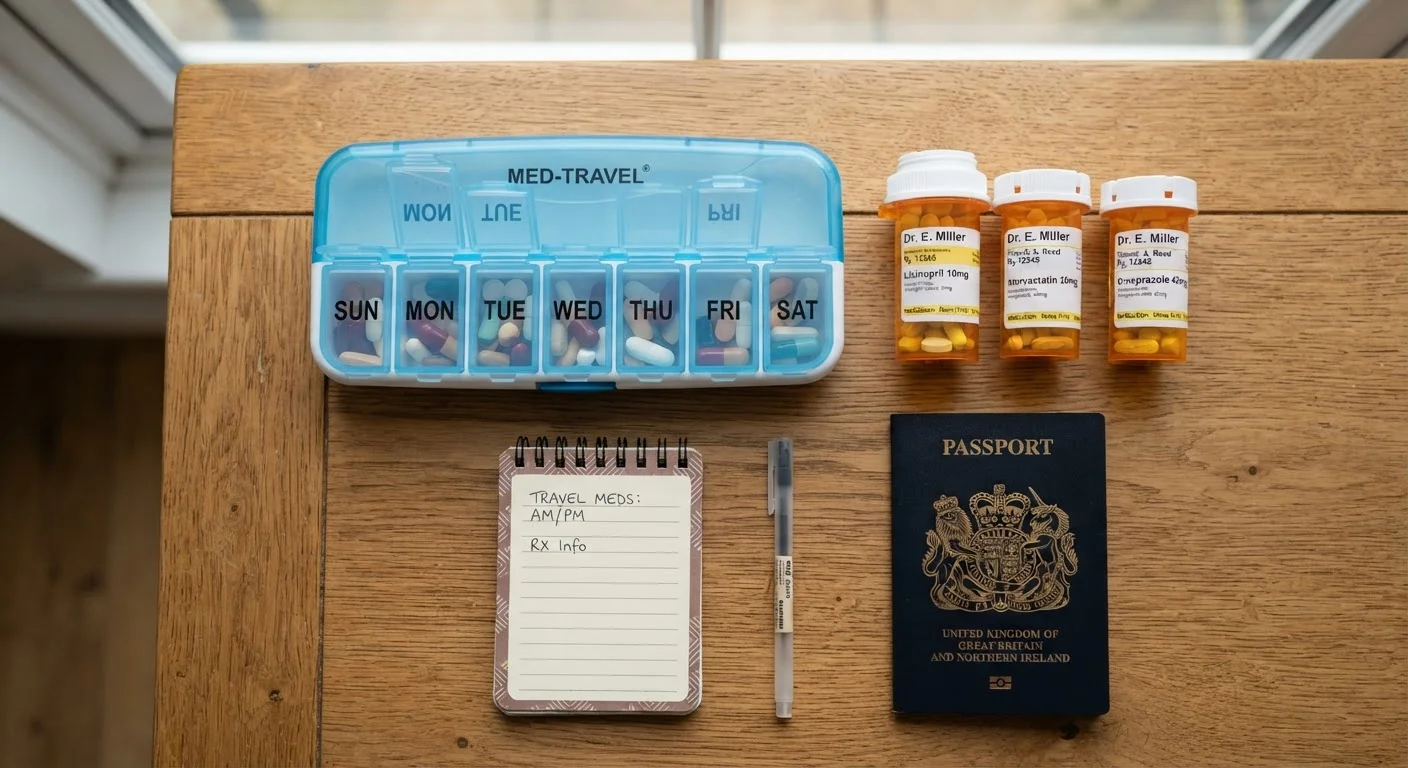
Photo: MyUrbanEscapes.net | Small Escapes. Big Experiences. editorial
—— In This Article
Key Takeaways
- Request prescription refills at least two weeks before departure to avoid supply shortfalls.
- Carry medications in original labeled containers to ease airport security and customs checks.
- A written medication list kept separately from your pills is essential for emergencies.
- Confirm whether your destination pharmacy can fill your specific prescriptions in advance.
- Consult your prescribing doctor before travel — some medications require timing or dosage adjustments.
Why Medication Preparation Deserves Its Own Checklist
Running short on a critical medication while traveling — whether across state lines or overseas — is one of the most preventable travel health crises seniors face. Yet it remains surprisingly common. The reasons are consistent: rushed packing, underestimated trip lengths, and the assumption that a pharmacy will always be nearby and able to help.
That assumption breaks down quickly in rural destinations, on cruise ships far from port, or in countries where your specific drug formulation isn't available. The good news is that with structured preparation, nearly every medication-related travel emergency can be anticipated and avoided. This checklist focuses on the steps that need to happen before you leave — not en route, and not when something goes wrong.
For guidance on what to do once you're already on the road, see our complete guide to traveling with medications, which covers storage, documentation, and emergency access in detail.
Supply and Refill Preparation
Documentation and Records
Packing and Storage Planning
Medical Consultations Before Departure
Emergency and Backup Planning
Tools and Resources to Have Ready
Before working through the checklist, gather the resources below. Having these on hand will make every subsequent step faster and more accurate.
Current prescription bottles
Needed to verify exact drug names, dosages, and prescription dates when creating your medication list and requesting refills.
Insulated medication travel case
Required for any medications that must be kept within specific temperature ranges, including many injectables and biologics.
Secure cloud storage or password-protected notes app
Stores digital copies of prescription labels, physician letters, and medication lists accessible from anywhere.
Pill organizer with labeled compartments
Simplifies daily medication routines and reduces the risk of missed or doubled doses while traveling.
Travel insurance policy documents
Needed to confirm emergency medication and medical care coverage before departure.
If you're planning an RV trip specifically, the logistics of medication storage and multi-state pharmacy access involve a distinct set of challenges — our guide to managing medications on a long RV trip addresses those directly.
Controlled Substances Require Extra Steps
Medications classified as controlled substances — including certain pain relievers, sleep aids, and anxiety medications — carry strict regulations that vary significantly by country and sometimes by state. Carrying these across international borders without proper documentation can result in confiscation or legal consequences. Always verify the rules for your specific destination through official government or embassy channels before traveling, and carry a physician's letter confirming medical necessity.
Don't Assume a Foreign Pharmacy Can Help Quickly
Even in well-resourced countries, obtaining a prescription-only medication as a foreign visitor often requires a local consultation, which takes time and can be costly. In some destinations, your exact formulation may simply not be stocked. Researching pharmacy access and medication availability at your destination before you leave — rather than assuming you can sort it out on arrival — is strongly recommended.
This article provides general health information for educational purposes only. It is not a substitute for personalized medical advice. Always consult a qualified healthcare professional before making changes to your medications or travel health plan.

Travel Health & Safety Editorial Team
Travel Health & Safety Editorial Team is the collective byline for our editorial team and contributor network. Articles published under this byline or an editorial pen name are researched, written, and reviewed according to our editorial standards for clarity, consistency, and independence before publication.
View author profile