
Traveling with Medications: Rules, Storage, and Emergency Planning
A general overview of how to carry, store, and document medications while traveling, including what to prepare if prescriptions run out abroad.
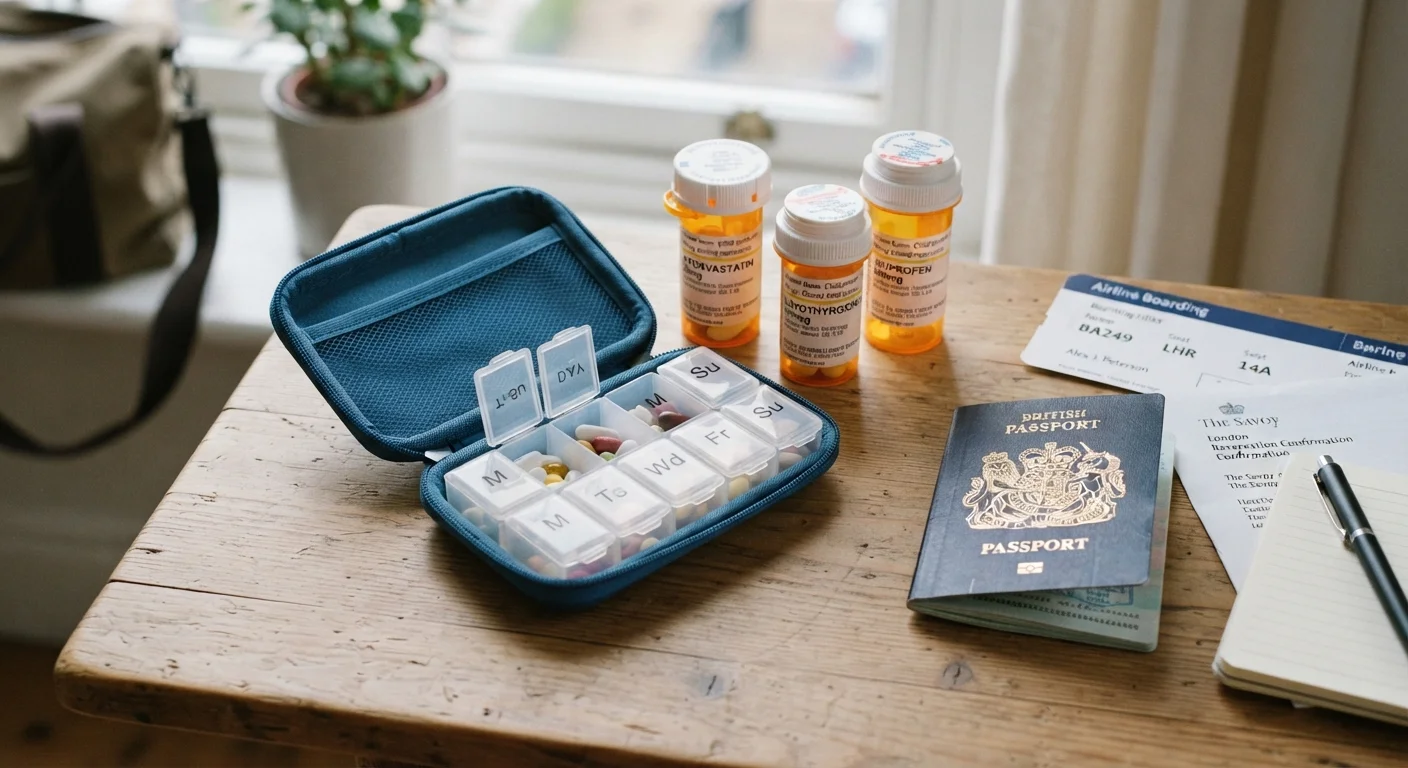
Photo: MyUrbanEscapes.net | Small Escapes. Big Experiences. editorial
—— In This Article
What Travelers Need to Know Before Packing Medications
Carrying medications while traveling — especially across state lines or international borders — requires more preparation than simply tossing bottles into a bag. For senior travelers managing multiple prescriptions, the stakes are higher: a missed dose, a lost supply, or a customs issue can turn a pleasant trip into a stressful situation.
Before departure, confirm that every medication you carry is legal in your destination. Some drugs that are common in the United States are controlled or prohibited in other countries. The U.S. Embassy website and your destination country's embassy can provide guidance, but always verify through official government sources before you travel — rules change, and this article cannot serve as a definitive legal reference.
For international travel, carry a signed letter from your prescribing physician on official letterhead. The letter should list each medication by its generic name, the dosage, and the medical reason for its use. This documentation supports both customs clearance and emergency care abroad. See our guide to medication documentation for a checklist of what to include.
This article provides general informational guidance only and is not medical or legal advice. Always consult your physician and verify entry requirements with official government sources before traveling.
Storage: Keeping Medications Safe and Effective
Medications can degrade when exposed to heat, humidity, or light — conditions that are easy to encounter in checked luggage, hot car trunks, or beach environments. As a general rule, keep all medications in your carry-on bag when flying, never in checked luggage that could be lost or subject to extreme temperatures in cargo holds.
Generic name
The non-brand, chemical name of a drug recognized internationally. Using generic names in documentation helps foreign pharmacists and physicians identify a medication even if the brand name differs by country.
Controlled substance
A drug regulated under specific laws due to potential for misuse or dependency. Travelers carrying controlled substances internationally may face additional customs requirements or outright prohibition depending on the destination.
Cold chain
The temperature-controlled supply process required for certain medications, such as insulin, that must remain refrigerated. Travelers must plan for maintaining cold chain conditions throughout their journey.
Formulary
The list of approved medications covered by a specific insurance plan or available at a particular pharmacy or country. Formularies vary widely, meaning a drug available in the U.S. may not be stocked or permitted abroad.
Temperature-sensitive medications — including many insulin products, some biologics, and certain eye drops — may require insulated cases or small portable coolers. Check the storage requirements printed on each medication label or ask your pharmacist before you leave. For extended road travel, see our tips for managing medications on a long RV trip, which covers storage strategies across multiple climates.
Keep medications in their original pharmacy-labeled containers whenever possible. This aids identification in an emergency and reduces friction at security checkpoints. If a pill organizer is more practical for daily use, carry the original bottles as backup identification alongside it.
Emergency Planning: What to Do If Something Goes Wrong
Even well-prepared travelers can face unexpected situations: a bag is lost, a medication runs out earlier than expected, or a prescription is damaged. Having a plan in place before you leave is far more effective than improvising in a foreign city.
40%+
Adults 65+ managing multiple chronic conditions
According to CDC data, a significant share of older adults take five or more prescription medications — making medication management a central travel planning concern.
1 in 5
International travelers reporting a health issue abroad
Research published in travel medicine literature suggests a notable proportion of travelers experience health problems during international trips, underscoring the value of preparation.
Supply buffer: Request enough medication for your trip plus an additional week's supply. Most physicians and insurers will accommodate this for travel purposes if asked in advance. Never assume you can easily refill a U.S. prescription at a foreign pharmacy — formularies, drug names, and available strengths differ by country.
Emergency contacts: Store your prescribing doctor's contact information and your pharmacy's phone number in your phone and in a written backup. The U.S. embassy or consulate in your destination country can help you locate local medical services. International assistance services included in some travel insurance plans may also help coordinate prescription access — review your policy before departure.
Carry a concise written summary of your medical history and current medications. In a medical emergency, this document may reach a clinician before you can speak for yourself. Our companion article on carrying your medical history abroad explains how to format this clearly and keep it accessible.
For travelers balancing medication needs with lighter packing, our packing guide for senior travelers offers practical strategies for making sure essentials always make it into the bag. Additional health and safety planning resources are available through our Health & Safety hub.

Travel Health & Safety Editorial Team
Travel Health & Safety Editorial Team is the collective byline for our editorial team and contributor network. Articles published under this byline or an editorial pen name are researched, written, and reviewed according to our editorial standards for clarity, consistency, and independence before publication.
View author profile