
Managing Medications on a Long RV Trip
Practical guidance on storing, organizing, and keeping track of prescription medications safely while traveling across multiple states.
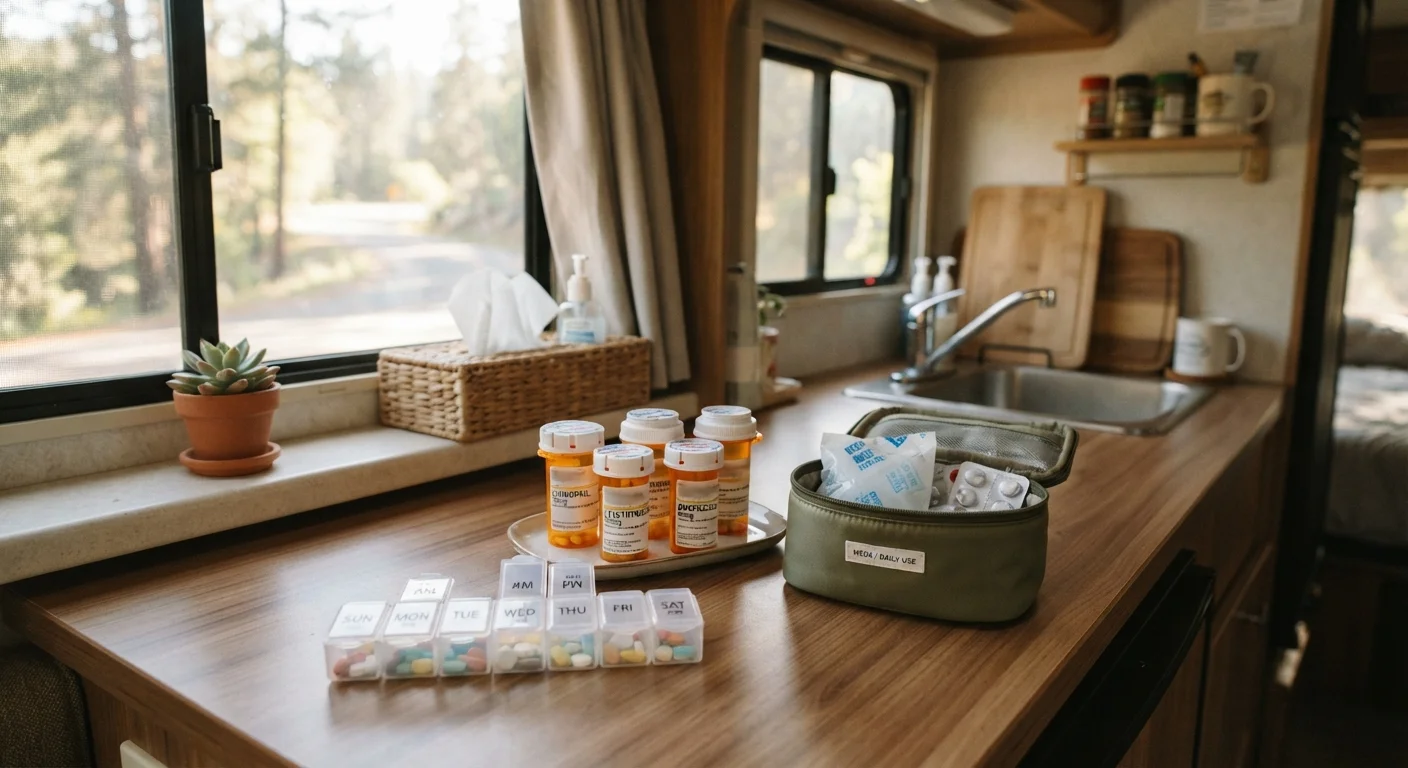
Photo: MyUrbanEscapes.net | Small Escapes. Big Experiences. editorial
—— In This Article
Key Takeaways
- Bring a written medication list and copies of prescriptions before departing on any multi-state RV trip.
- Proper storage temperature matters — many medications are heat-sensitive and can degrade quickly in a warm RV.
- Refill prescriptions early and identify pharmacies along your planned route before you leave home.
- A consistent daily routine reduces missed doses even when your travel schedule shifts unexpectedly.
- Always consult your healthcare provider before a long trip to review medications and plan for emergencies.
Plan Your Supply Before You Roll Out
Running low on a critical medication hundreds of miles from your usual pharmacy is one of the most preventable problems in RV travel — yet it happens regularly. Before departure, confirm that every prescription has enough supply to cover your entire trip plus a buffer of at least seven to ten extra days. Speak with your prescribing physician about your plans; many providers will authorize an early refill or a slightly extended supply for extended travel.
Ask your doctor or pharmacist to print a complete medication list that includes dosages, frequencies, and the prescribing physician's contact information. Carry physical copies and keep a photo on your phone. For more detail on documentation requirements, see our guide on traveling with prescription medications: rules, storage, and documentation.
Ask About 90-Day Supplies Before You Go
Many insurance plans and pharmacy benefit programs allow a 90-day supply for maintenance medications, which reduces the number of mid-trip refills you need to manage. Ask your pharmacist or insurance provider about this option well before your departure date. Your prescribing doctor will typically need to authorize the extended supply, so allow at least two to three weeks for the process.
Safe Storage Inside a Moving RV
Temperature control is the most overlooked medication challenge in RV travel. A parked RV in summer can exceed 130°F inside, which can degrade many common medications — including certain blood pressure drugs, thyroid medications, and insulin. Store temperature-sensitive medications in an insulated pouch or a small travel cooler with a reliable temperature indicator, not in a cabinet above the dashboard or near exterior walls.
Humidity is also a concern. Bathrooms inside RVs accumulate steam, which can compromise pills stored in standard pill bottles. Use an interior cabinet away from the bathroom and kitchen sink for your main medication storage area. A secure, labeled box or drawer prevents items from sliding during travel.
Controlled Substances Have Special Rules
Medications classified as controlled substances — such as certain pain relievers, sleep aids, or anxiety medications — are subject to federal and state regulations that limit how and where they can be refilled. In some states, an out-of-state prescription for a controlled substance cannot be filled at all. Discuss your specific situation with your prescribing physician before a long trip so you have adequate supply and a plan if something goes wrong. For additional context, see traveling with prescription medications: rules, risks, and routines.
Staying on Schedule While on the Move
Time zone changes and irregular daily schedules can disrupt medication timing. A weekly pill organizer with AM/PM compartments is a practical starting point, but pair it with a smartphone alarm or a dedicated medication reminder app set to your home time zone until you've settled into a new zone. If you cross into a different time zone, adjust gradually over a day or two — and consult your pharmacist if precise timing matters for a specific medication.
Build medication review into a fixed moment of your daily routine — morning coffee, an evening walk, or bedtime. Consistency is what reduces missed doses, not complex systems. For broader strategies on staying organized while traveling light, see packing light without leaving behind what you need.
Carry a written medication record at all times during your trip.
In a medical emergency, healthcare providers need an accurate medication list immediately. A written record ensures accuracy even if your phone battery dies or you are unable to speak.
Use an insulated storage solution for any heat-sensitive medications.
Many medications lose potency or become unsafe when exposed to high temperatures, which are common inside parked RVs. Proper storage protects your health and your investment in the medication.
Set daily alarms as reminders tied to a consistent routine anchor.
Travel disrupts normal routines, making missed doses more likely. Linking medication time to an existing habit — like morning coffee — creates a reliable trigger that persists even when your schedule shifts.
Confirm pharmacy access and refill eligibility before crossing state lines.
Some controlled substances have strict interstate refill rules, and not all pharmacies can process out-of-state prescriptions identically. Knowing your options ahead of time prevents a stressful scramble.
Pack medications in your primary living space, not in exterior storage bays.
Exterior bays are exposed to road vibration, moisture, and extreme temperatures. Keeping medications inside the living area maintains a more stable environment and keeps them accessible.
Preparing for Emergencies and Mid-Trip Refills
Before leaving, map pharmacy locations along your intended route. Major pharmacy chains operate across most states and can often transfer a prescription or work with your home pharmacy. Keep your insurance card and pharmacy membership details easily accessible in your medication folder.
If you manage a chronic condition, identify urgent care clinics and hospitals along your route as well. A written list of your conditions, allergies, and current medications is invaluable in an emergency when you may not be able to communicate clearly. For a broader framework on what to prepare before departure, our article on medication management on the road covers the key steps in depth.
This article provides general informational guidance only and is not a substitute for advice from your physician or pharmacist. Always consult a qualified healthcare professional regarding your specific medications and medical needs before traveling.

Rv Travel Editorial Team
RV Travel Editorial Team is the collective byline for our editorial team and contributor network. Articles published under this byline or an editorial pen name are researched, written, and reviewed according to our editorial standards for clarity, consistency, and independence before publication.
View author profile