
Packing Light Without Leaving Behind What You Need
Practical strategies for trimming your luggage while ensuring medications, mobility aids, and comfort items always make the bag.
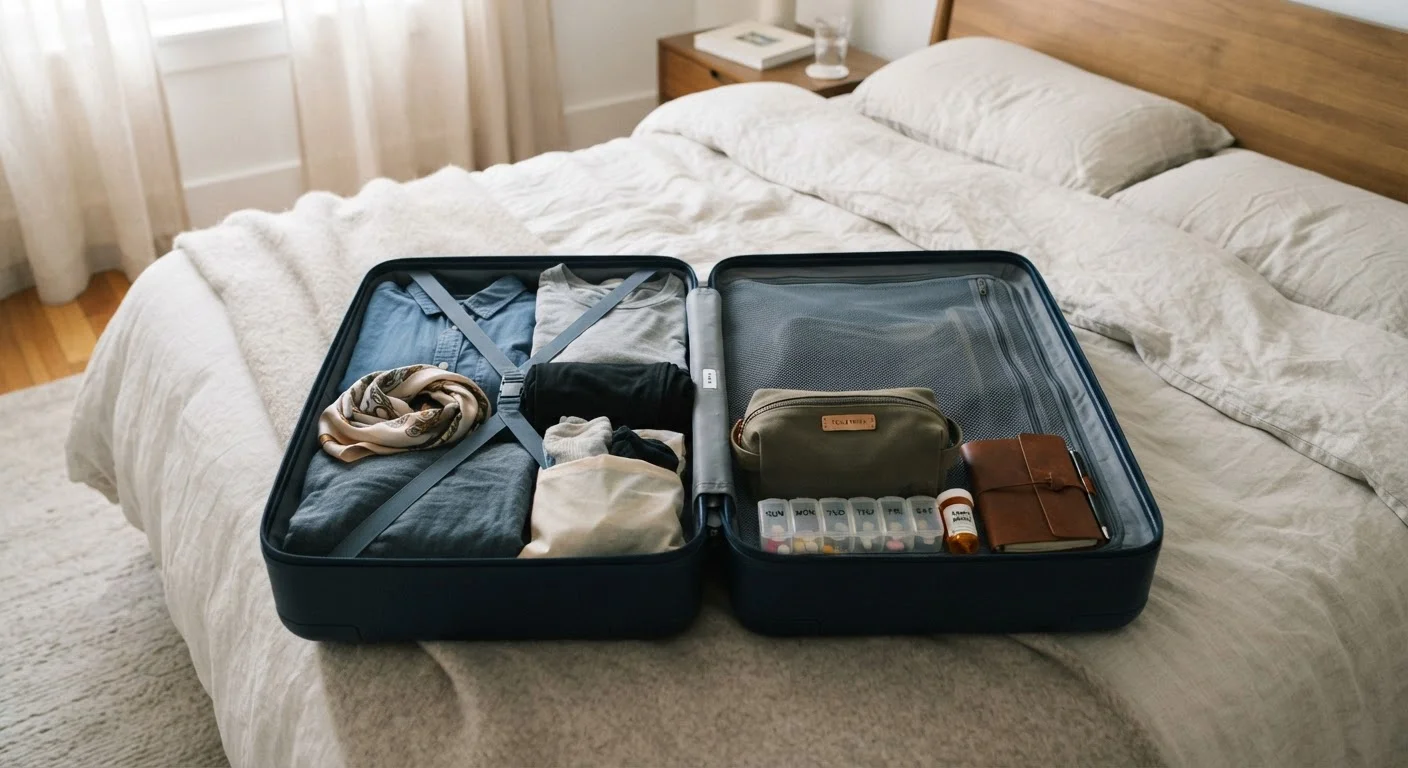
Photo: MyUrbanEscapes.net | Small Escapes. Big Experiences. editorial
—— In This Article
Key Takeaways
- Always pack medications, mobility aids, and health documents in your carry-on, never checked luggage.
- A structured packing list built around your specific health needs prevents costly last-minute oversights.
- Choosing versatile, lightweight clothing reduces bag weight without sacrificing comfort or appropriateness.
- Travel-sized duplicates of daily essentials help trim bulk while keeping your routine intact.
- Shipping items ahead or using destination services can eliminate the need to carry certain bulky gear.
Why Packing Light Matters More as We Get Older
Hauling a heavy suitcase through an airport, cruise terminal, or hotel lobby is genuinely tiring — and for many seniors, it carries real physical risk. Overpacked bags strain backs, limit mobility, and make navigating stairs or uneven pavement considerably harder than it needs to be. Yet packing too little creates its own anxiety: forgetting a critical medication or leaving behind a mobility support item can derail a trip entirely.
The goal isn't minimalism for its own sake. It's intentional packing — bringing exactly what supports your health, comfort, and independence, and leaving behind what doesn't earn its weight. The practices below are designed around that balance, with seniors' specific needs at the center.
The Non-Negotiables: Health Items That Always Come First
Before selecting a single outfit, build your packing list around your health essentials. These items are not candidates for downsizing.
Pack all medications — prescription and over-the-counter — in your carry-on bag, never in checked luggage.
Checked bags can be lost, delayed, or misrouted. If your medications are inaccessible for even one or two days, your health and your trip are both at risk. Keeping them with you at all times eliminates this vulnerability entirely.
Bring a complete, printed medication list with dosages, prescribing physician contacts, and your pharmacy's phone number.
If you need emergency care away from home, medical providers need accurate medication information quickly. A printed list works even when your phone is dead or unavailable. Our medication management guide covers what to include.
Pack a small, dedicated pouch for mobility and comfort aids you use daily.
Items like compression socks, a portable wedge pillow, or a foldable grabber tend to get scattered or forgotten when not organized together. A consistent, designated pouch makes them easy to find and ensures they're never accidentally left behind during hotel checkouts.
Build your packing list at least one week before departure and review it against your specific itinerary.
Last-minute packing leads to both forgetting essentials and overpacking out of anxiety. A list created with time to spare can be revised calmly and checked against your actual planned activities, which prevents both gaps and excess.
Carry copies of key travel and health documents separately from the originals.
Lost passports, insurance cards, or travel insurance documents are significantly easier to replace — and less disruptive — when you have a copy stored separately. Digital copies stored securely on your phone or email add an additional layer of backup.
For those traveling by cruise ship, detailed guidance on organizing and storing prescription medications during embarkation is worth reviewing in advance. See our guide to packing medications for a cruise for specifics. If you're planning an RV road trip instead, our article on managing medications on a long RV trip addresses storage across multiple states.
Clothing and Comfort: Doing More With Less
Clothing is typically the heaviest category in any suitcase, and it's also the most flexible. A few strategic choices dramatically reduce bulk without leaving you underprepared.
Choose items that serve more than one purpose: a lightweight cardigan works as a layer on a chilly excursion and as a cover for a nicer dinner. Neutral colors mix and match easily, reducing how many combinations you actually need. Fabrics that dry quickly allow you to wash and reuse items mid-trip, which cuts the total number of pieces required.
Compression packing cubes can reduce the physical volume of soft items and keep your bag organized so nothing gets buried. Shoes deserve special attention — they're heavy and bulky. Limiting yourself to two pairs (one supportive walking shoe, one that works for evenings or dressier occasions) satisfies most itineraries without overloading your bag.
Smart Strategies for Everything Else
Once health essentials and clothing are planned, apply a simple decision rule to everything else: Would I genuinely miss this, or am I packing it just in case? Most "just in case" items go unused. Items you'd genuinely miss stay.
Travel-sized toiletries and a small refillable bottle for your preferred products cut weight significantly. Many hotels and cruise lines provide basic toiletries; confirming this before you pack can eliminate several items outright. For bulky items like a CPAP machine, a neck pillow, or a folding cane, check whether your airline or cruise line has policies for medical equipment — many carriers do not count certified medical devices against carry-on limits.
Shipping items ahead to your hotel or rental property is a practical option for longer trips. It costs money but can make travel day itself far less stressful. Our safety while traveling hub includes additional considerations for managing your wellbeing during active travel, which can inform what support items belong in your bag.
A Note on Luggage Weight Limits
Most domestic airlines set checked bag weight limits at 50 pounds, but fees for overweight bags can add up quickly. Weighing your bag at home with a handheld luggage scale before you leave takes about 30 seconds and can save you a surprise charge at check-in. If you're traveling internationally, weight limits may differ by carrier, so confirming in advance is worthwhile.
For a framework specifically tailored to RV packing constraints, including weight limits and storage compartment considerations, our RV packing guide for seniors walks through a practical decision process.

Senior Trip Planning Editorial Team
Senior Trip Planning Editorial Team is the collective byline for our editorial team and contributor network. Articles published under this byline or an editorial pen name are researched, written, and reviewed according to our editorial standards for clarity, consistency, and independence before publication.
View author profile