
Packing Smart for Senior RV Travel: What Stays, What Goes
Weight limits, storage constraints, and comfort essentials — a practical packing framework tailored to the needs of senior RV travelers.
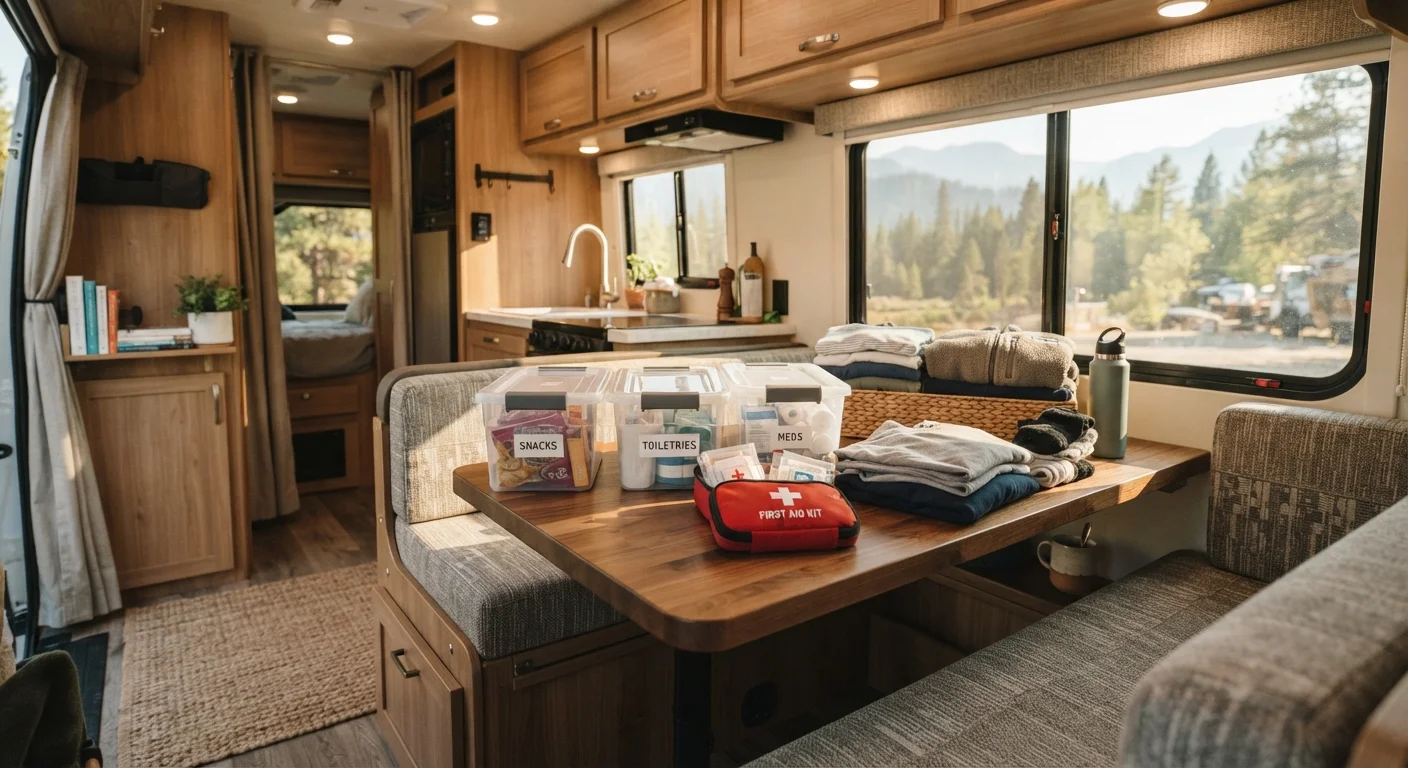
Photo: MyUrbanEscapes.net | Small Escapes. Big Experiences. editorial
—— In This Article
Key Takeaways
- RV weight limits are real safety constraints — exceeding them affects handling, braking, and tire integrity.
- Medications, mobility aids, and comfort items are non-negotiable; everything else competes for limited space.
- Packing light and packing smart are different goals — the right framework helps you achieve both.
- Duplicating household items you can buy on the road adds weight without adding value.
- A one-trip load-in rule — carrying everything in a single trip — is a practical test of whether you've packed too much.
Why Packing Differently Matters in an RV
An RV is not a hotel room on wheels. Every item you load affects the vehicle's gross vehicle weight rating (GVWR), which is the maximum safe operating weight set by the manufacturer. Exceeding it stresses tires, strains the braking system, and can compromise handling — particularly on mountain grades or in crosswinds. For senior travelers, that physical reality has direct safety implications.
Beyond weight, storage space in most RVs is fixed and finite. Cupboards, compartments, and closets fill faster than expected. Items that pile up in walkways or doorways create tripping hazards — a meaningful concern for anyone managing balance or mobility. Planning what comes aboard before you leave the driveway is one of the most practical safety decisions you can make. For a broader look at how travel logistics shift as we age, see our guide to RV travel after 60.
The Non-Negotiables: What Always Makes the Trip
Some items belong on every packing list regardless of trip length or destination. These are the things that, if forgotten, can genuinely disrupt your health, safety, or ability to travel.
Once your non-negotiables are loaded, it becomes clearer how much remaining capacity you actually have — and that's the space where smart decisions matter most.
What to Leave Behind — Even When It Feels Wrong
Most first-time RV packers overestimate how much they'll need and underestimate how cramped an overpacked RV feels after three days. The most common culprits are clothing, kitchen gear, and recreational equipment.
A useful gut-check: if you wouldn't carry an item up three flights of stairs without complaint, reconsider bringing it. The one-trip load-in rule — everything you pack must be carried in a single trip from your vehicle to the RV — is a surprisingly effective filter. For additional guidance on trimming wisely without sacrificing essentials, the packing light without leaving behind what you need article offers complementary strategies.
On Buying Supplies Along the Route
Many experienced RV travelers intentionally start trips with partial pantries and minimal toiletries, resupplying at grocery and general merchandise stores along the way. This approach reduces starting weight and eliminates the stress of packing perishables. It works especially well on routes through towns with accessible store parking — a detail worth confirming when planning your stops. Our article on RV trip logistics covers how to identify resupply points as part of your route plan.
Organizing What Stays for Comfort and Accessibility
Where you store things matters as much as what you store. Items used daily — medications, reading glasses, mobility aids, coffee supplies — belong at arm's reach, not buried at the back of an overhead locker. Heavy items should sit low and centered in the RV to help with weight distribution and stability.
Label storage bins clearly, especially if you share the RV with a travel partner. Assign permanent homes to critical items like your pill organizer, flashlight, and phone charger so they don't migrate during travel days. Good sleep is harder to achieve in a cluttered or poorly organized space — something explored in more depth in our article on sleep quality in an RV.
60%+
Of RV trips involve some form of overloading
Industry safety educators note that weight management is among the most frequently overlooked aspects of recreational vehicle preparation, particularly for first-time users.
3–5 lbs
Typical weight of a single pair of casual shoes
Footwear is one of the heaviest and most over-packed categories; two versatile pairs generally cover the full range of senior RV travel activities.
This article is for general informational purposes only and does not constitute medical or safety advice. Consult a qualified healthcare professional regarding any health-related packing needs, and verify your RV's specific weight ratings with the manufacturer or a certified technician.

Rv Travel Editorial Team
RV Travel Editorial Team is the collective byline for our editorial team and contributor network. Articles published under this byline or an editorial pen name are researched, written, and reviewed according to our editorial standards for clarity, consistency, and independence before publication.
View author profile