
Documents Worth Keeping on Your Person vs. in Your Luggage
A practical breakdown of which travel documents seniors should carry on them versus store separately to reduce risk if bags go missing.
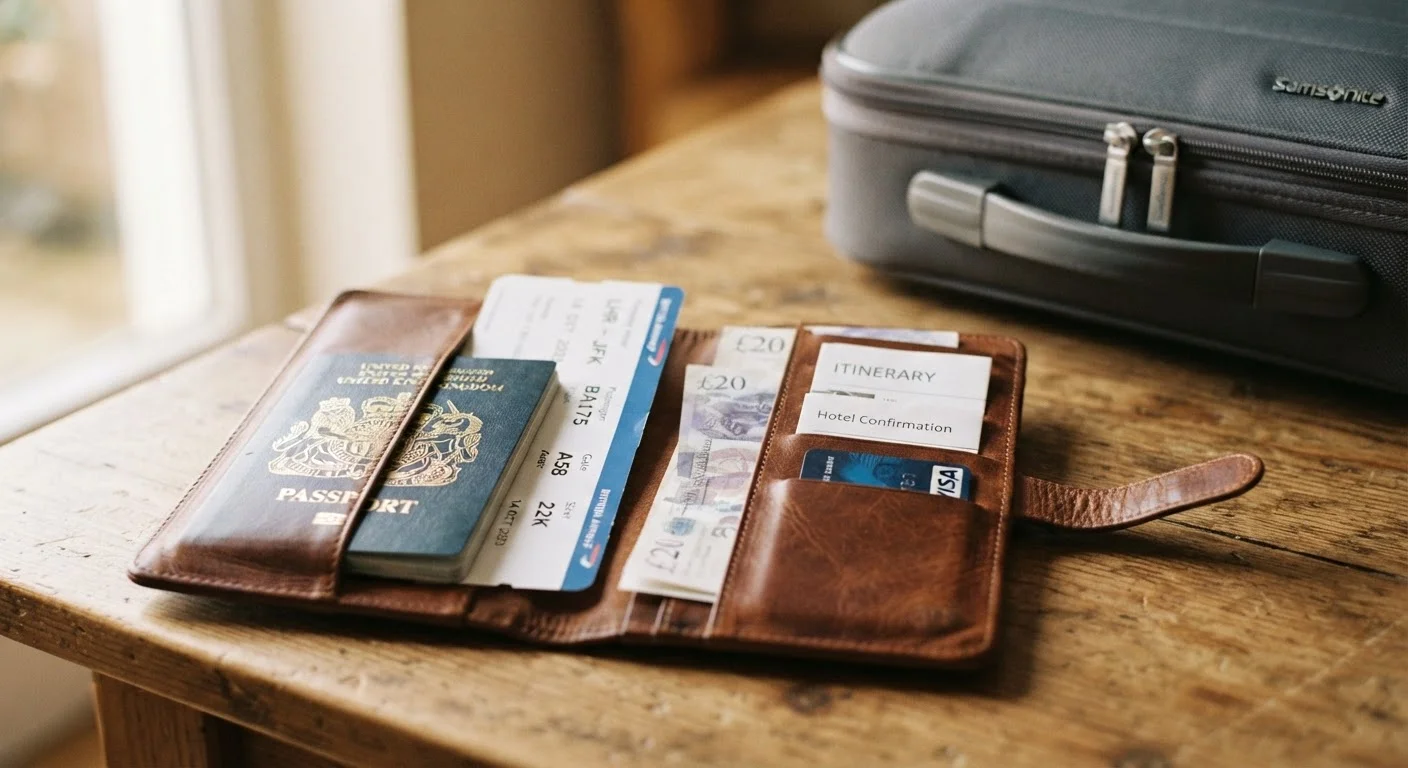
Photo: MyUrbanEscapes.net | Small Escapes. Big Experiences. editorial
—— In This Article
Key Takeaways
- Your passport, boarding pass, and health insurance card should always travel on your person.
- Backup photocopies of critical documents belong in checked luggage as a safety net.
- A digital copy stored securely in email or cloud provides an additional recovery option.
- Medication documentation and emergency contacts are safest kept on your person.
- Checked bags go missing; never place irreplaceable originals inside them.
Why the Distinction Matters
Lost luggage, bag theft, and airport delays affect travelers of all ages — but the consequences can feel especially disruptive for seniors managing complex itineraries, health conditions, or international travel. Knowing exactly which documents must stay on your person and which can safely travel in a bag removes a layer of anxiety before you even step out the door.
The guiding principle is straightforward: if losing a document could strand you, delay medical care, or prevent you from boarding, it belongs on your body. Everything else can travel separately as a backup. See our senior travel emergency planning guide for a broader look at preparing for the unexpected.
| Criterion | Keep on Your Person | Store in Luggage |
|---|---|---|
| Passport / government ID | Always — original | Photocopy only |
| Boarding pass | Always — needed at gate | Not needed in bag |
| Travel insurance card | Yes — emergencies occur in transit | Backup copy acceptable |
| Health / Medicare card | Yes — for medical access | Photocopy as backup |
| Medication list & prescriptions | Yes — customs and emergencies | Not appropriate |
| Hotel confirmation | Optional — phone access fine | Printed copy acceptable |
| Tour / activity bookings | Not needed during transit | Yes — for destination use |
| International driving permit | Only if renting on arrival day | Fine in luggage otherwise |
Documents Always to Keep on Your Person
The following should travel in a carry-on bag, a neck wallet, or a secure inner pocket — never in checked luggage:
- Passport or government-issued ID: Required for international border crossings and domestic flights. Without it, boarding is impossible.
- Boarding passes and e-ticket confirmations: Whether printed or on a phone, keep these accessible through the entire check-in and security process.
- Travel insurance card or policy summary: If a medical event occurs in transit, you need this immediately to contact your insurer.
- Health insurance card and Medicare/supplemental card: Emergency rooms abroad or at connecting cities may require proof of coverage before treating you.
- Medication documentation: A list of current prescriptions, dosages, and your doctor's contact information. Our article on traveling with prescription medications explains exactly what paperwork customs may require.
- Emergency contact card: A small card listing next-of-kin names, phone numbers, and any critical medical conditions — invaluable if you are ever unable to speak for yourself.
- Credit or debit card and small local currency: Not a document, but financial access is closely tied to document security; keep at least one card on your person at all times.
~26M
Bags mishandled by airlines globally per year
According to SITA's Baggage IT Insights report, tens of millions of bags are delayed, damaged, or lost annually — underlining why originals should never travel in checked luggage.
1 in 3
Travelers who don't carry backup document copies
Travel industry surveys consistently find a significant share of travelers depart without any photocopied or digital backups of key identity documents.
Documents That Can Travel in Luggage
These items support your trip but are not required during transit itself. Storing them in checked or packed luggage is reasonable — ideally in a zippered interior pocket:
- Photocopies of your passport and ID: If originals are lost or stolen, a photocopy speeds up the replacement process at an embassy or consulate. Never store copies and originals together.
- Hotel confirmation printouts: Useful at check-in, but most hotels can look up reservations by name and these are easily reprinted.
- Tour and activity booking confirmations: Reference documents for excursions that begin after arrival, not during transit.
- International driving permit: Needed only if you plan to rent a vehicle at your destination — not during the flight.
- Vaccination records (non-required): If entry requirements don't mandate proof of vaccination on arrival, a copy can stay packed. Verify current entry requirements with official government sources before travel, as rules change.
A practical habit: photograph every document with your smartphone and email the images to yourself before departure. That gives you a digital backup accessible from anywhere, even if both your carry-on and checked bag are lost. For a full pre-departure review, see our senior travel safety checklist.
Practical Tips for Staying Organized
Having the right documents in the right place only works if you can find them quickly. A few organizational habits make a real difference:
- Use a dedicated travel wallet or document organizer that holds your passport, cards, and boarding pass in one place — and keep it zipped.
- Label your luggage clearly inside and out with your name and a contact email, so airlines can reunite delayed bags with you faster.
- Separate your backup copies from originals at all times. If your carry-on is stolen, your photocopies in checked luggage become your recovery tool — and vice versa.
- Review your document kit the night before departure, not at the airport gate. The senior traveler's medical kit guide includes useful notes on organizing health-related paperwork alongside your other essentials.
This article provides general travel information only. Always verify entry requirements, document rules, and health-related travel regulations with official government sources and your healthcare provider before departure.

Senior Trip Planning Editorial Team
Senior Trip Planning Editorial Team is the collective byline for our editorial team and contributor network. Articles published under this byline or an editorial pen name are researched, written, and reviewed according to our editorial standards for clarity, consistency, and independence before publication.
View author profile