
What to Put in a Senior Traveler's Medical Kit
A curated rundown of the medications, tools, and documents that belong in every senior traveler's medical kit, with notes on why each item matters.
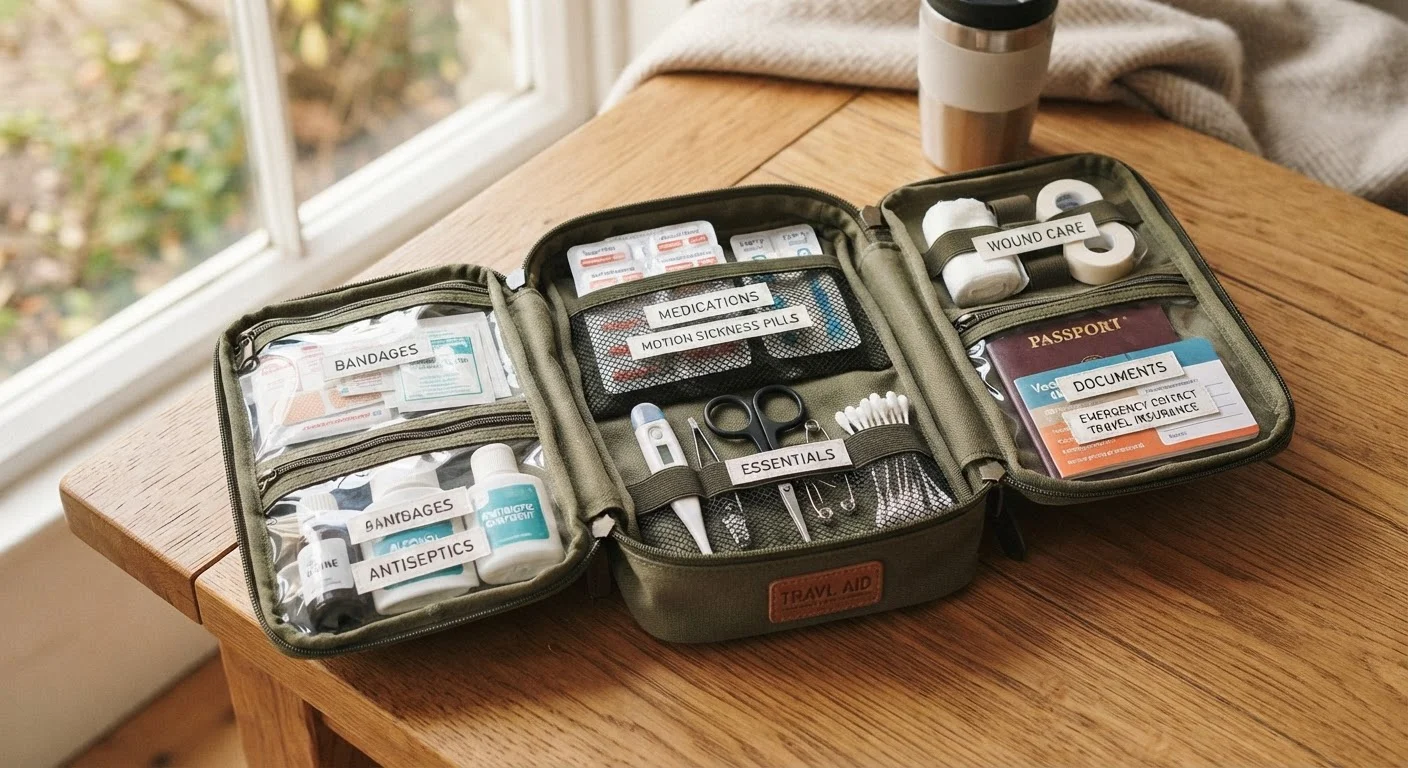
Photo: MyUrbanEscapes.net | Small Escapes. Big Experiences. editorial
—— In This Article
Why a Dedicated Medical Kit Matters
Packing a medical kit is one of the most practical steps a senior traveler can take before any trip. When something goes wrong — a blister from too much walking, an upset stomach from unfamiliar food, or a missed dose of a critical medication — having the right supplies on hand prevents a minor inconvenience from becoming a genuine emergency.
This reference guide breaks down every category of item worth including, with brief notes on why each one earns its place in your kit. Before you pack, review it alongside our pre-departure checklist for a complete picture of travel readiness.
This article provides general health information for educational purposes only and is not a substitute for personalized medical advice. Always consult your healthcare provider before traveling, especially if you manage chronic conditions or take prescription medications.
| Kit format | Compact zippered pouch or hard-shell case with labeled compartments |
| Where to carry it | Carry-on bag or personal item — never checked luggage |
| Prescription buffer | Bring at least 7 extra days beyond your planned trip length |
| Document copies | Waterproof envelope with medication list, allergies, emergency contacts, and insurance info |
| When to restock | Check and replenish supplies after every trip; verify expiration dates before each departure |
Medications and Supplements
Your prescription medications are the kit's highest-priority contents. Carry a full supply plus a buffer of several extra days' worth in case of travel delays. Keep them in original labeled containers to simplify customs inspections and reduce questions at security checkpoints.
- All current prescriptions — never pack these in checked luggage; keep them with you at all times
- Over-the-counter pain reliever — acetaminophen or ibuprofen for headaches, minor aches, or fever (check with your doctor if you take blood thinners or have kidney issues)
- Antidiarrheal and antacid tablets — digestive upsets are among the most common travel complaints
- Antihistamine — useful for allergic reactions, insect stings, or unexpected exposures
- Motion sickness remedy — especially relevant for cruises, winding mountain roads, or small planes
- Electrolyte packets — helpful for rehydrating after illness or heavy exertion in heat
For guidance on organizing prescriptions before departure, see our article on medical pre-trip preparation.
PRN medication
A Latin abbreviation meaning 'as needed.' PRN medications are taken only when a specific symptom arises rather than on a fixed schedule. Examples include antacids or antihistamines.
Hydrocolloid dressing
A type of wound dressing that creates a moist environment to promote healing and cushion blisters. Widely available in blister-treatment product lines and highly effective for foot blisters during travel.
Electrolyte replacement
Drinks or powders containing sodium, potassium, and other minerals lost through sweating, vomiting, or diarrhea. Replenishing electrolytes helps prevent dehydration during illness or heat exposure.
Medical summary
A concise, written snapshot of a traveler's health history, including diagnoses, surgeries, current medications, allergies, and blood type. Useful for foreign emergency providers who have no access to a patient's regular medical records.
First-Aid Supplies and Health Tools
Basic wound care and monitoring tools round out a functional kit. You don't need a field hospital — a compact selection handles the vast majority of common travel health situations.
- Adhesive bandages in multiple sizes — blisters and small cuts happen on almost every active trip
- Sterile gauze pads and medical tape — for larger wounds or securing dressings
- Antiseptic wipes or small bottle of antiseptic solution — clean wounds promptly to reduce infection risk
- Digital thermometer — fever is an early warning sign worth monitoring
- Tweezers — for splinters, thorns, or tick removal
- Blister treatment pads — moleskin or hydrocolloid dressings are far more comfortable than standard bandages on feet
- Compression socks or a travel-grade compression bandage — supports circulation during long flights or bus rides
- Personal medical devices — blood pressure cuff, glucose meter, or CPAP travel adapter if relevant to your health needs
~50%
Travelers affected by digestive illness on international trips
Traveler's diarrhea is among the most commonly reported travel health problems, according to the CDC's travel health guidance for international travelers.
1 in 3
Adults aged 65+ who fall each year
According to the U.S. Centers for Disease Control and Prevention, falls are the leading cause of injury among older adults, making wound-care supplies a sensible kit staple.
Documents Your Kit Should Always Contain
Physical copies of key health documents can be genuinely lifesaving when you're abroad or in an unfamiliar emergency room. Keep a sealed, waterproof envelope inside your medical kit containing:
- Medication list — drug name, dosage, prescribing physician, and purpose for each medication
- Allergy record — including drug, food, and environmental allergies with reaction type noted
- Medical summary or health history snapshot — conditions, surgeries, implants, and blood type; our guide on carrying your medical history abroad explains what to include and how to format it usefully
- Emergency contacts — primary care physician, specialist, and a trusted family member or friend
- Insurance card copies — including any supplemental travel insurance information
For a broader look at document strategy, learn which documents to keep on your person versus in checked luggage. You can also build this document set into a full senior travel emergency plan before you depart.

Senior Trip Planning Editorial Team
Senior Trip Planning Editorial Team is the collective byline for our editorial team and contributor network. Articles published under this byline or an editorial pen name are researched, written, and reviewed according to our editorial standards for clarity, consistency, and independence before publication.
View author profile