
The Pre-Departure Checklist Every Senior Traveler Should Run Through
A step-by-step checklist covering documents, medications, emergency contacts, and home preparations before any trip.
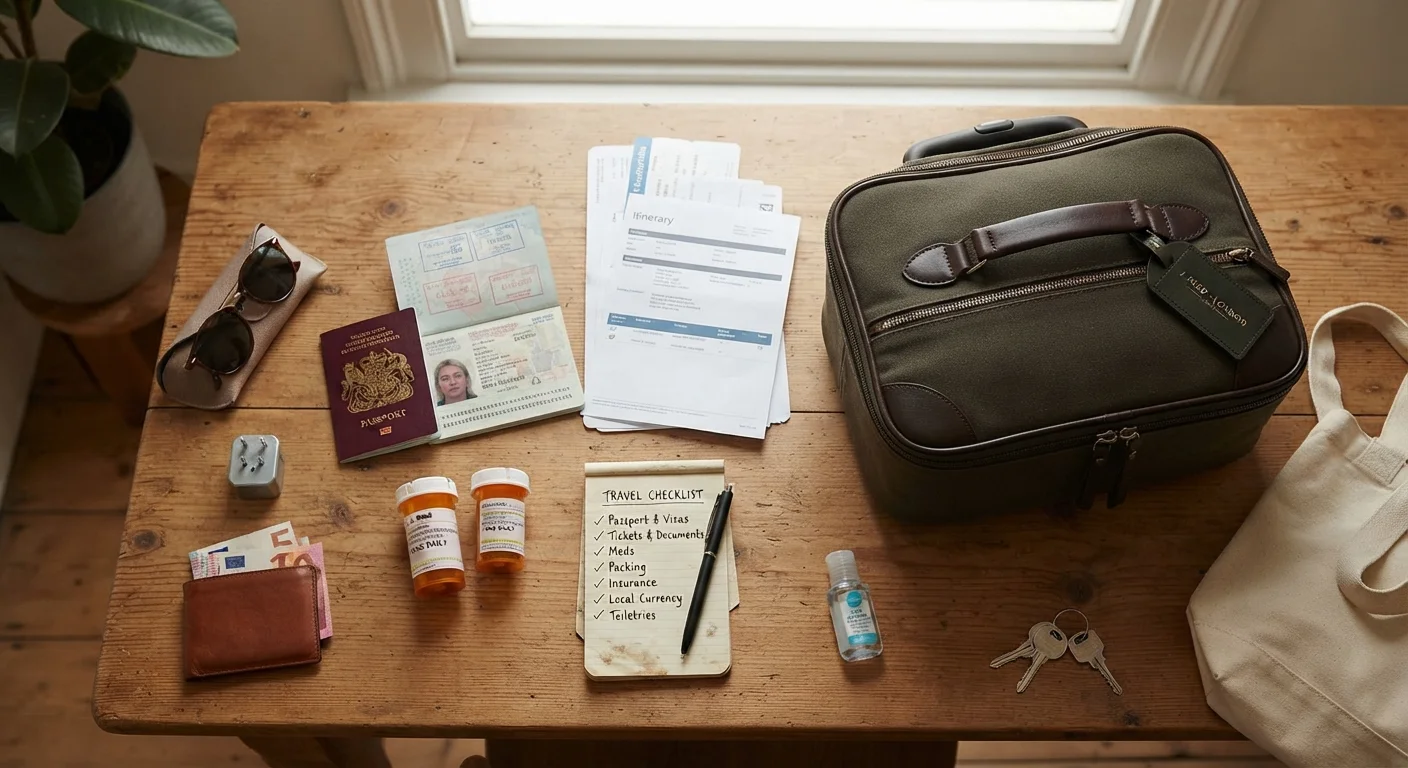
Photo: MyUrbanEscapes.net | Small Escapes. Big Experiences. editorial
—— In This Article
Key Takeaways
- Gather all travel documents — passport, insurance cards, and itinerary — at least one week before departure.
- Organize medications with enough supply for the full trip plus several extra days.
- Share your itinerary and emergency contacts with at least two trusted people at home.
- Secure your home and pause services like mail and newspaper before you leave.
- Carry a written medical summary in your wallet or travel bag at all times.
Why a Pre-Departure Checklist Matters for Senior Travelers
The days before a trip can feel overwhelming — there's a lot to remember, and the stakes of forgetting something feel higher when you're far from home. A structured checklist turns that mental load into a manageable series of small, confident steps.
This checklist is designed for any kind of trip: a domestic flight, a road trip, a cruise, or an extended international journey. For those planning travel abroad, our international pre-departure planning checklist covers the additional layers — visas, currency, and country-specific health requirements — in detail. RV travelers will find a vehicle-specific version in our RV pre-trip safety checklist.
Work through the groups below at your own pace, ideally starting at least a week before your departure date. Checking each item off as you go helps prevent the last-minute scramble that can make travel feel stressful before it's even begun.
Accordion-style travel document wallet
Keeps all paper documents — passport copies, insurance cards, confirmations — organized and easily accessible during travel.
Pill organizer with daily compartments
Helps track and manage multiple medications across travel days without risking missed doses.
Secure cloud storage app
Stores digital copies of documents so you can access them from any device if originals are lost or stolen.
Medical ID card or bracelet
Communicates critical health information — conditions, allergies, medications — to emergency responders when you cannot speak for yourself.
The Complete Pre-Departure Checklist
The checklist is organized into four categories — documents, health and medications, emergency preparedness, and home security. Tackle them in order or jump between groups based on what's most urgent for your trip.
Documents & Identification
Medications & Health Supplies
Emergency Preparedness
Home Security & Logistics
Never Pack Medications in Checked Luggage
Checked bags can be delayed, lost, or misrouted — sometimes for days. All prescription medications, as well as any critical over-the-counter items, must travel with you in your carry-on bag. If you use medical devices such as a CPAP machine or insulin pump, these also belong in the cabin with you. Verify TSA rules for liquid medications and medical equipment before your flight.
Verify Insurance Coverage Before You Travel
Standard Medicare does not cover most medical care outside the United States. If your trip includes any international travel, confirm whether your supplemental insurance or travel insurance provides adequate overseas medical and evacuation coverage. Review your policy's exclusions carefully — pre-existing conditions are sometimes limited. This is general information; consult your insurance provider directly for guidance specific to your plan.
If you want a deeper look at health-specific preparation, the medical pre-trip checklist for senior travelers walks through doctor consultations, vaccination records, and prescription documentation in full. For a complete guide to what belongs in your travel medical kit, see what to put in a senior traveler's medical kit.
Once you've run through this checklist, consider building a written emergency plan for your trip. Building a personal emergency plan before every trip explains how to document contacts, protocols, and medical information in one place — something every traveler can benefit from.

Senior Trip Planning Editorial Team
Senior Trip Planning Editorial Team is the collective byline for our editorial team and contributor network. Articles published under this byline or an editorial pen name are researched, written, and reviewed according to our editorial standards for clarity, consistency, and independence before publication.
View author profile