
Before You Leave the Driveway: An RV Pre-Trip Safety Checklist
Run through this practical checklist before every RV departure — covering tires, connections, safety gear, medications, and navigation tools.
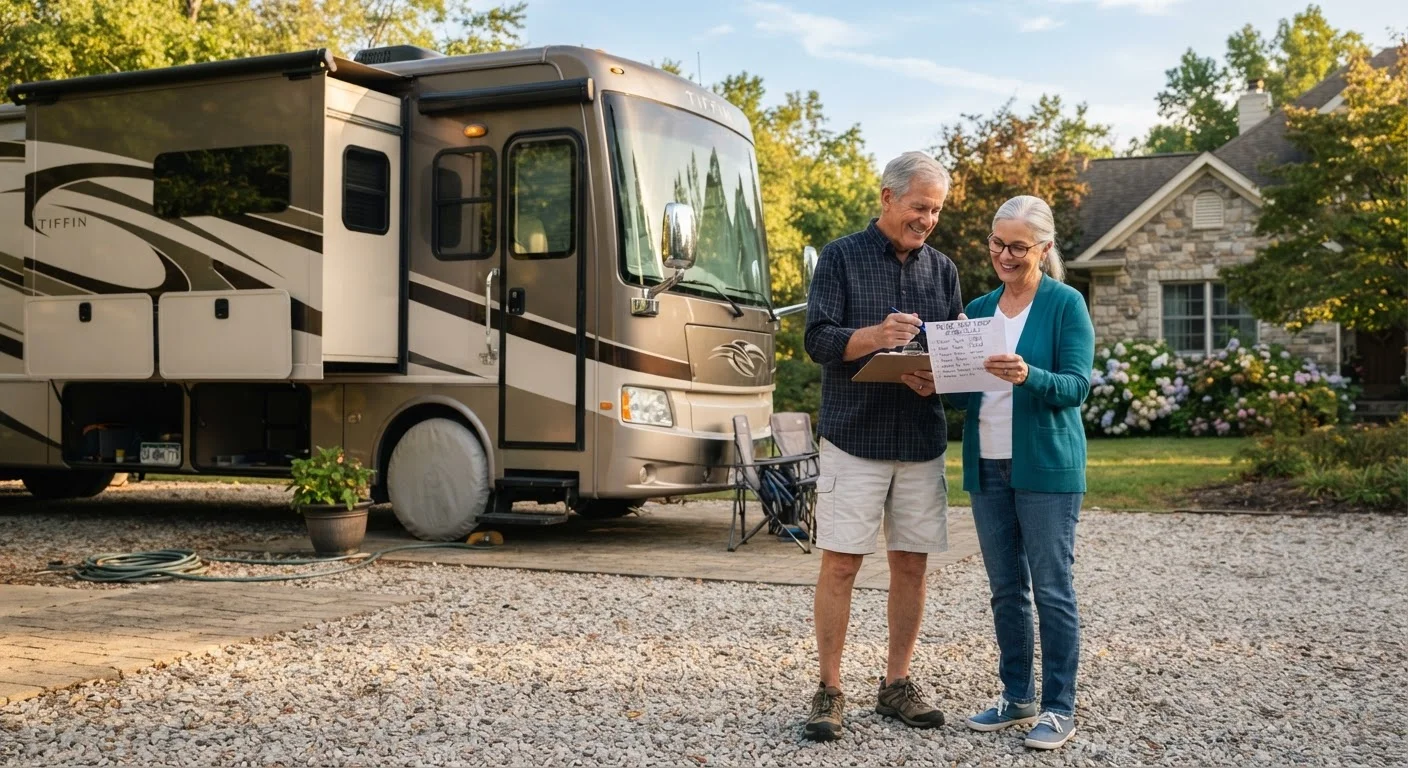
Photo: MyUrbanEscapes.net | Small Escapes. Big Experiences. editorial
—— In This Article
Key Takeaways
- Tire pressure and hitch security checks prevent the majority of preventable RV road incidents.
- Medications, medical contacts, and insurance documents should be confirmed accessible before every departure.
- Slide-outs, awnings, and exterior connections must all be fully retracted or secured before moving.
- A printed paper backup of your route and campground reservations is a reliable fallback when technology fails.
- Running this checklist consistently — every time — builds habits that reduce on-road stress significantly.
Why a Pre-Trip Checklist Matters More as We Get Older
The freedom of RV travel is one of its greatest appeals — but that freedom depends on leaving prepared. For senior travelers especially, a missed step before departure can turn into a safety issue, a costly repair, or a disrupted trip far from home. A reliable pre-departure routine removes guesswork and builds quiet confidence before you pull out of the driveway.
This checklist is designed for motorhomes and towable RVs alike. Run through it every time you depart — whether you're heading across the state or just a few hours down the road. For broader trip logistics beyond the RV itself, see our pre-departure checklist for senior travelers, which covers documents, medications, and home preparations.
Tires & Exterior Walkthrough
Slide-Outs, Awnings & Connections
Hitch, Tow, & Brake Systems
Interior Safety & Systems
Medications, Documents & Health Supplies
Navigation & Route Prep
Tools and Supplies to Have on Hand
Before working through the checklist, make sure the following items are in your RV or on your person. These aren't luxury accessories — they're the practical tools that make the checklist actionable and keep you safer once you're on the road.
Tire Pressure Gauge
Accurately measure PSI in all tires before each departure — visual checks alone are insufficient for RV tires.
Torque Wrench or Lug Nut Check Tool
Verify lug nuts are properly torqued, particularly important after a tire change or service.
CO and Propane Detector (tested and in-date)
Detect carbon monoxide and propane leaks inside the RV before and during travel.
RV-Specific GPS or Navigation App
Route planning that accounts for your RV's height, weight, and length to avoid low bridges and weight-restricted roads.
Printed Backup Route & Reservation Confirmation
Provide a reliable fallback when GPS, phone batteries, or cellular service fail on the road.
First-Aid Kit with Personal Medical Supplies
Handle minor injuries and carry essential personal health tools such as blood pressure monitors or glucose meters.
Once you've confirmed these tools are aboard, the checklist items below will go faster and more reliably. For a deeper look at what to carry for emergencies after you depart, our senior RVer's emergency preparedness guide covers roadside protocols, kit contents, and medical alert considerations in detail.
Don't Skip the Checklist on Short Trips
Many RV incidents happen on short, familiar routes — precisely because drivers assume familiarity means safety. Slide-outs left partially extended, shore power cords dragged for miles, and propane left open are common mistakes on "quick" departures. Run the full checklist every time, regardless of trip length.
After the Checklist: Build the Habit
The real power of a checklist isn't the list itself — it's the consistency. Pilots run checklists before every flight, not just unfamiliar ones. The same logic applies to RV travel. Post a printed copy inside your entry door or in a cabinet you open every departure morning. Over time, the walkthrough will take less than 20 minutes and become second nature.
If you're heading somewhere new, complement this checklist with our pre-departure checklist for unfamiliar destinations, which adds route research and campground-specific preparation steps. For everything related to staying safe and comfortable once you're rolling, the RV Safety & Comfort hub is a useful ongoing reference.
Medications Must Travel in the Cabin
Never pack daily medications in exterior cargo bays or inside non-climate-controlled storage areas. Heat, cold, and vibration can affect medication integrity — and inaccessible medications during an emergency can have serious consequences. Keep all essential medications in a bag within immediate reach from the driver or passenger seat, and always carry a written medication list. Consult your healthcare provider or pharmacist about safe storage temperatures if you have questions specific to your prescriptions.

Rv Travel Editorial Team
RV Travel Editorial Team is the collective byline for our editorial team and contributor network. Articles published under this byline or an editorial pen name are researched, written, and reviewed according to our editorial standards for clarity, consistency, and independence before publication.
View author profile