
A Pre-Departure Checklist for Senior RVers Heading to Unfamiliar Destinations
Cover every key base before leaving home — route research, medical supply inventory, campground reservations, and emergency planning — in one checklist.
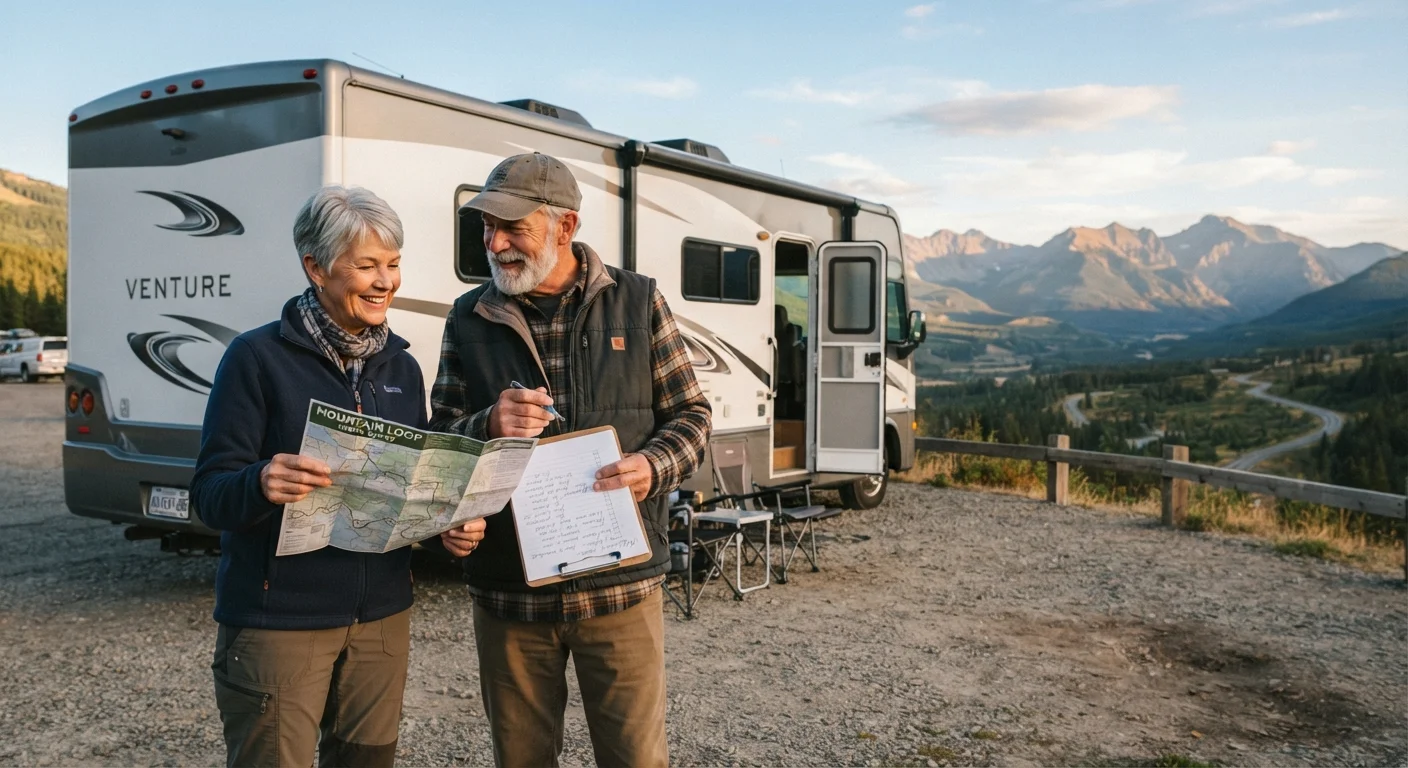
Photo: MyUrbanEscapes.net | Small Escapes. Big Experiences. editorial
—— In This Article
Key Takeaways
- Research your destination's terrain, road conditions, and campground accessibility before you depart.
- Carry at least a 30-day supply of all medications plus written prescriptions in case of delays.
- Confirm campground reservations, hookup availability, and accessibility features in advance.
- Build a written emergency plan that includes local hospital locations and emergency contacts.
- Inspect your RV's safety systems and mechanical readiness before every unfamiliar-destination trip.
Why a Destination-Specific Checklist Matters
Heading to a familiar campground is one thing. Rolling into unfamiliar territory — a new state park, a remote canyon, a coastal town you've never visited — raises the preparation stakes considerably. Roads may be narrower, elevation changes more dramatic, cell coverage spottier, and local medical facilities harder to locate under pressure.
This checklist is designed to layer on top of your standard RV departure routine. If you haven't yet built that routine, our RV pre-trip safety checklist is a practical starting point. For broader senior health preparation before any trip, see the Senior Health Prep hub.
Work through each group below a day or two before departure — not the morning you leave. That buffer gives you time to address anything you find missing.
Printed route maps
Provide navigation backup when GPS signals fail or cell coverage drops in remote areas.
Waterproof document pouch
Protect insurance cards, prescriptions, and your emergency reference sheet from moisture damage.
Satellite communicator or PLB
Enable emergency communication and GPS location sharing in areas with no cellular service.
Power adapter or voltage converter
Ensure medical devices and sensitive electronics work safely across different campground power supplies.
First-aid kit (fully stocked)
Handle minor injuries and health events until professional medical care is accessible.
The Full Pre-Departure Checklist
The 24 items below are organized into four logical groups. Tackle them in order: destination research sets the foundation for everything that follows.
Destination & Route Research
Campground & Accessibility Confirmation
Medical Supplies & Health Preparation
Emergency Planning & Communication
Don't Rely Solely on GPS for Remote Routes
Many GPS apps route RVs onto roads that are unsuitable for larger vehicles — including low-clearance bridges, unpaved forest roads, and weight-restricted routes. Always cross-reference your GPS route with a printed map and, where possible, RV-specific routing software. When in doubt about a road, contact the campground or the local ranger district directly before you commit to that approach.
Putting It All Together
Once you've worked through every group, take ten minutes to do a final verbal walk-through with your travel partner or a trusted contact at home. Saying each item aloud catches things a silent scan can miss.
Keep this checklist — and your completed emergency reference sheet — printed and clipped inside a cabinet door. Digital copies are convenient, but paper doesn't depend on a charged device or a cell signal.
For a companion resource covering what to do once you're on the road, our emergency preparedness reference guide covers roadside protocols and medical alert considerations in depth. And if you want to revisit the broader pre-trip picture from a senior traveler's perspective, The Pre-Departure Checklist Every Senior Traveler Should Run Through offers a useful complement.
Medical Needs Require Advance Planning
If you manage a chronic health condition, do not wait until departure day to verify your medical supplies and coverage. Contact your healthcare provider and insurer at least one to two weeks before your trip. Replacing a specialty medication or finding an in-network specialist in an unfamiliar region can take significantly longer than you expect, and some rural areas have limited pharmacy or specialist availability.
This article is for general informational purposes only. Consult qualified healthcare, mechanical, and emergency management professionals for advice specific to your personal health conditions, RV equipment, and travel circumstances.

Rv Travel Editorial Team
RV Travel Editorial Team is the collective byline for our editorial team and contributor network. Articles published under this byline or an editorial pen name are researched, written, and reviewed according to our editorial standards for clarity, consistency, and independence before publication.
View author profile