
Emergency Preparedness on the Road: A Senior RVer's Reference Guide
Key emergency contacts, kit contents, roadside protocols, and medical alert considerations every senior RV traveler should have on hand.
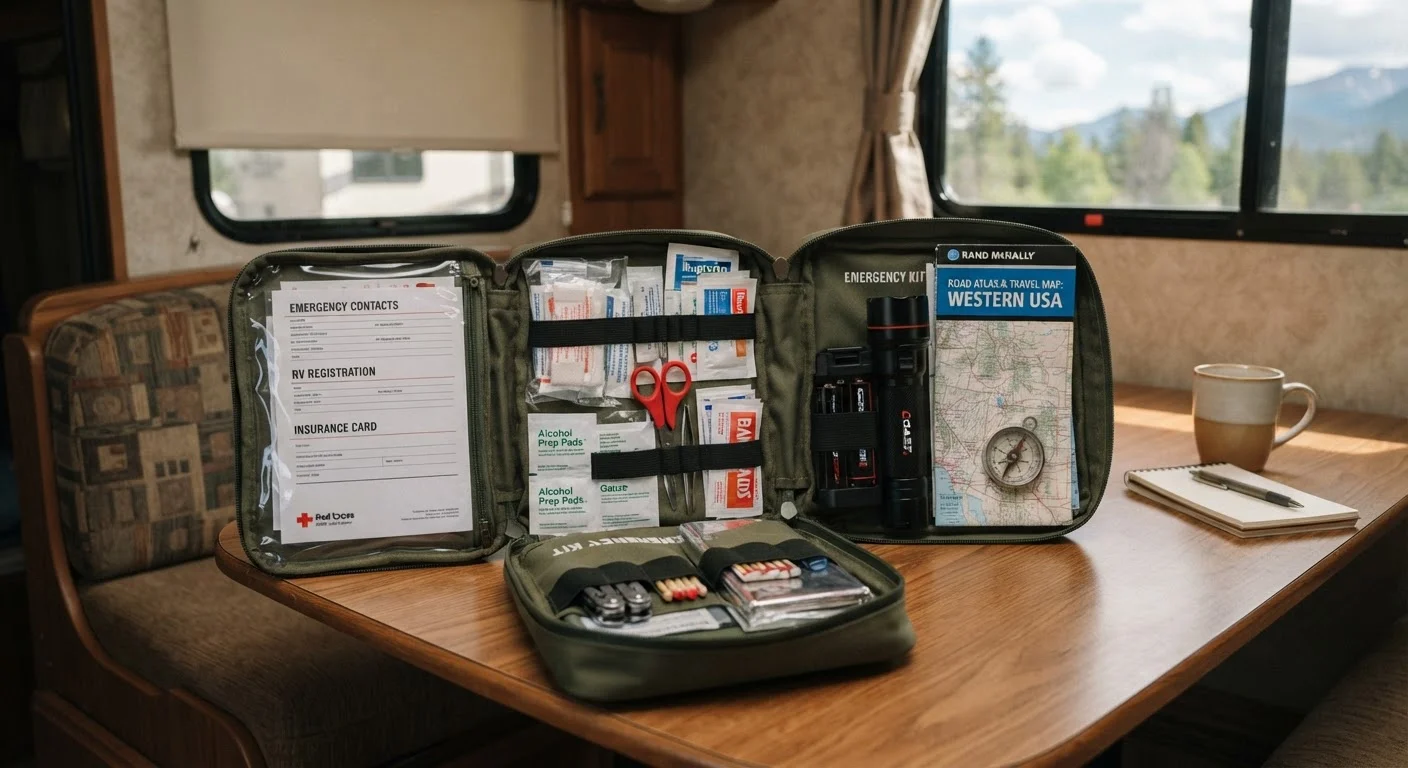
Photo: MyUrbanEscapes.net | Small Escapes. Big Experiences. editorial
—— In This Article
Essential Emergency Contacts to Keep Within Reach
Before you turn the key, compile a single emergency contact sheet — printed and laminated — stored in the glove compartment and photographed on your phone. Include the following categories:
- Primary care physician with after-hours line
- Nearest family or emergency contact with full name and two phone numbers
- Roadside assistance (your RV's specific plan, not a generic number)
- Campground host number for the site where you're currently staying
- Poison Control: 1-800-222-1222 (US national line)
- Non-emergency sheriff or highway patrol for your current county or state
911 covers life-threatening emergencies, but many RV situations — a stuck slide-out at night, a carbon monoxide alarm, a medical question — fall into a gray zone where non-emergency contacts are more appropriate. Having tiered contacts prevents unnecessary 911 calls and gets you the right help faster.
For broader safety planning beyond RV-specific scenarios, see our senior traveler safety primer.
| US Poison Control | 1-800-222-1222 (American Association of Poison Control Centers) |
| Minimum Water Supply | 1 gallon per person per day (72-hour minimum) (FEMA emergency preparedness guidelines) |
| Medication Surplus Recommended | At least 7-day extra supply (General emergency preparedness guidance) |
| Reflective Triangle Placement | 10, 100, and 300 feet behind vehicle (US Federal Motor Carrier Safety Administration) |
| Document Storage | Glove compartment + photographed on phone (Standard RV safety practice) |
RV Emergency Kit: What to Pack
A standard first aid kit is a starting point, not a complete solution for RV travel. Senior travelers benefit from a kit tailored to their specific health profile and the realities of remote travel.
Core Physical Supplies
- First aid kit (bandages, antiseptic, gauze, medical tape)
- Flashlight or headlamp with extra batteries
- Emergency mylar blankets (at least two)
- Waterproof matches and a manual can opener
- Extra water (minimum one gallon per person per day for 72 hours)
- Non-perishable food for three days
Medical and Health Items
- All prescription medications in original labeled containers, plus a minimum 7-day surplus supply
- Copies of prescriptions and a medication list with dosages and prescribing doctor's contact
- Blood pressure cuff if medically relevant
- Glucose monitoring supplies if applicable
- Hearing aid batteries and spare glasses
- Any mobility aids or spare parts (e.g., extra wheelchair tire)
Documents
- Copies of insurance cards (health, vehicle, roadside)
- Advance directive and medical power of attorney — stored accessibly, not buried in luggage
- Vehicle registration and emergency plan one-pager
For a full pre-trip inventory process, the senior RVer pre-departure checklist walks through each category systematically.
Advance Directive
A legal document stating your healthcare preferences if you become unable to communicate them. It may include a living will and designation of a healthcare proxy. RVers should carry a copy in the vehicle.
Medical Power of Attorney
A legal document authorizing a designated person to make healthcare decisions on your behalf. It activates only when a physician determines you cannot make decisions yourself.
Mobile Medical Alert Device
A wearable device that can detect emergencies (such as falls) and contact a monitoring center via cellular network, even away from home. Differs from home-based alert systems by including GPS tracking.
Roadside Assistance Plan
A service contract — typically purchased separately for RVs — that dispatches help for breakdowns, flat tires, or towing. Standard automobile plans often do not cover RV-class vehicles, so verify coverage before departure.
Reflective Triangle
A folding orange warning triangle placed behind a disabled vehicle to alert approaching drivers. Federal regulations recommend placement at 10, 100, and 300 feet for highway use.
Roadside Protocols and Medical Alert Considerations
Knowing what to do in the first five minutes of a breakdown or medical event reduces panic and improves outcomes.
Vehicle Breakdown Protocol
- Move the RV fully off the roadway if safely possible; activate hazard lights immediately.
- Place reflective triangles or road flares at 10, 100, and 300 feet behind the vehicle.
- Do not stand between the RV and traffic; stay well off the roadway.
- Call roadside assistance and provide your GPS coordinates — many smartphones show these in the Maps app.
- If on a highway, remain inside the vehicle with seatbelts on until help arrives.
Medical Emergency on the Road
- If a passenger is experiencing chest pain, difficulty breathing, or sudden confusion, pull over safely and call 911 immediately.
- Provide the dispatcher with your precise location — mile marker, highway name, nearest town.
- Have your medication list and emergency contacts ready to hand to first responders.
Medical Alert Devices
Wearable medical alert devices designed for mobile use — distinct from home-based systems — can be valuable for solo RV travelers or those with cardiac or fall-risk conditions. These devices can transmit GPS location and alert a monitoring center in areas with cellular coverage. Consult your physician about whether a mobile medical alert device is appropriate for your health situation.
For maintaining communication in areas with limited cell service, see our guide on staying connected and communicating safely on the road.
35%
Adults 65+ living with two or more chronic conditions
According to the Centers for Disease Control and Prevention, multiple chronic conditions are common among older adults, underlining the importance of thorough medical preparation for travel.
72 hours
Recommended self-sufficient supply window
FEMA advises all households and travelers to maintain emergency supplies sufficient for at least 72 hours in the event of a disruption or delay in emergency services.
Building your full emergency plan before departure — including contacts, document copies, and contingency decisions — is covered in detail in the senior travel emergency plan guide.
This article provides general safety and preparedness information for educational purposes only. It is not a substitute for personalized medical advice. Always consult a qualified healthcare professional regarding your specific health needs before traveling.

Rv Travel Editorial Team
RV Travel Editorial Team is the collective byline for our editorial team and contributor network. Articles published under this byline or an editorial pen name are researched, written, and reviewed according to our editorial standards for clarity, consistency, and independence before publication.
View author profile