
Staying Safe on the Road: A Senior Traveler's Complete Safety Primer
From crowded airports to unfamiliar streets, this guide covers the core safety habits every senior traveler should build before and during a trip.
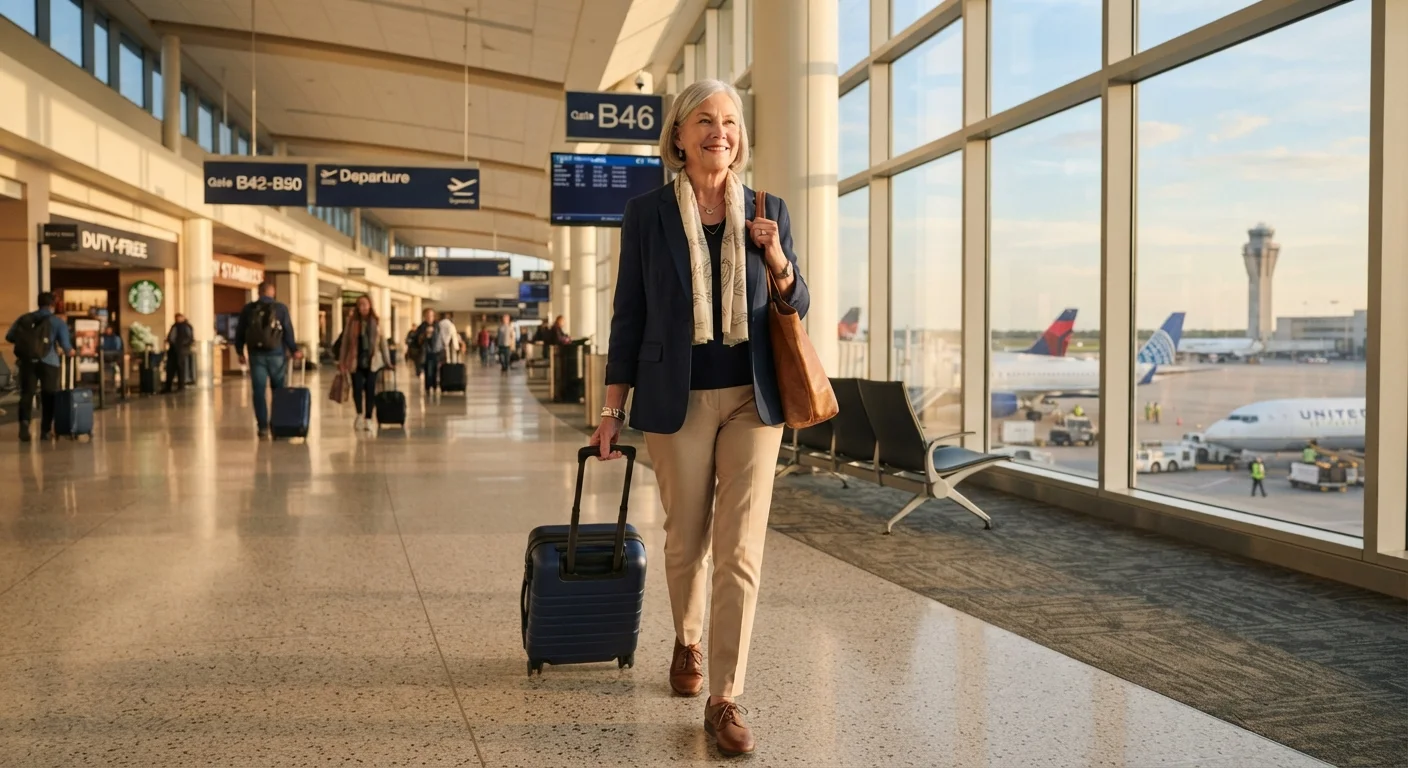
Photo: MyUrbanEscapes.net | Small Escapes. Big Experiences. editorial
—— In This Article
- Why On-the-Go Safety Habits Matter for Senior Travelers
- Before You Leave Home: Foundational Preparations
- Navigating Airports, Stations, and Transit Hubs Safely
- Staying Safe in Unfamiliar Places
- Managing Medications and Health on the Road
- Digital and Financial Safety While Traveling
- When Something Goes Wrong: Emergency Protocols
Key Takeaways
- Preparation before departure is the single most effective safety investment for senior travelers.
- Carrying printed emergency contacts and a medication list separately from your phone reduces risk.
- Pacing yourself and building in rest time significantly lowers injury and illness risk on the road.
- Travel health insurance with medical evacuation coverage is strongly recommended for seniors.
- Knowing how to reach local emergency services at your destination should be confirmed before arrival.
Why On-the-Go Safety Habits Matter for Senior Travelers
Traveling in later life brings genuine rewards — new scenery, reconnection with family, and the satisfaction of maintaining an active lifestyle. It also introduces specific safety considerations that differ from those facing younger travelers. Changes in balance, medication schedules, slower recovery from physical exertion, and increased vulnerability to heat or dehydration are factors worth acknowledging — not to discourage travel, but to plan around them effectively.
This guide is designed as a practical reference for senior travelers at any experience level. Whether you're planning a domestic road trip or an international cruise, the habits covered here apply broadly. For a structured pre-departure health checklist, see our senior travel safety checklist.
1 in 4
Adults 65+ experience a fall each year
According to the CDC, falls are the leading cause of injury among older adults — a risk that travel environments can amplify.
60%+
Seniors have at least one chronic condition
The CDC estimates the majority of adults over 65 manage at least one chronic health condition, making pre-trip medical coordination especially important.
3x
Higher medical evacuation costs internationally
Industry data consistently shows that international medical evacuations can cost tens of thousands of dollars — often three or more times standard emergency care costs.
Before You Leave Home: Foundational Preparations
The most impactful safety decisions happen before you leave your driveway. Thorough preparation reduces the likelihood of avoidable problems and makes any unexpected situations easier to handle.
- Medical clearance: Consult your primary care physician before any trip involving significant physical activity, altitude, extreme temperatures, or international travel. This is especially important if you manage chronic conditions. Our pre-travel health prep guide covers this process step by step.
- Document copies: Keep photocopies — and separate digital scans — of your passport, insurance cards, Medicare or supplemental plan details, prescriptions, and emergency contacts. Store physical copies apart from originals.
- Travel insurance: Ensure your policy includes medical coverage and, for international travel, emergency medical evacuation. Standard trip cancellation policies may not cover medical emergencies adequately.
- Notify your bank and phone carrier: Avoid card blocks and ensure your phone works at your destination before you depart.
Pack a 'Go Bag' for Day Trips
For any day away from your accommodation, carry a small bag containing your medication list, a copy of your insurance card, your hotel's address, a phone charger or power bank, and a day's supply of any essential medications. This single habit covers the majority of common travel emergencies and takes minimal extra effort.
Navigating Airports, Stations, and Transit Hubs Safely
Busy transit environments present a concentrated set of physical and security challenges. Crowds, uneven flooring, long walking distances, and the stress of time pressure can all increase fall risk and fatigue.
- Request mobility assistance early: Airlines and rail operators offer wheelchair or cart assistance at no charge — request it when booking, not at the gate. There is no obligation to use a wheelchair if you don't need one; assistance carts are equally available.
- Travel light: Overpacked bags are a leading contributor to shoulder and back strain. Use a rolling carry-on whenever possible and pack only what's genuinely needed.
- Stay hydrated: Airport and transit environments are often dehydrating. Bring an empty water bottle through security and refill it before boarding.
- Allow extra time: Rushing is a significant fall risk. Build generous buffer time into every connection.
If you use a cane or walking aid, attach a luggage tag with your name and contact number. In a busy transit hub, a misplaced mobility aid is a genuine safety hazard, not just an inconvenience.
Mobility aids are frequently set aside during security screening and can be picked up by the wrong person or left behind — a small label dramatically improves recovery odds.
Take a photograph of your hotel room number and the property's business card the moment you check in. Disorientation in an unfamiliar building is common after long travel days, and having this on your phone eliminates guesswork.
Fatigue after long journeys temporarily reduces spatial memory and navigation — a practical workaround prevents unnecessary stress and wandering.
Staying Safe in Unfamiliar Places
Arriving somewhere new requires a brief but deliberate orientation. A few simple habits substantially reduce the risk of getting lost, becoming a target for petty crime, or encountering physical hazards.
- Know your surroundings: Before leaving your hotel or rental, note the address and nearest cross street. Save the property name and address in your phone and on a small card in your pocket — useful if you need to direct a taxi or ask for help.
- Walk confidently and stay aware: Travelers who appear uncertain are more visible targets for opportunistic theft. Keep bags close, avoid displaying valuables, and use ATMs inside banks or hotels where possible.
- Use well-lit, populated routes: This is especially important at night and in unfamiliar neighborhoods. When in doubt, take a rideshare or taxi rather than walking alone.
- Check local advisories: Before traveling, review the U.S. State Department's country-specific travel advisories at travel.state.gov, and note any health advisories from the CDC for your destination.
Destination-specific guides can help you anticipate the terrain. For example, our article on San Antonio's River Walk for senior visitors covers accessibility features and shaded rest areas — the kind of practical detail that makes a meaningful difference on foot.
Always Verify Entry and Health Requirements Officially
Visa requirements, vaccination mandates, and travel advisories can change with little notice. Always verify current requirements directly with official government sources — such as the U.S. State Department at travel.state.gov and the destination country's embassy — before departure. Do not rely solely on third-party travel sites for requirements that affect your ability to enter or receive care.
Managing Medications and Health on the Road
Medication management is one of the most consequential health tasks for senior travelers. Disrupted routines, time zone changes, and unfamiliar environments all create opportunities for missed doses or errors.
- Carry medications in original labeled containers and keep them in your carry-on, never in checked luggage. Bring more than you expect to need — a reasonable buffer accounts for delays.
- Carry a printed medication list that includes drug names, dosages, prescribing physician, and any known allergies. Keep one copy on your person and one in your luggage.
- Know your time zone adjustments: For time-sensitive medications, discuss with your physician before departure how to adjust your schedule across time zones. Do not independently change dosing schedules.
- Hydration and rest: Dehydration and exhaustion amplify medication side effects and reduce cognitive sharpness. Prioritize consistent sleep and fluid intake, especially in hot climates.
For comprehensive planning across medications, insurance, and vaccinations, the senior travel health and safety overview is a useful companion resource.
This article provides general information only and is not a substitute for personalized medical advice. Always consult a qualified healthcare professional before making changes to your medication routine or travel health plan.
Digital and Financial Safety While Traveling
Travelers are common targets for digital fraud and financial theft, particularly in tourist-heavy environments. Simple precautions protect your accounts and personal information without significant inconvenience.
- Avoid public Wi-Fi for sensitive transactions: Public networks in hotels, cafes, and airports are not secure. Use mobile data or a personal VPN (virtual private network — a service that encrypts your internet connection) for banking or email.
- Use credit cards over debit cards: Credit cards generally offer stronger fraud protection and do not expose your bank balance directly if compromised.
- Enable transaction alerts: Most banks allow real-time text or email alerts for card activity. Enable these before departure so you can spot unauthorized charges quickly.
- Keep digital and physical documents backed up: Email yourself a copy of key documents so they are accessible from any device if your phone is lost or stolen.
If you are traveling solo, the routines covered in our guide to solo travel safety after 65 extend these principles further.
Currency and ATM Safety Abroad
When withdrawing cash internationally, use ATMs attached to bank branches rather than standalone machines in tourist areas, which are more frequently tampered with. Withdraw larger amounts less often to minimize exposure, and keep most cash in a secure inside pocket rather than a wallet.
When Something Goes Wrong: Emergency Protocols
Even well-prepared travelers encounter unexpected situations. Knowing what to do — before the situation arises — keeps a manageable problem from becoming a crisis.
- Know local emergency numbers: 911 works in the U.S. and Canada; in Europe, 112 is the standard emergency number. Research your destination's equivalent before arriving.
- Identify nearby medical facilities: When you check into a hotel or rental, ask the front desk or check online for the nearest urgent care and hospital. Save the address.
- Share your itinerary: Leave a detailed copy with a trusted contact at home, including accommodation names, phone numbers, and travel dates. Check in with them at agreed intervals.
- Medical alert devices: For travelers managing serious chronic conditions or traveling solo, a GPS-enabled medical alert device may provide additional peace of mind and faster emergency response capability.
RV travelers face a distinct set of roadside and medical emergency variables — the senior RV emergency preparedness guide covers kit contents and protocols specific to that context.
“The travelers who handle unexpected situations best are not the ones with the most experience — they are the ones who prepared for contingencies before they needed them.”
— Travel Health & Safety Editorial Team, Senior Travel Health Editors

Travel Health & Safety Editorial Team
Travel Health & Safety Editorial Team is the collective byline for our editorial team and contributor network. Articles published under this byline or an editorial pen name are researched, written, and reviewed according to our editorial standards for clarity, consistency, and independence before publication.
View author profile