
Staying Connected on the Road: Phones, Wi-Fi, and Emergency Communication for Senior RVers
A practical look at how senior RV travelers can maintain reliable communication and emergency access, even in areas with limited cell coverage.
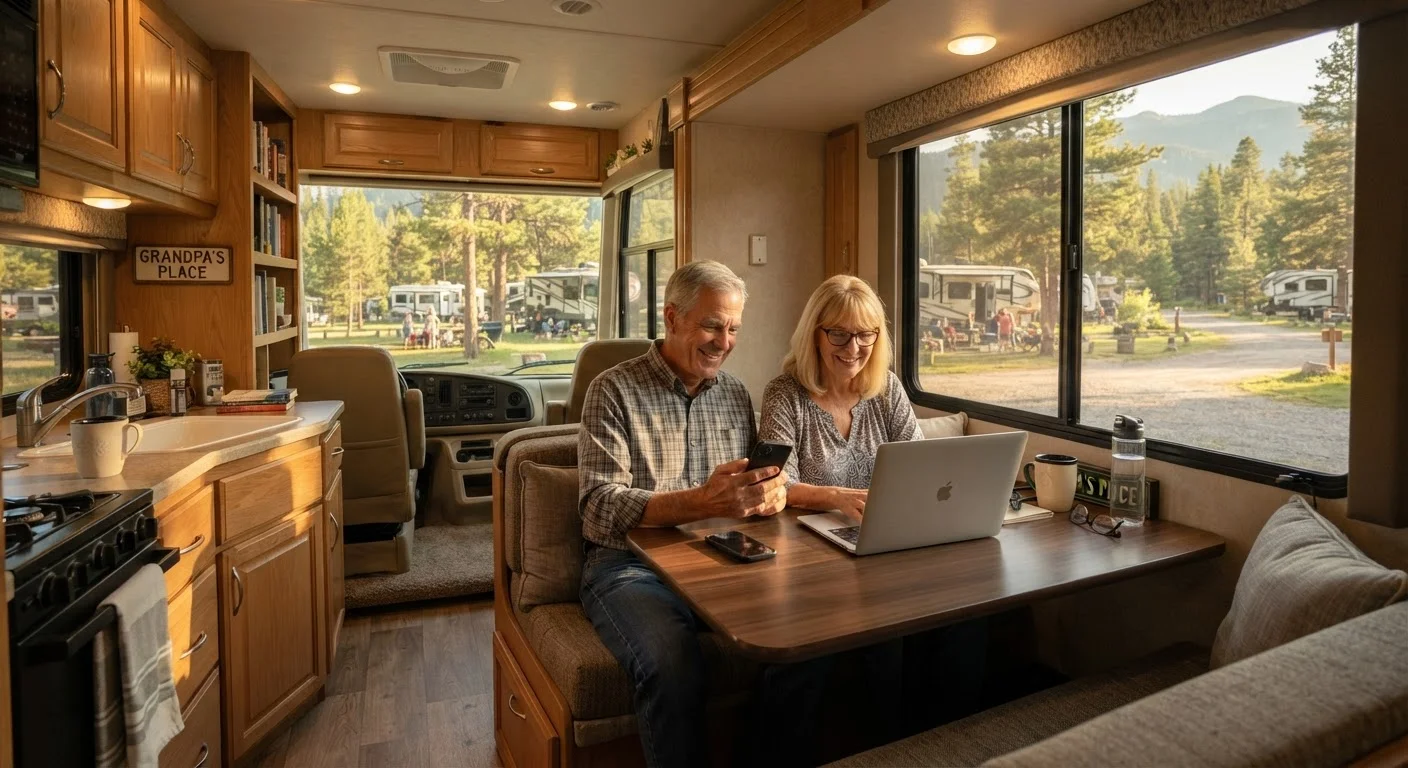
Photo: MyUrbanEscapes.net | Small Escapes. Big Experiences. editorial
—— In This Article
Key Takeaways
- No single communication method works everywhere — use a layered approach combining cellular, Wi-Fi, and satellite options.
- A cellular signal booster can meaningfully improve connectivity in rural and forested campgrounds.
- Satellite communicators and personal locator beacons provide emergency access where cell networks don't reach.
- Share your route and check-in schedule with a trusted contact before every trip.
- Public campground Wi-Fi is convenient but not secure — avoid financial transactions on shared networks.
Why Connectivity Matters More for Senior RVers
For senior RV travelers, staying reachable isn't just a convenience — it's a core safety consideration. Whether you need to reach a doctor, communicate a schedule change to family, or summon roadside help, reliable communication can make the difference between a manageable situation and a crisis.
The challenge is that RV routes frequently pass through rural corridors, mountain terrain, and national forest areas where standard cell service is weak or absent. Understanding your options before you leave — and layering them appropriately — is the most practical way to stay connected regardless of where the road takes you. For a comprehensive look at building safety into your trip from the ground up, see our senior travel emergency planning guide.
Cellular Coverage: Know It Before You Need It
Your smartphone is your first line of communication, but its usefulness depends entirely on carrier coverage maps — and those maps don't always reflect real-world conditions in campgrounds and mountain passes. Before finalizing any route, check coverage maps for your carrier and consider whether a secondary prepaid SIM from a different carrier could fill gaps in your primary network's reach.
Check carrier coverage maps for your entire planned route before departure.
Coverage maps reveal gaps you might not anticipate, especially in national parks, mountain corridors, and rural highways. Knowing where dead zones exist lets you plan alternative check-in points and carry backup tools.
Carry a cellular signal booster if your routes include rural or forested campgrounds.
Signal boosters amplify weak signals that smartphones alone can't utilize effectively. In campgrounds where even one bar of signal exists, a booster can enable reliable voice calls and basic messaging.
Invest in a satellite communicator or PLB for trips that include remote or backcountry areas.
Cell networks are infrastructure-dependent and simply don't exist in many scenic RV destinations. Satellite devices operate independently of cell towers, ensuring emergency signaling capability wherever you are.
Establish and share a formal check-in schedule with a trusted contact before every trip.
A scheduled check-in creates an automatic early-warning system. If a contact doesn't hear from you by an agreed time, they can initiate a welfare check — a simple system that has proven effective in real emergencies.
If you frequently camp in remote areas, a cellular signal booster (a device that amplifies existing weak signals inside your RV) can extend your effective range. These devices require at least a faint signal to work and won't conjure coverage from nothing, but they perform well in areas with marginal service. A qualified RV technician can advise on installation if you're not comfortable doing it yourself.
Wi-Fi Options: Campground Networks and Mobile Hotspots
Many campgrounds offer Wi-Fi, but connection quality varies dramatically. High-traffic campgrounds often experience network congestion, especially on weekends. Campground Wi-Fi is useful for light browsing and video calls but is rarely reliable enough for streaming or large file transfers.
A mobile hotspot — either a dedicated device or the hotspot feature on your smartphone — gives you a private, more stable connection using your cellular data plan. This is particularly useful for video consultations with healthcare providers or for accessing medical records on the road. Be mindful of your monthly data allotment; streaming video uses data quickly.
Get More From Your Mobile Hotspot
Position your hotspot device near a window rather than in the center of the RV — exterior walls and roof materials can reduce signal strength. If your smartphone doubles as a hotspot, check your carrier plan to confirm hotspot data is included and what limits apply. Using a portable battery bank to keep devices powered through the day removes one more source of worry.
When using any public or campground Wi-Fi network, avoid logging into financial accounts or entering passwords. For guidance on protecting yourself on shared networks, our article on digital safety while traveling covers the key risks and precautions.
Emergency Communication Beyond Cell Service
No cell or Wi-Fi option protects you in a true dead zone. For remote travel, a dedicated emergency communication device is a sound investment in peace of mind.
Personal Locator Beacons (PLBs) transmit a distress signal via satellite to search-and-rescue services at no subscription cost — they are a one-way emergency tool only. Satellite communicators (two-way devices using commercial satellite networks) allow two-way messaging and GPS tracking, typically requiring a subscription plan. Either device should be considered essential equipment for anyone camping in areas without reliable cell coverage.
For a deeper look at emergency tools and protocols specific to remote campgrounds, see our guide on staying connected and safe at remote campgrounds. And for a full emergency kit reference, including medical alerts and roadside protocols, consult our senior RVer emergency preparedness reference guide.
PLBs vs. Satellite Communicators: A Key Distinction
Personal Locator Beacons (PLBs) transmit a one-time distress signal to government-operated rescue coordination centers and require no subscription. Satellite communicators (such as two-way messaging devices on commercial satellite networks) allow ongoing two-way text communication and GPS tracking but typically require a paid service plan. Both serve legitimate roles; your choice depends on how often you camp in remote areas and whether you want ongoing two-way contact or simply emergency signaling capability.
Building Your Communication Routine
Technology alone isn't enough — consistent habits close the gap. Before each leg of your trip, share your planned route and expected arrival time with a trusted contact at home. Agree on a check-in window (for example, a brief text or call by 7 p.m. each day) and clarify what that contact should do if they don't hear from you by a defined deadline.
Keep a printed list of key phone numbers — family, your primary care provider, roadside assistance, and campground contacts — stored inside your RV alongside your vehicle documents. Cell batteries die and screens crack; paper doesn't need a signal. Senior RVers who are new to this kind of planning often find that the practical insights from experienced senior RVers make the communication learning curve much shorter.
This article is for general informational purposes only. Always verify coverage and device capabilities with your service provider before travel, and consult a qualified professional for medical or emergency planning decisions specific to your situation.

Rv Travel Editorial Team
RV Travel Editorial Team is the collective byline for our editorial team and contributor network. Articles published under this byline or an editorial pen name are researched, written, and reviewed according to our editorial standards for clarity, consistency, and independence before publication.
View author profile