
Things Senior RVers Discover Once They're Already on the Road
From campground etiquette to hidden rest-stop gems, here are the practical insights experienced senior RVers wish they'd known before their first trip.
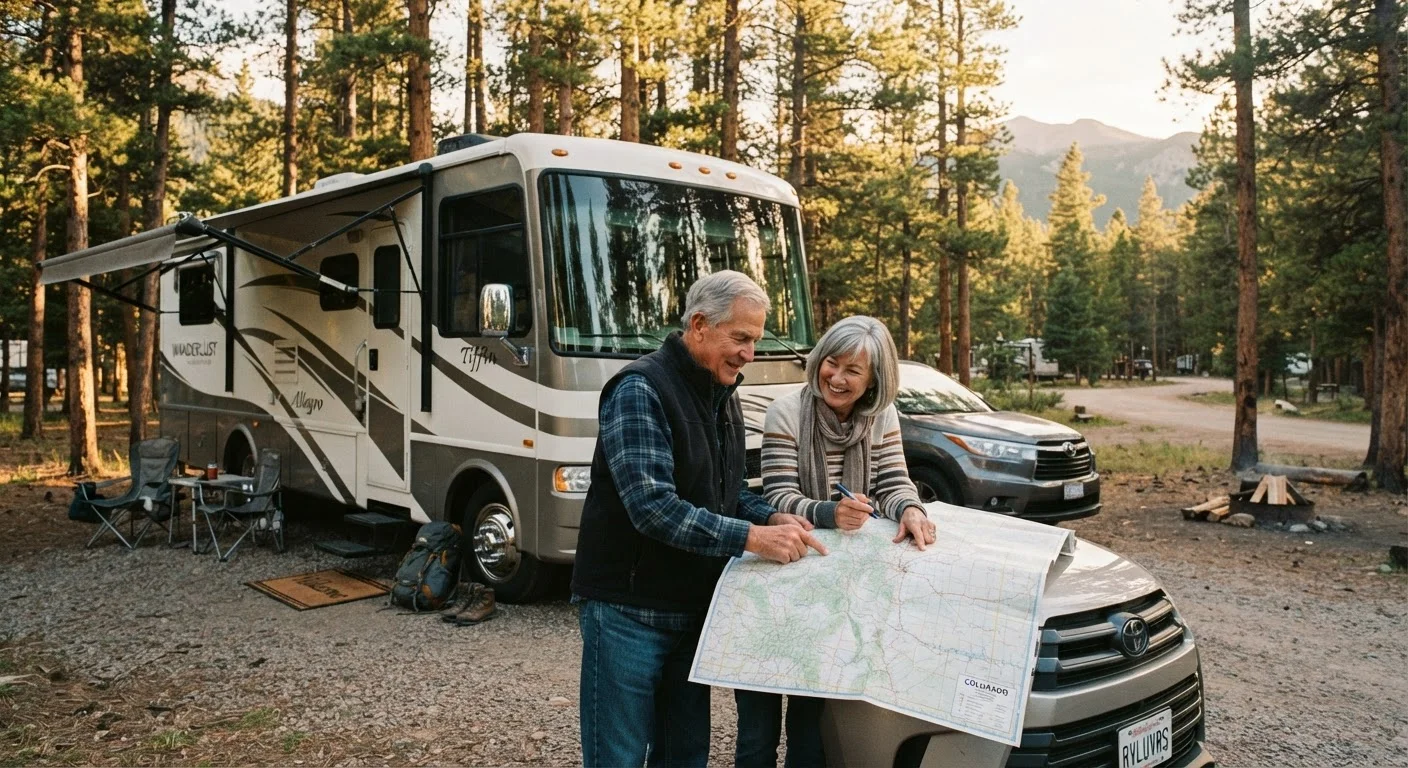
Photo: MyUrbanEscapes.net | Small Escapes. Big Experiences. editorial
—— In This Article
Key Takeaways
- Campground etiquette and hookup logistics are skills most RVers learn by doing, not reading.
- Daily driving distance often needs to be shorter than first-timers plan.
- Rest stops and pull-throughs are far more valuable than beginners realize.
- Flexibility in scheduling is one of the biggest comforts senior RVers discover late.
- Water, waste, and power management require hands-on learning to fully understand.
- Fellow RVers at campgrounds are often the most useful source of local route knowledge.
What the Planning Stage Doesn't Fully Prepare You For
Every experienced RVer remembers the gap between their pre-trip research and the reality of day one. For seniors hitting the road, that gap is often wider than expected — not because the planning was poor, but because some lessons only arrive through experience. Our complete first-timer's roadmap covers the planning essentials, and our pre-departure checklist helps cover every base before leaving home — but neither can fully replicate the things you discover once the wheels are rolling.
This list captures the practical insights that senior RVers most commonly encounter on the road — logistics, comfort, social dynamics, and small adjustments that make a significant difference. Consider it the unofficial companion to everything you've already prepared.
Your planned daily mileage is usually too ambitious
Most first-time senior RVers plan driving days based on car-trip logic — assuming 300 or 400 miles is manageable. RV travel doesn't work that way. Larger rigs require more concentration, frequent stops are necessary for safety and comfort, and traffic through mountain passes or construction zones adds unexpected time. Many experienced RVers settle on 150 to 200 miles as a realistic, enjoyable daily limit. Cutting your mileage targets early isn't a concession — it's what allows you to arrive at each stop without exhaustion.
RV driving fatigue sets in faster than car-trip experience suggests — plan for fewer miles.
Pull-through sites are worth requesting every time
Backing a large RV into a standard campsite is a skill that takes real practice. Pull-through sites — where you drive straight in and straight out — eliminate that stress entirely. Many campgrounds have them, but they fill quickly. Calling ahead to request one specifically, rather than leaving it to chance at check-in, can make the difference between a relaxed arrival and a tense half-hour in the dark. This small logistical habit is something nearly every senior RVer adopts after their first difficult back-in experience.
Requesting a pull-through site at booking is one of the simplest stress-reducers on any trip.
Hookup connections take practice and patience
Reading about shore power, water connections, and sewer hookups is straightforward. Actually doing it for the first time — often in dim light, on uneven ground, while other campers are watching — is another matter. Understanding what full hookup, partial hookup, and dry camping each involve before you arrive at a site helps enormously. Our guide to full-hookup camping and what it means is worth reading before your first night. Give yourself extra time at setup until the process becomes routine.
Hookup logistics feel awkward the first few times — allow extra setup time until it becomes routine.
Campground neighbors are a genuinely useful resource
The RV community has a well-earned reputation for helpfulness. Senior RVers consistently report that their most useful route tips, campground warnings, and practical advice came not from apps or guidebooks, but from conversations with neighbors at the next site. Locals at full-time RV parks often know which nearby dump stations are cleanest, which roads are rough for large rigs, and which campgrounds two towns over are worth the detour. Introducing yourself to neighbors isn't just pleasant — it's practical travel research.
A five-minute conversation with a neighboring RVer often beats an hour of online research.
Rest areas offer more than a parking spot
Many highway rest areas — particularly those maintained by state departments of transportation — include accessible restrooms, walking paths, picnic areas, and travel information kiosks. For senior RVers managing circulation, hydration, or simply fatigue, a 20-minute stop at a well-maintained rest area is more restorative than pushing through to the next planned stop. Some travelers underestimate these facilities and drive past them; experienced RVers treat them as scheduled recovery points, not last resorts.
Well-timed rest area stops are a recovery tool, not just a convenience.
Flexibility in your schedule reduces more stress than any gadget
The travelers who enjoy RV life most tend to be those who hold their itinerary loosely. Weather changes, unexpected discoveries, a campground that turns out to be a favorite — these are the experiences that define a great trip, but only if your schedule has room for them. Many senior RVers find that booking every night in advance creates pressure rather than comfort. A practical middle ground: reserve the first two or three nights firmly, then leave a buffer of open nights to adapt. Our guide on common RV logistics gaps covers how to build that kind of flexibility into your planning from the start.
A loosely held itinerary often produces a better trip than a tightly scheduled one.
Staying connected requires deliberate planning in rural areas
Cell coverage on scenic rural routes can drop without warning, and many RVers don't think about communication backup until they're already out of range. Knowing which carrier has the strongest coverage along your planned route, downloading offline maps before departure, and sharing a detailed itinerary with someone at home are habits worth building before your first trip, not after. Our resource on staying connected on the road covers the practical options in detail. For remote campground stays specifically, see our guide on safety practices at remote campgrounds.
Communication backup planning is most urgent precisely where coverage is worst — prepare before you go.
Taking These Insights With You
The RVers who adapt quickest are the ones willing to let the road teach them without frustration. Slowing down the pace, asking a neighbor at the next site for their honest campground opinion, and being honest about your comfort needs are not signs of inexperience — they are the markers of a traveler who will keep going for years.
Build in a 'shakedown' night close to home
Many experienced RVers recommend spending one or two nights at a campground within an hour of home before beginning a longer trip. This gives you a chance to identify anything you forgot, test your hookup routine, and sleep in the RV without being far from home if something needs attention. It's a low-pressure way to catch the surprises before the miles add up.
For deeper dives into specific logistics, our guides on dump stations and water management, full-hookup camping, and sleep quality in an RV address the specifics that often catch travelers off guard after the first night. The more you know before a problem appears, the more you'll enjoy the moments between them.

Rv Travel Editorial Team
RV Travel Editorial Team is the collective byline for our editorial team and contributor network. Articles published under this byline or an editorial pen name are researched, written, and reviewed according to our editorial standards for clarity, consistency, and independence before publication.
View author profile