
Understanding RV Dump Stations, Water Fills, and Grey Water Management
A no-jargon explainer of the water and waste systems every RV traveler needs to understand before pulling out of the driveway for the first time.
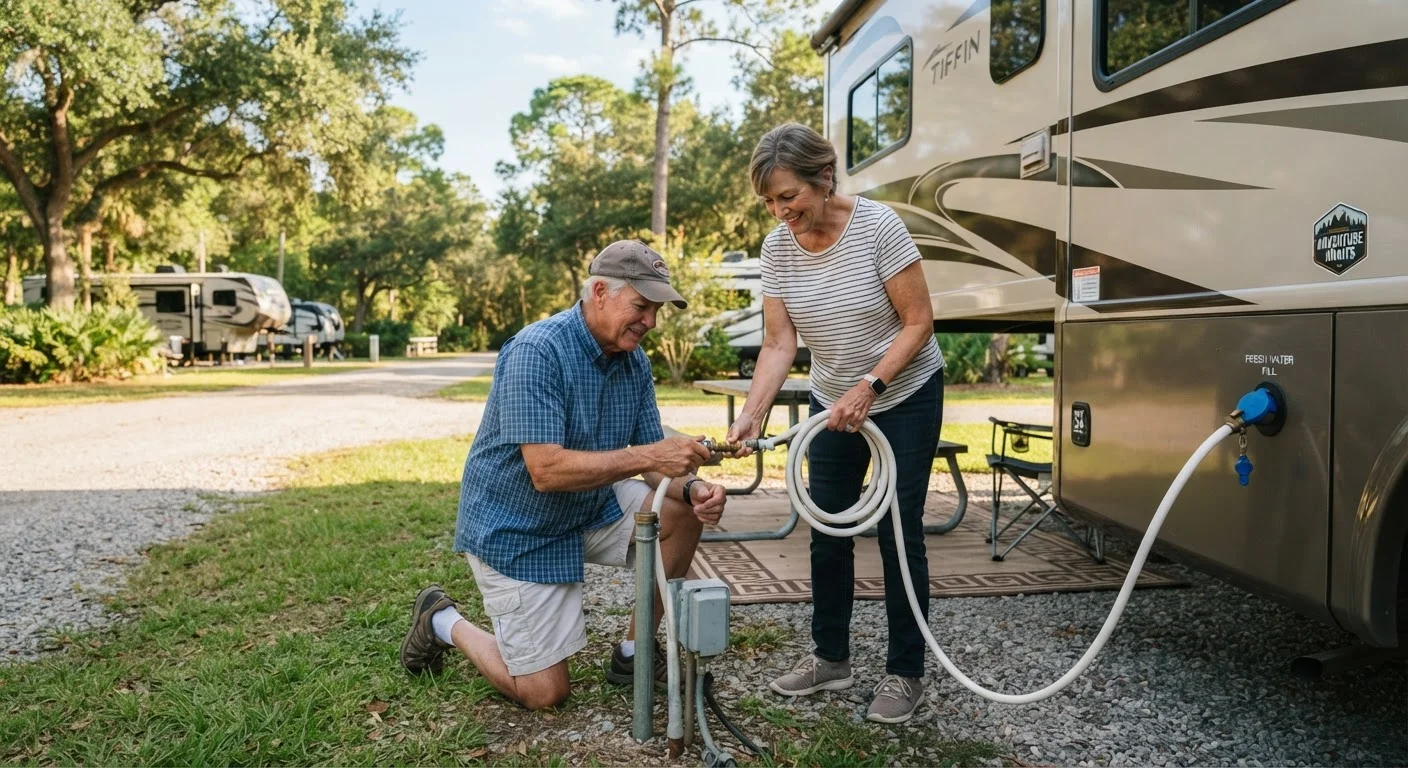
Photo: MyUrbanEscapes.net | Small Escapes. Big Experiences. editorial
—— In This Article
Key Takeaways
- Every RV has three separate water systems: fresh, grey, and black — each managed differently.
- Dump stations are used to empty both black and grey holding tanks safely and legally.
- Fresh water tanks can be filled at campgrounds, RV parks, and some public facilities.
- Grey water from sinks and showers must be contained in a holding tank — never dumped on the ground.
- Planning water and waste stops in advance prevents inconvenient surprises on the road.
The Three Water Systems in Your RV
Before worrying about dump stations or water fills, it helps to understand the three separate water systems every RV uses. Getting these straight from the start removes a lot of confusion.
Fresh water tank
The onboard tank that stores clean water for drinking, cooking, and bathing. You fill it at campgrounds or designated water stations.
Grey water tank
A holding tank that collects used water from your sinks and shower. It does not contain sewage but must still be emptied at a dump station.
Black water tank
The tank that holds waste from your RV toilet. It must be emptied at a designated dump station and handled with proper protective gear.
Dump station
A facility with a sewer inlet where RV travelers legally empty their black and grey holding tanks. Found at campgrounds, travel centers, and some public rest areas.
Full hookup
A campsite that provides connections for electricity, water, and sewer directly at your pad, allowing you to skip dump stations for the duration of your stay.
Potable water hose
A hose specifically rated safe for drinking water, used to fill your fresh water tank. It should never be used for any sewer-related task.
- Fresh water tank: Stores clean water for drinking, cooking, and bathing. You fill this at campgrounds or water stations.
- Grey water tank: Collects used water from your sinks and shower — water that has gone down a drain but does not contain sewage.
- Black water tank: Holds waste from the RV toilet. This is the tank most people are apprehensive about, but emptying it is straightforward once you know the steps.
These three systems work independently. Keeping them distinct in your mind makes every other task — filling up, dumping, and day-to-day management — much easier to follow. For a broader look at how these systems fit into your overall trip logistics, see our complete first-timer's roadmap for senior RVers.
How RV Dump Stations Work
A dump station is a designated facility — usually a concrete pad with a sewer inlet — where you legally and safely empty your black and grey holding tanks. Most campgrounds have one, and many travel centers and state rest areas offer them as well.
The basic process works like this:
- Pull your RV up so the tank drain outlets are close to the sewer inlet.
- Put on disposable gloves. Always.
- Connect your sewer hose from the RV's drain outlet to the station inlet.
- Open the black tank valve first and let it drain completely.
- Close the black tank valve, then open the grey tank valve. The grey water helps rinse the hose.
- Close the grey valve, disconnect and rinse your hose, and cap the outlet.
Always Open the Black Tank First
Drain the black water tank before the grey tank every time. The grey water then helps flush residue from the sewer hose. Reversing the order leaves waste sitting in the hose and makes cleanup much harder. Wearing disposable gloves throughout the process is non-negotiable.
Many campgrounds have dump station etiquette — keep your process efficient, especially if others are waiting. Rinsing your tanks is worthwhile, but extended flushing sessions during peak times can frustrate fellow campers.
If you are staying at a full-hookup site, you can connect directly to the sewer at your pad and skip the dump station entirely. Learn what full-hookup camping means and whether it suits your travel style.
Filling Your Fresh Water Tank
Running low on fresh water mid-trip is easily avoided with a bit of planning. Most campgrounds and RV parks have a water fill spigot near the dump station or at your individual site.
To fill your tank, connect a dedicated drinking-water-safe hose (typically white or blue, not a standard garden hose) from the spigot to your RV's fresh water inlet. Avoid using the same hose for water fills that you use for sewer connections — keep them labeled and stored separately.
Know Your Daily Water Usage
Estimate how many gallons your travel party uses per day before your first trip. A realistic number helps you plan refill stops without running dry. Most campgrounds are happy to answer questions about water availability when you book your site.
Gauge how much water you realistically use per day. A solo traveler might use 10–15 gallons; a couple might use 20–30. Knowing your approximate daily usage helps you decide how often to refill and whether a campsite with a water connection is worth the extra cost.
Water quality varies across locations. Many experienced RVers use an inline filter at the spigot as a general precaution. For specific concerns about water safety at a destination, check with local authorities or the campground directly.
Grey Water: What It Is and How to Manage It
Grey water is often misunderstood. It is not clean, but it is not sewage either — it includes soap residue, food particles, and the general run-off from daily cleaning and bathing. Because it can carry bacteria and cause environmental harm, most campgrounds and public lands prohibit dumping it on the ground.
Day-to-day grey water management is mostly a matter of monitoring your tank level and making sure you dump before it overflows. A few practices help keep your grey tank from filling too quickly:
- Scrape plates into the trash before rinsing rather than washing heavy food debris down the drain.
- Take shorter showers or use a campground shower facility when available.
- Use a small basin for dishwashing and empty it into the grey tank drain rather than running water continuously.
Some campgrounds allow you to run a garden hose from a grey water outlet to a ground drain at your site — but always confirm this is permitted before doing so. When in doubt, use the dump station. For guidance on campground rules across different site types, see our overview of RV overnight options.
Planning Your Water and Waste Stops
Fitting water and waste management into your route planning removes the stress of scrambling for a dump station on the fly. Before each leg of your trip, take five minutes to note where dump stations and water fills are available along your route.
Several free apps and websites list dump station locations by state and city. RV-focused campground directories typically note whether dump access is included in the site fee or available for a small charge. Many truck stops and travel centers also offer dump stations.
A useful mindset: treat water and waste stops the same way you treat fuel stops — check your levels regularly and refill or dump before you reach a limit, not after. This is especially important on routes through remote areas where services may be spaced far apart.
Logistics Planning Pays Off Early
Water and waste management is a routine part of RV life that becomes genuinely easy with repetition. The learning curve is steep only on the very first trip. Most senior RVers report that after two or three dump station visits, the whole process feels as ordinary as stopping for gas.
New RVers — seniors included — frequently underestimate how much attention water and waste logistics require on longer trips. See the planning gaps that commonly catch first-timers off guard and how to address them before they become problems.
Sanidumps.com
A searchable directory of dump stations across the US and Canada, filterable by state and city. Useful for planning waste stops along any route.
Recreation.gov Campground Finder
The official federal recreation reservation site includes campground amenity details — including whether dump stations and water hookups are available — for national park and forest sites.
RV Safety & Comfort Hub
Explore tips specifically designed to keep senior RV travelers safe, healthy, and comfortable throughout their journey on the road.
Frequently Asked Questions

Rv Travel Editorial Team
RV Travel Editorial Team is the collective byline for our editorial team and contributor network. Articles published under this byline or an editorial pen name are researched, written, and reviewed according to our editorial standards for clarity, consistency, and independence before publication.
View author profile