
RV Parks, National Forest Campgrounds, and State Sites: Understanding Your Overnight Options
A clear breakdown of different campground types — from full-service RV resorts to dispersed public land — to help seniors choose what fits their trip.
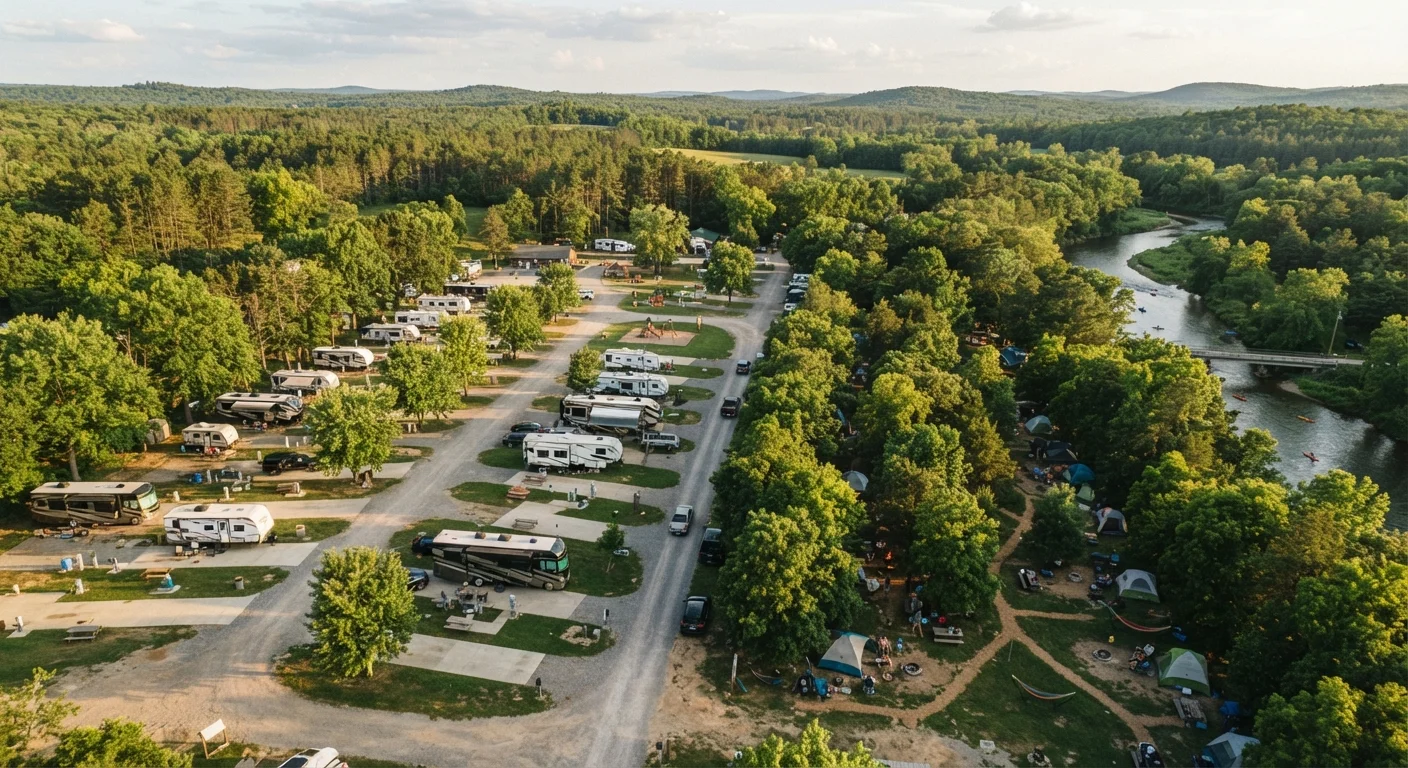
Photo: MyUrbanEscapes.net | Small Escapes. Big Experiences. editorial
—— In This Article
The Main Categories of Overnight RV Sites
Choosing where to park for the night shapes nearly everything about your RV experience — cost, comfort, amenity access, and how much planning is required. There are four broad categories worth understanding before you book anything.
Private RV Parks and Resorts
Privately operated parks range from simple roadside pull-offs with basic electricity to full-amenity resorts offering pools, laundry, Wi-Fi, and organized activities. Most offer full or partial hookups, making them a straightforward choice for seniors who want reliable utilities. Sites are typically reservable weeks or months in advance, though availability tends to be more flexible than federal campgrounds. See how private resorts compare to state park sites for a detailed side-by-side breakdown.
State Park Campgrounds
State parks offer a middle ground: natural settings with a reasonable level of developed infrastructure. Hookup availability varies widely by state and specific park. Many states offer reduced camping fees for residents aged 62 or older. Reservation windows tend to be shorter than federal sites — often 90 to 180 days — but popular parks fill quickly on weekends and holidays. Amenities generally include restrooms, and often shower facilities.
National Park and National Forest Campgrounds
Federally managed campgrounds attract millions of visitors annually. National park campgrounds typically offer more developed infrastructure — paved pads, restrooms, sometimes electric hookups — while national forest sites are frequently more rustic. The National Parks RV circuit for senior travelers covers accessible campgrounds within the park system specifically. Holders of the Interagency Senior Pass receive significant discounts on camping fees at federal sites.
Dispersed and BLM Land Camping
Bureau of Land Management (BLM) land and national forest dispersed areas allow camping outside designated sites — often for free. There are no hookups, no trash pickup, and no facilities. While experienced RVers with large tank capacity and solar setups use dispersed sites regularly, they require self-sufficiency and are generally less suited to seniors with medical equipment needs or limited mobility. If you're curious about the full spectrum, our guide comparing full-hookup and primitive camping lays out what's genuinely at stake.
Key Factors for Senior RVers When Comparing Site Types
| Federal campground reservations | Primarily through Recreation.gov (U.S. National Park Service) |
| Senior Pass eligibility (federal lands) | U.S. residents age 62+ (U.S. Interagency Senior Pass program) |
| National Forest campgrounds (approximate) | 4,400+ across 154 national forests (U.S. Forest Service) |
| Typical reservation window (federal) | Up to 6 months in advance (Recreation.gov) |
| Dispersed camping stay limits | Usually 14 days per location (U.S. Forest Service general policy; verify locally) |
| State park campgrounds (approximate) | 6,600+ state parks across the US (National Association of State Park Directors) |
Beyond hookup availability, several practical factors should drive your decision about where to overnight.
Accessibility and Physical Comfort
Look for paved or hard-packed level pads, ADA-accessible restrooms, and sites close to facilities. Pull-through sites eliminate the stress of backing a rig in tight spaces. Private parks are often more consistent in this regard; federal and state sites vary considerably. Always call ahead to confirm specific accessibility features rather than relying solely on online descriptions.
Utility Needs and Onboard Capacity
If you rely on electricity for medical devices or air conditioning in summer, full-hookup or at minimum 30-amp electric sites are non-negotiable. For shorter stops or mild weather, partial hookups or even a one-night dry camp can work if your tanks and batteries are topped up. Understanding dump stations and water management is essential reading before you camp anywhere without sewer hookups.
Reservation Logistics and Planning Lead Time
Federal campgrounds — especially in national parks — book out months in advance during peak season. If you're a spontaneous traveler or prefer flexible itineraries, private parks and less-popular national forest sites tend to have better walk-up or short-notice availability. For extended stays, see what long-stay site decisions senior travelers often regret so you can sidestep common pitfalls.
Hookup Needs Vary — Know Yours First
Before choosing a campground type, take stock of your RV's onboard systems: tank capacities, battery setup, and whether you have a generator. Some seniors find that a night or two without hookups is perfectly manageable with proper preparation, while others — particularly those running CPAP machines or refrigerated medications — genuinely need electrical access every night. Plan accordingly, and consult your physician if medical equipment is part of your travel kit.
For a comprehensive planning framework that ties these decisions together, the RV trip planning roadmap for seniors walks through the full process from route research to site booking. For destination-specific logistics — including which site types appear at specific parks — the Desert Southwest RV destination guide is a practical regional example.

Rv Travel Editorial Team
RV Travel Editorial Team is the collective byline for our editorial team and contributor network. Articles published under this byline or an editorial pen name are researched, written, and reviewed according to our editorial standards for clarity, consistency, and independence before publication.
View author profile