
State Park Campgrounds vs. Private RV Resorts: A Senior Traveler's Honest Comparison
Weighing the real differences between public state park sites and private RV resorts — costs, amenities, quiet hours, and accessibility features.
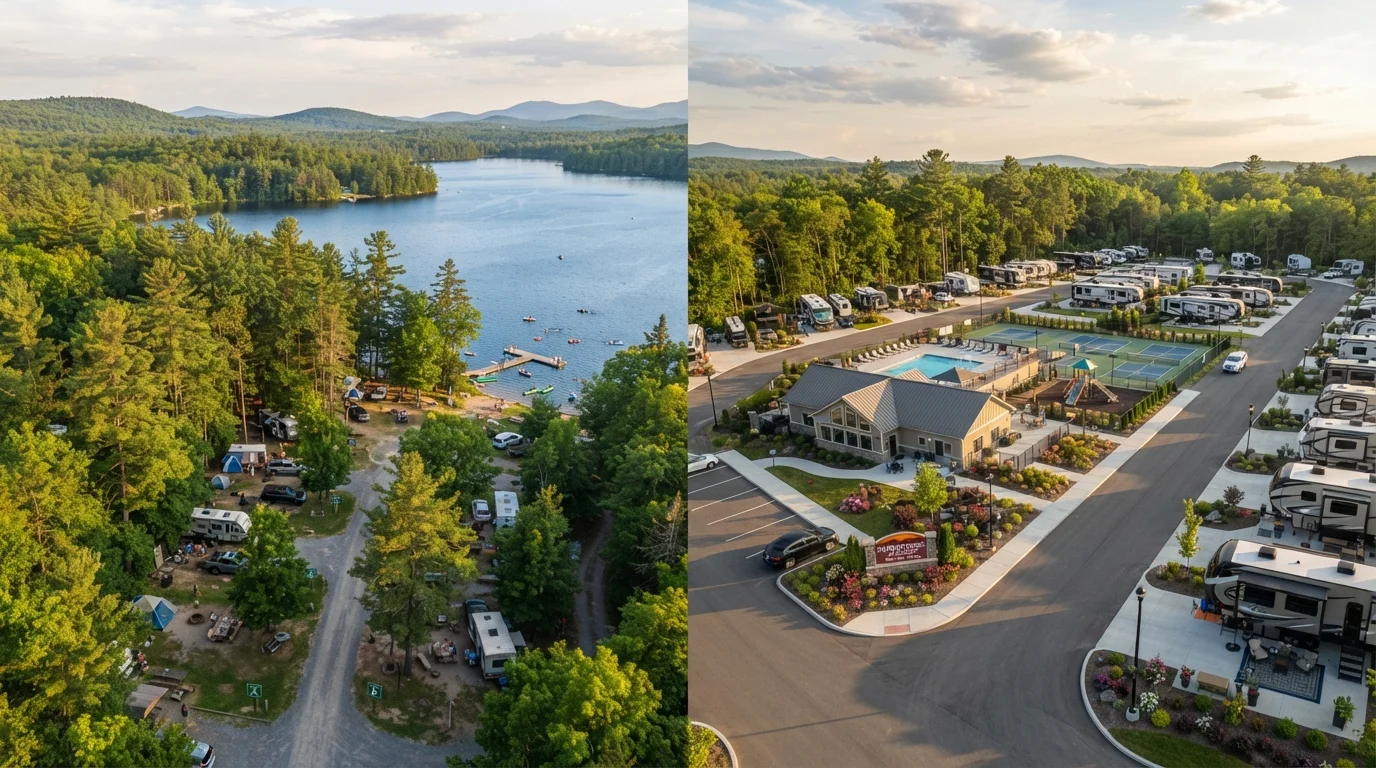
Photo: MyUrbanEscapes.net | Small Escapes. Big Experiences. editorial
—— In This Article
Key Takeaways
- State park campgrounds generally cost less but offer fewer amenities and may have limited accessibility features.
- Private RV resorts typically provide full hookups, paved sites, and on-site services better suited to seniors with mobility needs.
- Quiet hours, reservation flexibility, and site spacing vary significantly between the two options.
- Neither option is universally superior — your health needs, budget, and travel style should guide the choice.
- Researching accessibility details before booking prevents costly surprises on arrival.
Cost and Reservation Logistics
Nightly rates at state park campgrounds typically run considerably lower than private RV resorts — often ranging from roughly $20 to $45 per night depending on the state and hookup level. Private resorts frequently charge $50 to $90 or more per night for a full-hookup site, though rates vary widely by region and season. For seniors on fixed incomes, that gap compounds quickly over a multi-week trip.
However, state park sites book up fast, especially at popular destinations. Many states now use centralized reservation systems that open windows 6 months in advance, requiring online navigation that some travelers find frustrating. Private resorts often hold more inventory and offer more flexible cancellation policies, which matters when health or weather disrupts travel plans.
Seniors holding an America the Beautiful Senior Pass receive free or discounted access to federal recreation sites — though this applies to national parks and national forests, not state parks, which operate on separate systems. Check each state's senior discount program individually before booking. For a broader look at campground types and what they actually offer, see our overview of overnight RV options.
| State Park Campgrounds | Private RV Resorts | |
|---|---|---|
| Typical Nightly Cost | ~$20–$45 per night | ~$50–$90+ per night |
| Full Hookups (Water/Electric/Sewer) | Uncommon; partial hookups typical | Standard at most locations |
| Site Surface & Leveling | Often gravel or uneven; varies by park | Paved, level pads common |
| ADA Accessibility | Inconsistent; call ahead to confirm | More reliably accessible |
| Quiet Hours Enforcement | Generally strict; 10 p.m.–6 a.m. | Variable; depends on resort culture |
| On-Site Amenities | Trails, nature, basic facilities | Laundry, clubhouse, social programs |
| Reservation Flexibility | Limited windows; books fast | More inventory; flexible policies |
| Natural Setting | Typically scenic and spacious | Variable; often more developed |
Amenities, Hookups, and Comfort Features
Full-hookup sites — with water, electric, and sewer connections — are standard at most private RV resorts but far less common at state parks, where partial hookups or dry camping are the norm at many locations. For seniors managing health conditions that require CPAP machines, refrigerated medications, or air conditioning in warm climates, reliable electrical hookups aren't a luxury — they're a necessity.
Private resorts often include amenities such as heated bathhouses, on-site laundry, fitness rooms, and organized social activities. State parks, by contrast, emphasize outdoor access: trails, water frontage, and wildlife — amenities that require physical mobility to enjoy fully.
Understanding what amenity ratings actually signal can save significant disappointment. Our article on what RV park amenity ratings mean for seniors breaks down which listed features genuinely translate to comfort. Those weighing hookup access as a health consideration should also read our full-hookup vs. primitive camping comparison.
Ask About Accessible Sites Specifically
When booking either type of campground, request ADA or accessible sites by name — don't assume a general booking will place you on a level, paved pad. Many parks designate a small number of accessible sites that aren't prominently advertised. Calling ahead and confirming in writing protects you if the site doesn't match expectations on arrival.
Accessibility, Site Terrain, and Noise
Accessibility is where the two options diverge most sharply. Private RV resorts are more likely to offer paved pull-through sites, level pads, and ADA-compliant bathhouses. State parks vary enormously — some have been updated with accessible infrastructure, while others still have gravel or uneven terrain that presents real challenges for travelers with limited mobility or balance concerns.
When researching state park sites, call the park directly rather than relying solely on online listings. Ask specifically about surface type, slope of the pad, and proximity of the site to restroom facilities. Photographs on reservation sites are often outdated.
Noise management is another underappreciated factor. State parks generally enforce strict quiet hours — often 10 p.m. to 6 a.m. — and tend to draw families and outdoor enthusiasts who respect natural surroundings. Private resorts can vary considerably: a resort with an active social calendar and weekend events may not suit seniors seeking a restful environment. Review guest feedback specifically for noise levels before booking.
For those exploring scenic routes and comparing campground quality along the way, our guide to RV parks along the Blue Ridge Parkway illustrates how terrain and paving vary even within a single corridor. Seniors planning extended stays should also review long-stay RV site decisions seniors often regret before committing to one location for weeks at a time.
Don't Rely Solely on Online Photos
Campground listing photos are frequently outdated or taken from flattering angles that obscure uneven terrain, gravel surfaces, or close site spacing. Senior travelers with mobility considerations should always call the park directly and ask targeted questions about surface materials, slope, and distance to facilities. A five-minute call can prevent a week of discomfort.
Making the Right Choice for Your Trip
Neither campground type will suit every senior traveler for every trip. A practical approach is to consider them complementary rather than competing. Many experienced RVers use state park sites for short, scenic stopovers — particularly when following routes through national parks (see our national parks RV circuit for senior travelers) — and reserve private resorts for longer stays where utility reliability and physical comfort take priority.
When evaluating any campground, prioritize these questions: Does the site offer the hookup level your health and equipment require? Is the terrain paved and level? Are bathrooms accessible and close to your site? What are the quiet hours and the general noise environment? Does the park have cell or Wi-Fi connectivity if you need remote medical support or navigation?
For general trip planning tailored to senior RVers, explore our RV trip planning hub and our RV safety and comfort resources. With the right preparation, both campground types can deliver genuinely rewarding experiences on the road.

Rv Travel Editorial Team
RV Travel Editorial Team is the collective byline for our editorial team and contributor network. Articles published under this byline or an editorial pen name are researched, written, and reviewed according to our editorial standards for clarity, consistency, and independence before publication.
View author profile