
RV Parks Along the Blue Ridge Parkway: Scenery, Accessibility, and What to Expect
A practical look at campgrounds and RV parks near the Blue Ridge Parkway, with a focus on paved sites, level terrain, and nearby medical services.
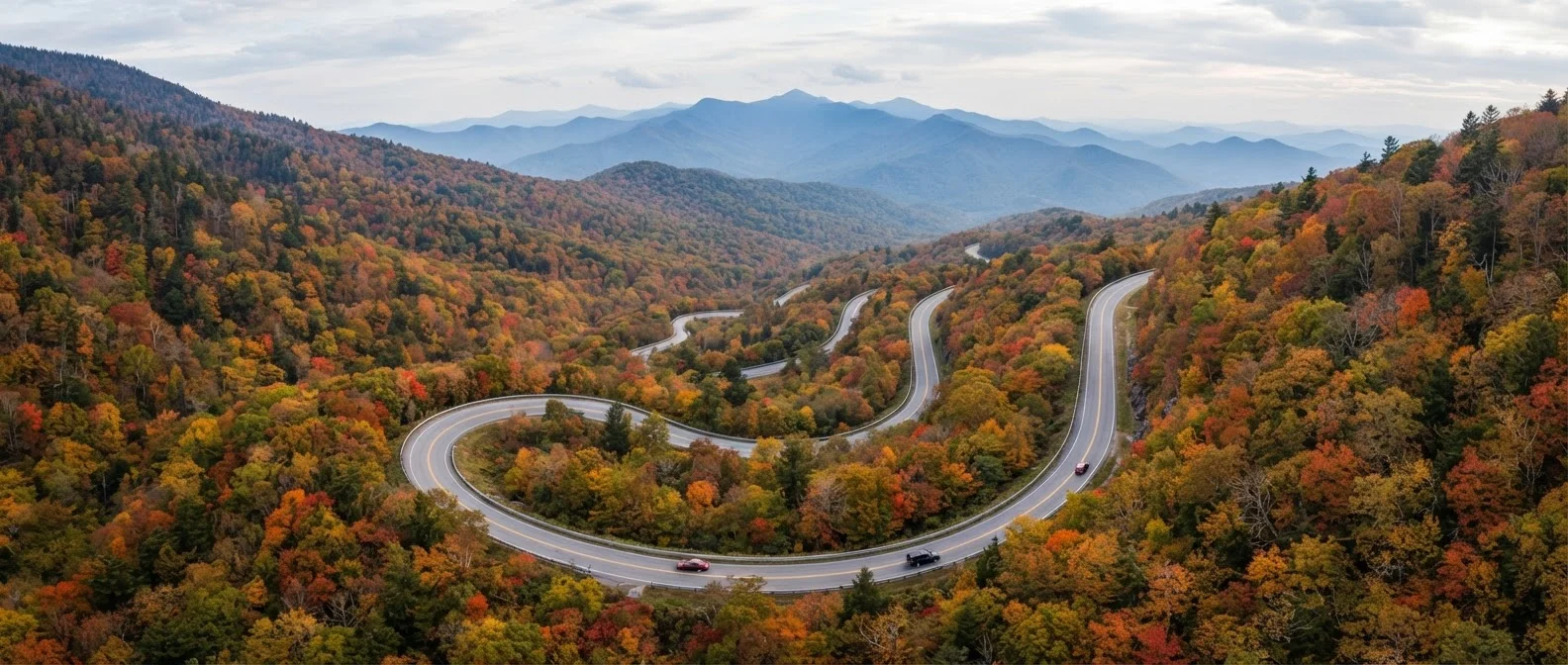
Photo: MyUrbanEscapes.net | Small Escapes. Big Experiences. editorial
—— In This Article
What Makes the Blue Ridge Parkway Unique for RV Travel
Stretching 469 miles from Shenandoah National Park in Virginia to the Great Smoky Mountains in North Carolina, the Blue Ridge Parkway is one of America's most celebrated scenic drives. For senior RVers, its slower speed limits (generally 45 mph), limited commercial traffic, and sweeping mountain views make it a genuinely enjoyable route — but the terrain also demands careful preparation.
| Total Parkway Length | 469 miles (National Park Service) |
| Speed Limit (general) | 45 mph maximum (National Park Service) |
| Elevation Range | 650 ft to 6,053 ft (Richland Balsam) (National Park Service) |
| States Covered | Virginia and North Carolina |
| NPS Campgrounds on Route | 9 campgrounds (seasonal availability varies) (National Park Service) |
| Peak Visitation Season | October (fall foliage) and June–August |
Elevation changes are frequent and significant, with many overlooks and campground access roads featuring steep grades. Rigs longer than 30 feet may encounter tight pull-through limitations at certain Parkway-managed campgrounds. Checking your rig's length and weight against a specific campground's listed specs before arrival is essential. For a broader orientation to campground types along this corridor, see RV Parks, National Forest Campgrounds, and State Sites.
Campground Types Along the Corridor
RVers have three main lodging categories near the Parkway: National Park Service (NPS)-managed campgrounds directly on the Parkway, state park sites just off the route, and private RV parks in nearby towns. Each has meaningful tradeoffs for seniors.
- NPS Parkway Campgrounds: Sites like Otter Creek (Virginia) and Linville Falls (North Carolina) offer rustic, first-come-first-served sites with basic hookups or none at all. Terrain is often uneven, and ADA-accessible sites are limited — call ahead to confirm availability.
- State Park Campgrounds: Sites in Virginia and North Carolina state parks near the Parkway frequently offer electric hookups, paved pads, and reservable ADA sites. Many include accessible bathhouses and level pull-throughs suited to larger rigs.
- Private RV Parks: Towns such as Waynesboro, VA; Boone, NC; and Asheville, NC host private parks with full hookups (water, electric, sewer), laundry, and Wi-Fi — amenities that can meaningfully affect comfort on longer stays. State park campgrounds vs. private RV resorts breaks down those differences in detail.
Full Hookup Site
A campsite providing connections for water, electricity, and sewer simultaneously. Full hookups eliminate the need to dump tanks at a separate station and are generally most convenient for extended stays.
Pull-Through Site
A campsite designed so an RV can drive straight in and straight out without reversing. This layout is significantly easier for solo drivers or those with limited mobility.
ADA-Accessible Site
A campsite meeting Americans with Disabilities Act standards, typically featuring a paved, level pad, wider pathways, and accessible facilities. Availability varies widely by campground; always confirm in advance.
First-Come, First-Served
A campground reservation policy where sites cannot be reserved ahead of time and are assigned upon arrival. This carries more uncertainty and is less suitable for travelers with fixed medical or logistical schedules.
Accessibility Features Worth Confirming Before You Book
The term "accessible" covers a wide range of features, and what's labeled accessible at one campground may be quite different at another. Before booking any site along the Parkway corridor, senior RVers should ask specifically about:
- Site surface material (gravel, asphalt, or packed dirt)
- Grade or slope of the site pad and entry path
- Distance from site to bathhouse, and whether pathways are paved
- Availability of grab bars in shower and toilet facilities
- Pull-through vs. back-in configuration, and maximum rig length
For a thorough checklist of features that genuinely affect daily comfort, accessible RV campground features that make a difference is a practical starting point. Understanding what campground ratings actually signal is also useful — see what RV park amenity ratings actually mean for guidance.
Confirm Site Details Directly with the Campground
Online listings for campgrounds along the Blue Ridge Parkway corridor are not always current. Site surfaces, hookup availability, and ADA features can change between seasons or after maintenance work. Calling the campground directly — or checking the official NPS or state park reservation system — is the most reliable way to confirm conditions before you travel. For RVers with specific accessibility needs, this step is especially important.
Medical Services and Practical Logistics
The Parkway itself has no hospitals, urgent care clinics, or pharmacies along its length. Cellular coverage is also spotty through much of the route, particularly in remote segments in North Carolina. Senior travelers managing chronic conditions or requiring regular prescriptions should plan stops strategically near service towns.
469 miles
Total length of the Blue Ridge Parkway
According to the National Park Service, the Parkway is the longest linear national park in the United States.
~15 million
Annual visitors to the Blue Ridge Parkway
The Parkway consistently ranks among the most visited units in the National Park System, per NPS visitation data.
Towns with reliable medical infrastructure close to the Parkway include Roanoke, VA; Boone, NC; and Asheville, NC — each with hospital systems and multiple pharmacies. When planning overnight stops, it's worth noting travel time to the nearest emergency room from any remote campground site. Staying in private parks near these towns also tends to mean better cellular and emergency services access. For context on building a full RV route with senior-friendly services in mind, the National Parks RV Circuit guide offers a connected route framework. For general trip-planning foundations, the RV Trip Planning hub provides step-by-step guidance.

Rv Travel Editorial Team
RV Travel Editorial Team is the collective byline for our editorial team and contributor network. Articles published under this byline or an editorial pen name are researched, written, and reviewed according to our editorial standards for clarity, consistency, and independence before publication.
View author profile