
What RV Park Amenity Ratings Actually Mean for Senior Travelers
Decoding campground star ratings and amenity labels so senior RVers know which features genuinely matter for comfort and accessibility.
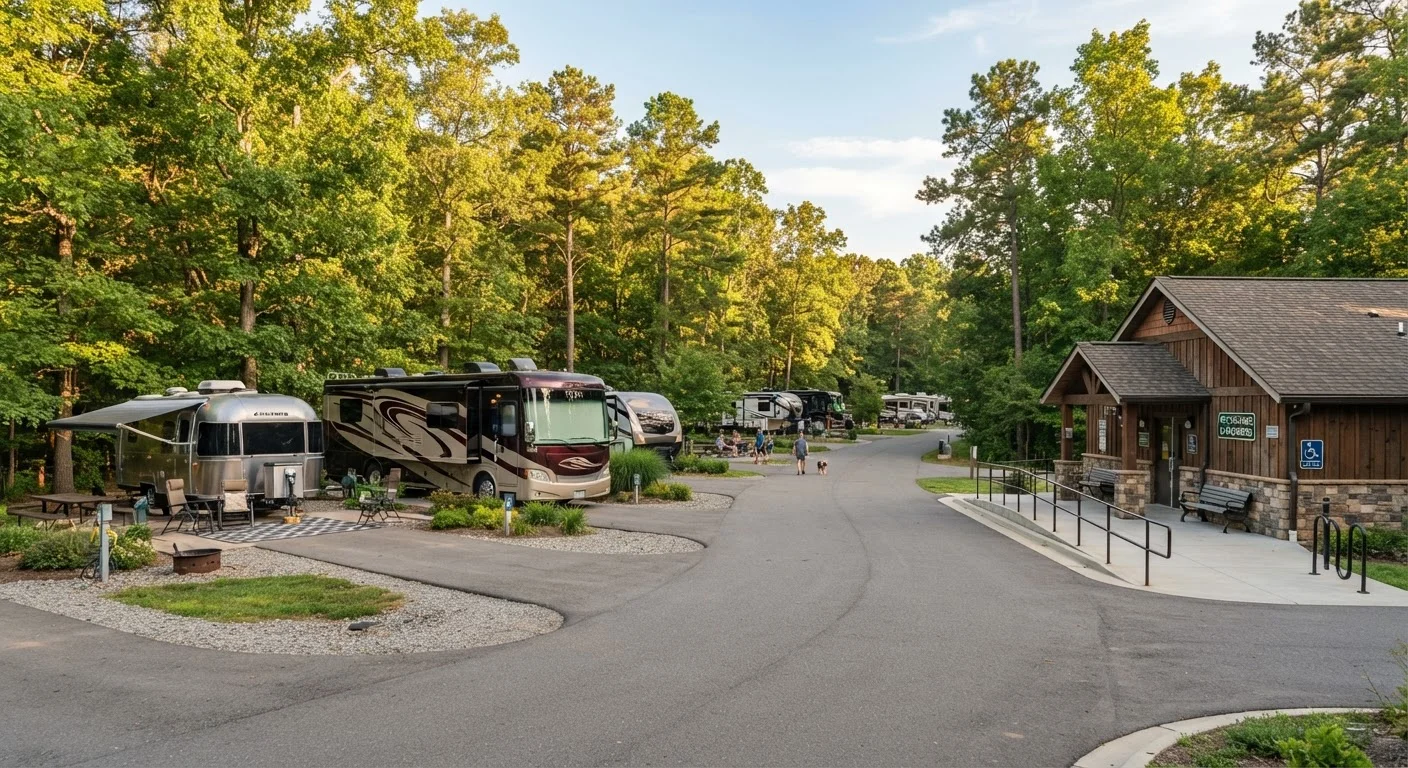
Photo: MyUrbanEscapes.net | Small Escapes. Big Experiences. editorial
—— In This Article
Key Takeaways
- Amenity ratings vary widely depending on who assigned them and what criteria they used.
- A high star rating does not guarantee accessible features for seniors with mobility needs.
- Full hookups, level sites, and paved paths are more meaningful than overall star counts.
- Reading individual reviewer comments often reveals what star scores don't capture.
- Calling the park directly before booking is the most reliable way to confirm senior-relevant details.
- Understanding rating systems helps senior RVers filter campgrounds that genuinely match their comfort needs.
Why Amenity Ratings Don't Always Tell the Full Story
When senior RVers search for a campground, star ratings are usually the first filter they reach for. They're convenient, quick, and feel objective. The problem is that rating systems — whether from a camping club, a review app, or the park itself — were not designed with senior-specific needs in mind.
Most systems score campgrounds on a combination of facility quantity, cleanliness, and overall guest satisfaction. A park with a pool, a pickleball court, a camp store, and 200 sites will often outscore a quieter park with only 40 sites, even if the smaller park has paved paths, accessible bathhouses, and level pull-through sites that make daily life far easier for someone with a mobility aid or joint pain.
Understanding this gap is the first step toward using ratings as one useful input — not a final verdict. For broader context on what accessibility really looks like in travel contexts, see our explanation of what senior-friendly actually means when applied to real destinations.
40%+
RV travelers aged 55 and older
According to the RV Industry Association, more than 40% of RV owners in the US are in the 55-and-older age group, making senior-relevant amenity information increasingly important.
3–5
Rating platforms most RVers consult
Experienced RV travelers frequently cross-reference multiple platforms — including camping club directories, app-based reviews, and Google — because no single system captures all relevant details.
What the Numbers and Stars Actually Measure
Different organizations use meaningfully different criteria. Some rate on a 1–10 scale weighted toward physical infrastructure and site quality. Others rely almost entirely on crowdsourced reviews that reflect whatever the reviewer happened to notice. A few membership-based camping organizations conduct in-person inspections, but even those inspections focus on amenity count and safety compliance rather than accessibility nuance.
Common factors included in most rating systems:
- Utility hookups — whether sites offer electric, water, and sewer connections
- Restroom and shower quality — cleanliness and basic functionality, rarely accessibility
- Recreation amenities — pools, clubhouses, game rooms, laundry facilities
- Site spacing and privacy — how close rigs are parked together
- Overall cleanliness — grounds maintenance and trash management
Notice what's typically absent: site surface material, path grades, grab bar availability, proximity of accessible sites to facilities, and lighting levels after dark — all of which directly affect senior comfort and safety.
Filter Reviews by Keywords That Matter to You
When reading campground reviews, use your browser's find function (Ctrl+F or Cmd+F) to search for words like 'level,' 'pull-through,' 'accessible,' or 'grab bar.' This surfaces the comments most relevant to senior needs without reading dozens of reviews in full. It takes under a minute and often reveals details no star rating captures.
The Amenity Features That Genuinely Matter for Senior RVers
Rather than chasing high star counts, senior travelers benefit from prioritizing a short list of specific features that translate into real comfort on the road.
Full hookups: Having water, electric, and sewer at your site removes the friction of water conservation and dump-station trips — a significant quality-of-life improvement on multi-week trips.
Level, paved, or compacted sites: Uneven or loose-gravel sites create leveling challenges and trip hazards. A site described as level in a photo may not be level enough for comfortable living or safe walking.
Pull-through sites: These eliminate the need to back into a spot — a skill that can be physically and cognitively demanding, especially after a long drive.
Accessible bathhouses: Grab bars, non-slip surfaces, roll-in showers, and wide doorways matter enormously when your own rig's bathroom feels cramped. Our reference guide to accessible campground features details exactly what to look for before booking.
Proximity of amenities: A highly rated park where the bathhouse is a 10-minute walk from your site may be far less comfortable than a modest park where everything is nearby.
How to Read Reviews More Usefully
User reviews, when filtered thoughtfully, surface details that star ratings never capture. Search for keywords like level, paved, pull-through, accessible, quiet, or staff helpful within review text. Reviews mentioning these terms — positively or negatively — tend to be the most informative for senior travelers.
Pay attention to review dates. A park that earned strong reviews three years ago may have changed ownership, deferred maintenance, or upgraded facilities since then. Prioritize recent reviews, and if the most recent comments consistently raise a concern, treat that as a signal.
When you've narrowed your list, call the park directly. Ask specifically about site surface material, whether pull-throughs are available at your rig's length, and the distance from accessible sites to the bathhouse. No review or rating replaces a two-minute phone call for confirming details that matter most to you.
For a broader look at how campground types compare before you start filtering by ratings, see our honest comparison of state park campgrounds and private RV resorts. And if you're planning a scenic circuit, our national parks RV circuit guide includes campground notes suited to senior needs.
Ratings are a starting point, not a destination. For planning resources and safety guidance tailored to older RVers, the RV Safety & Comfort hub and RV Trip Planning hub offer practical steps for every stage of your journey.
Frequently Asked Questions

Rv Travel Editorial Team
RV Travel Editorial Team is the collective byline for our editorial team and contributor network. Articles published under this byline or an editorial pen name are researched, written, and reviewed according to our editorial standards for clarity, consistency, and independence before publication.
View author profile