
Accessible RV Campground Features That Genuinely Make a Difference
A reference guide to the accessibility features worth checking before you book — from site surface material to bathhouse grab bars and path lighting.
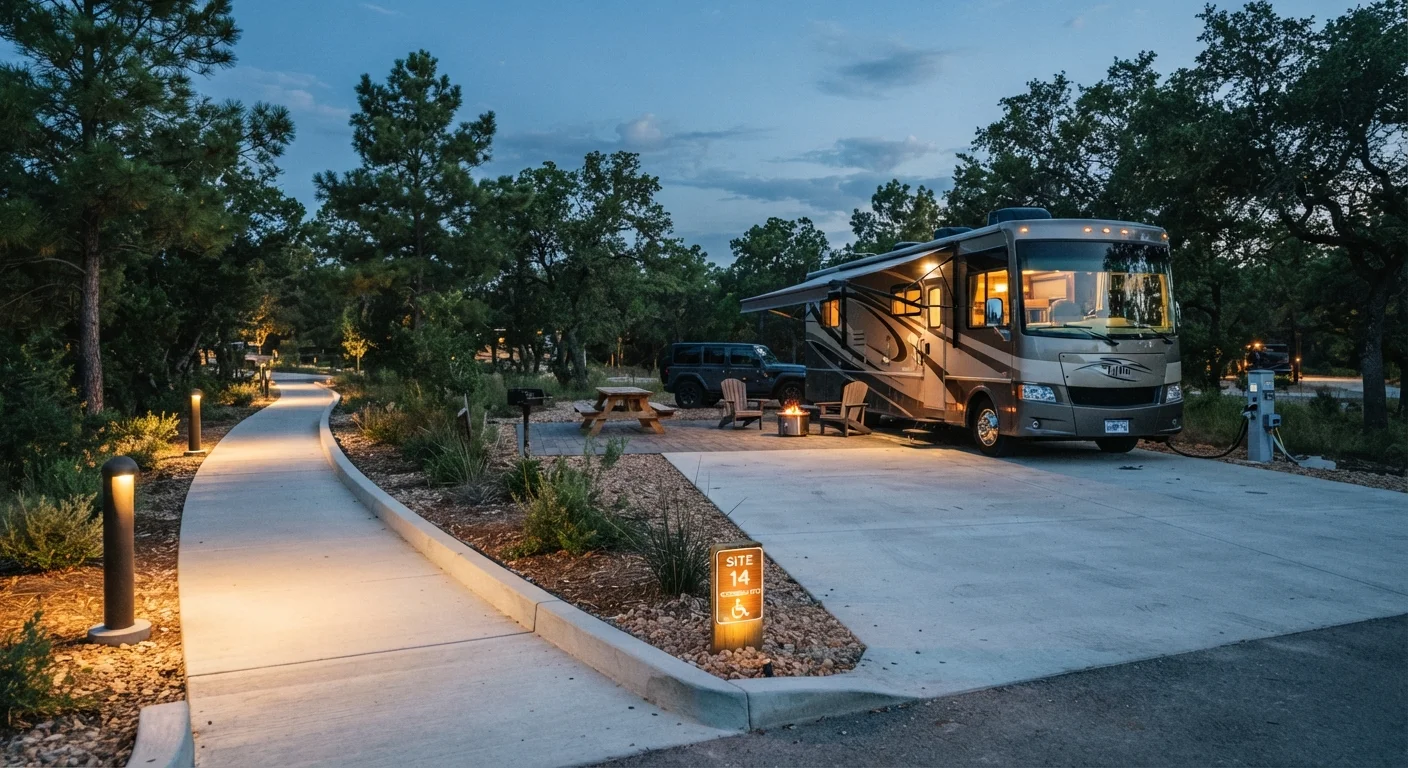
Photo: MyUrbanEscapes.net | Small Escapes. Big Experiences. editorial
—— In This Article
Why Campground Accessibility Features Matter Before You Book
A star rating tells you very little about whether a campsite actually works for someone with limited mobility, balance concerns, or chronic joint pain. The features that matter most — surface material underfoot, grab bar placement in bathhouses, path lighting after dark — rarely appear in standard campground listings. Knowing what to look for, and asking about it directly, can mean the difference between a comfortable trip and one spent managing preventable hazards.
This reference guide focuses on the physical features most relevant to senior RVers. It complements broader RV trip planning advice by zeroing in on accessibility details specifically. For a parallel look at what to verify in rental properties, see our guide on accessibility features every senior should look for in a vacation rental.
| Most impactful site feature | Paved or compacted-gravel pad with level surface |
| Recommended minimum site width | 20 feet of usable clearance on entry side |
| Best hookup type for senior comfort | Full hookup (water, electric, sewer) |
| Key bathhouse safety features | Grab bars, roll-in shower, non-slip floors, lever faucets |
| ADA compliance caution | Legal minimum — always verify specifics directly with campground |
| Portable backup options | Non-slip mats, folding grab bars, step stools with rails |
Site-Level Features: The Ground Beneath Your Feet
The campsite pad itself is the first thing to evaluate. Gravel, grass, and dirt surfaces present real risks — they shift underfoot, become slippery when wet, and make rolling mobility aids significantly harder to use. Paved or compacted-gravel pads reduce these risks considerably. Many federal and state campgrounds now designate accessible sites with concrete or asphalt pads; always confirm surface type with the campground directly rather than relying on photos.
Pad levelness matters as much as surface material. Even a modest slope makes step entry and exit from an RV harder and increases fall risk when moving around the site. Ask whether accessible sites are graded level, not just paved.
Site width determines how much clearance you have between the RV door and neighboring rigs or trees. A minimum of 20 feet of usable width on the entry side is a reasonable threshold to request. Wider sites also ease maneuvering for those using walkers or canes. See our full article on what RV park amenity ratings actually mean for senior travelers for context on how these details are — and aren't — captured in standard ratings.
ADA-Accessible Site
A campsite designed to meet minimum standards set by the Americans with Disabilities Act. These standards cover pad surface, width, and proximity to accessible facilities, but the legal minimum may not address every individual need — always verify specifics with the campground.
Full Hookup
A campsite with simultaneous connections for electricity, fresh water supply, and sewer drainage. Full hookup allows continuous use of all RV systems, including the onboard bathroom, without relying on shared campground facilities.
Roll-In Shower
A shower stall with no raised threshold, allowing wheelchair or mobility aid entry at floor level. Often paired with a fold-down seat and grab bars for additional support.
Pad Levelness
The degree to which a campsite's parking surface sits on flat, even ground. An unlevel pad can make RV door entry and exit harder and increases the risk of falls when moving around the exterior of the vehicle.
Grab Bar
A fixed, weight-bearing horizontal or angled bar mounted to a wall near toilets, showers, or entry steps. Properly installed grab bars provide bracing support and help prevent falls in wet or confined spaces.
Bathhouses, Hookups, and Path Infrastructure
Shared bathhouses vary enormously. Features that genuinely improve safety and comfort include: roll-in shower stalls with fold-down seats, grab bars beside toilets and inside shower areas, lever-style faucet handles (easier than knobs for those with arthritis or reduced grip strength), and non-slip flooring. Request specific details rather than accepting a general statement that a bathhouse is "ADA-compliant" — compliance covers a legal minimum that may not match your specific needs.
For many senior RVers, avoiding bathhouse reliance altogether is the more practical goal. Full-hookup camping — sites with water, electric, and sewer connections — allows you to use your RV's own bathroom at all hours without navigating a path in the dark. This is one of the most impactful comfort upgrades available, particularly at campgrounds where the bathhouse is a significant walk from the site.
Path lighting and surface continuity between your site and any shared facilities matters especially after dusk. Lit pathways with smooth, even surfaces and minimal grade change reduce the risk of trips and falls. If lighting details aren't listed, call ahead — it's a straightforward question that takes seconds to ask. For guidance on preparing accessibility questions before you arrive, the accessibility questions worth asking every host article offers a useful framework that transfers directly to campground inquiries.
If a campground falls short in some areas, portable accessibility aids — such as non-slip bath mats, folding grab bars, and step stools with rails — can help bridge gaps. For destination-specific accessibility details, our guide to RV parks along the Blue Ridge Parkway illustrates what to expect from a well-documented accessible route.
Verify Directly — Not Just Online
Campground listings on booking platforms often lack detail about surface materials, grab bar placement, or path lighting. A brief phone call to the campground host before booking is the most reliable way to confirm accessibility specifics. Staff can describe the actual site you'd be assigned, not just a general category. This single step prevents the most common accessibility surprises on arrival.

Rv Travel Editorial Team
RV Travel Editorial Team is the collective byline for our editorial team and contributor network. Articles published under this byline or an editorial pen name are researched, written, and reviewed according to our editorial standards for clarity, consistency, and independence before publication.
View author profile