
Accessibility Features Every Senior Should Look for in a Vacation Rental
From grab bars to step-free entrances, learn which accessibility features matter most when evaluating a rental property as an older traveler.
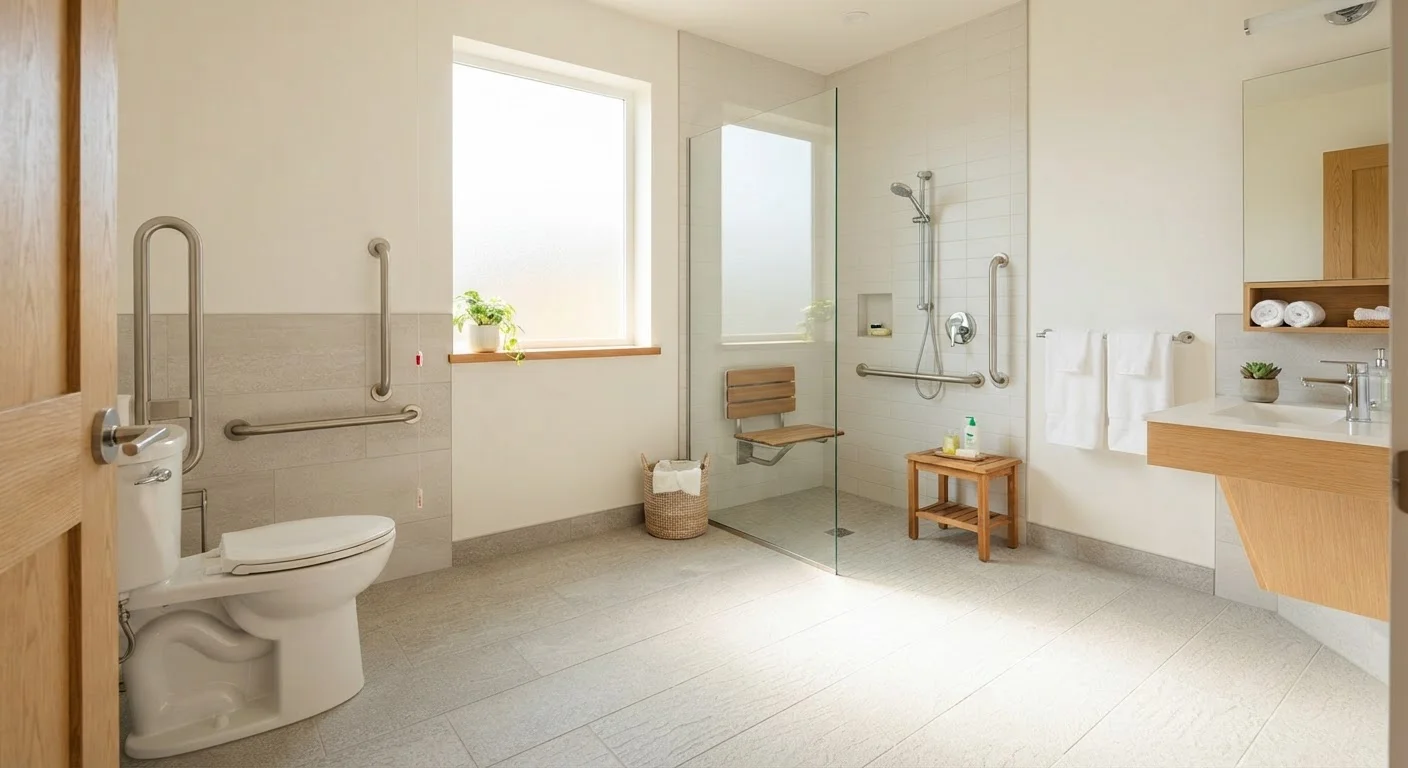
Photo: MyUrbanEscapes.net | Small Escapes. Big Experiences. editorial
—— In This Article
Why Accessibility Features Deserve Serious Attention Before You Book
A listing photo can show a beautiful kitchen or a scenic deck, but it rarely tells you whether you can get through the front door without climbing steps, or whether the bathroom is safe to use at night. For older travelers, these details are not optional extras — they directly affect daily comfort and personal safety.
Accessibility features fall into two broad categories: structural (built into the property itself, such as doorway widths and step-free entries) and added fixtures (installed items like grab bars or shower seats). Both matter, and neither should be assumed from photos alone. Start with our complete guide to finding rentals as a senior if you are new to the search process.
| Minimum doorway width (walker/wheelchair users) | 32 inches clear; 36 inches preferred (ADA Design Guidelines reference) |
| Recommended bed height for ease of use | 18–22 inches from floor to mattress surface (Occupational therapy general guidance) |
| Most common cause of injury in rental bathrooms | Slips and falls on wet, untextured flooring (CDC fall prevention data) |
| Grab bar load-bearing standard | Minimum 250 lbs; confirm wall mounting, not adhesive (ADA Standards for Accessible Design) |
| Step-free entry terminology | Zero-threshold, no-step, or ramped entrance |
The Features That Matter Most — Room by Room
Evaluate each area of the property against your own mobility needs and daily routines.
Entry and Exterior
- Step-free or ramped entrance: Even a single step can pose a fall risk, particularly at night or with luggage. Look for zero-threshold or ramped access.
- Accessible parking: A short, flat path from car to door reduces fatigue and trip hazard exposure.
- Well-lit pathways: Motion-activated or always-on lighting along entry paths is a meaningful safety feature.
Doorways and Hallways
- Wide doorways (32 inches minimum, 36 inches preferred): Necessary for walkers, rollators, or wheelchairs. Standard interior doors can be too narrow.
- Lever-style door handles: Easier to operate than round knobs for those with arthritis or reduced grip strength.
Bathroom
- Grab bars at toilet and shower: The most critical safety feature in any rental. Confirm they are wall-mounted and load-bearing, not decorative.
- Walk-in or roll-in shower: Avoids the need to step over a tub lip, which is a leading cause of bathroom falls.
- Handheld showerhead: Allows bathing while seated, which is safer and less fatiguing.
- Shower seat or bench: Fixed or fold-down seats reduce standing time and fall risk.
- Non-slip flooring: Wet bathroom floors without texture are hazardous; ask specifically about mat availability.
Bedroom
- Bed height: A mattress that is too low makes it difficult to stand safely. Aim for a surface approximately 18–22 inches from the floor.
- Nightstand and lamp within easy reach: Reduces the need to move around in the dark.
- Ground-floor location or elevator access: Stairs overnight increase fall risk significantly.
Living Areas and Kitchen
- Clear, unobstructed pathways: Furniture-heavy rooms reduce maneuverability for anyone using a mobility aid.
- Stable seating with armrests: Soft, low sofas are difficult to rise from safely.
For a printable version of this feature list, see the accessibility features checklist before you confirm your booking.
Zero-threshold entry
A doorway or entrance with no step or raised lip, allowing level passage from outside to inside. This is the most accessible entrance type for wheelchair users, rollator users, and anyone with limited step clearance.
Roll-in shower
A shower with no curb or step at the base, designed so a wheelchair or shower chair can be rolled directly into the spray area. Sometimes listed as a barrier-free or curbless shower.
Grab bar
A wall-mounted, load-bearing bar installed beside a toilet, in a shower, or along a hallway to provide a stable handhold. Effective grab bars are anchored to wall studs, not just tile or drywall.
Lever handle
A door or faucet handle shaped like a lever rather than a round knob. Lever handles can be operated with a closed fist or forearm, making them easier for people with arthritis or reduced grip strength.
ADA (Americans with Disabilities Act)
A US federal law establishing minimum accessibility standards for buildings and facilities. While vacation rentals are not always required to comply, ADA dimensions (such as 36-inch doorways) serve as a useful reference when evaluating a property.
Verifying Features Before You Confirm
Listing descriptions vary widely in detail and accuracy. A property described as "accessible" may meet only a loose interpretation of that term. To reduce surprises, take these steps:
- Request specific confirmation in writing. Ask the host to confirm grab bar locations, doorway widths, and shower type via message. This creates a record and prompts hosts to check their own property accurately.
- Ask for additional photos. Request images of the bathroom, entrance, and bedroom if they are not already in the listing. Most hosts will provide them.
- Read recent reviews carefully. Look for comments from guests who mention mobility, stairs, or accessibility. Their on-the-ground observations are often more reliable than listing text.
- Clarify what is not listed. If the listing does not mention grab bars, assume they are absent and ask directly. Our guide to accessibility questions for rental hosts provides exact phrasing you can use.
If a rental is otherwise ideal but falls short on one or two features, portable accessibility aids — such as suction-cup grab bars, bed rails, or non-slip bath mats — can fill some gaps. However, they do not replace structural features for guests with significant mobility needs.
Also be aware that listings sometimes use "accessible" loosely. The article myths about accessible vacation rentals addresses common misconceptions that can lead to booking errors.

Vacation Rentals Editorial Team
Vacation Rentals Editorial Team is the collective byline for our editorial team and contributor network. Articles published under this byline or an editorial pen name are researched, written, and reviewed according to our editorial standards for clarity, consistency, and independence before publication.
View author profile