
What 'Senior-Friendly' Actually Means When Applied to a US Destination
The term gets used loosely in travel marketing. This article unpacks the concrete features — terrain, transport, healthcare access — that make a city genuinely accessible.
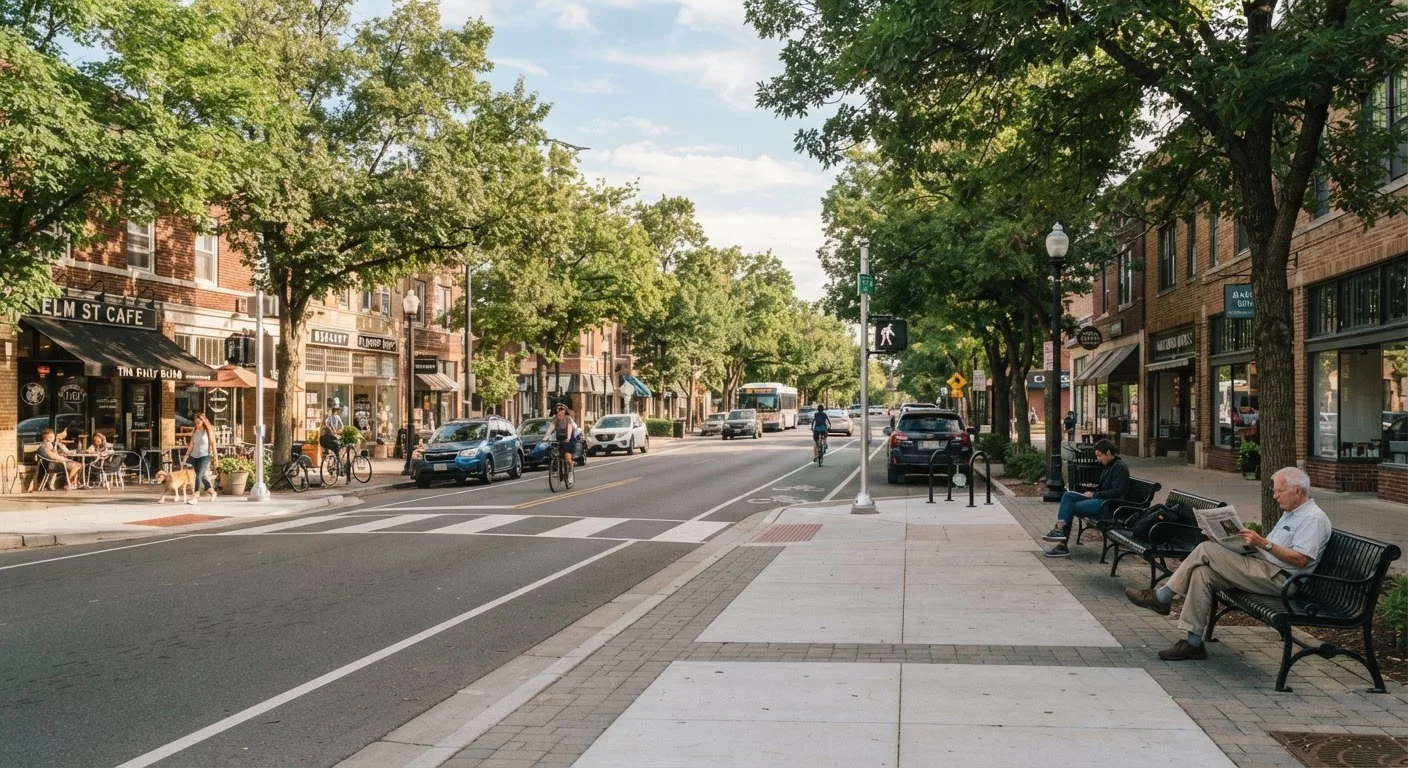
Photo: MyUrbanEscapes.net | Small Escapes. Big Experiences. editorial
—— In This Article
Key Takeaways
- Terrain and walkability are among the most important factors — flat, compact cities with paved paths reduce fatigue and fall risk.
- Proximity to quality healthcare matters: look for destinations within easy reach of a hospital or urgent care facility.
- Accessible, reliable public transport reduces dependence on driving and opens up more of a city to exploration.
- Crowd levels and pace affect stress — smaller or off-peak destinations often suit seniors better than tourist-saturated hotspots.
- Climate considerations such as heat, humidity, and altitude can significantly affect comfort and safety for older travelers.
- The phrase 'senior-friendly' in marketing rarely maps to a defined standard — independent verification of specific features is essential.
Why the Label Alone Means Very Little
Travel marketers apply the phrase 'senior-friendly' the way food labels use 'natural' — broadly, loosely, and without a binding definition. A resort can describe itself as senior-friendly because it offers a shuttle from the lobby to the pool. A city tourism board can claim the label because its downtown museum has an elevator. Neither of those facts tells you whether the surrounding neighborhood is walkable, whether a hospital is reachable in an emergency, or whether the terrain will leave you exhausted after two blocks.
For older travelers, the distinction matters. A destination that is genuinely accessible reduces physical strain, removes logistical friction, and provides a safety net when health concerns arise — all without requiring extra planning effort. One that merely uses the term as a marketing hook can cause real inconvenience when its limitations become apparent on arrival.
The useful approach is to evaluate destinations against a concrete set of criteria rather than accepting promotional language at face value. Those criteria fall into five broad categories: terrain and walkability, transport access, healthcare proximity, climate, and overall pace.
ADA Compliance Is a Floor, Not a Ceiling
U.S. law requires public spaces to meet minimum accessibility standards under the Americans with Disabilities Act, but compliance thresholds were designed around legal minimums — not optimal comfort for all older travelers. A sidewalk can be technically ADA-compliant and still be difficult to navigate with a walker or rollator. Treat legal compliance as a baseline check, then look for destinations that exceed it through thoughtful design.
The Five Criteria That Actually Measure Senior-Friendliness
Terrain and Walkability
Flat, compact cities with paved, well-maintained sidewalks consistently outperform scenic but hilly destinations for older travelers. Steep grades increase cardiovascular demand and fall risk; broken pavement and curbs without cuts exclude anyone using a cane, walker, or wheelchair. Cities like Savannah, Georgia — with its flat grid, shaded squares, and relatively short blocks — offer a measurably different experience than San Francisco, regardless of how both might be described in a tourism brochure.
Public Transport and Ground Access
Driving becomes less desirable for many seniors on longer trips. A destination served by frequent, accessible transit — light rail, buses with low floors, reliable ride-share coverage — extends independence without requiring a rental car. Proximity to a major airport with non-stop routes from common departure cities also reduces the physical fatigue of multi-connection travel. For alternatives to flying, see how domestic destinations compare in our look at international senior-friendly criteria.
Healthcare Proximity
The presence of a hospital or urgent care center within a short, accessible distance is a practical safeguard — not an alarmist concern. Destinations in rural or remote areas can be scenic and relaxing, but travelers managing chronic conditions or taking multiple medications benefit from knowing that capable medical attention is reachable quickly if needed.
Climate
Extreme heat, high humidity, and significant altitude all impose physiological stress. The U.S. Southwest is popular in winter for its mild temperatures but can become genuinely hazardous in summer for older adults. Altitude in cities like Denver or Santa Fe may require acclimatization time. Matching climate to individual tolerance is a real factor in destination selection, not a minor preference.
Pace and Crowd Levels
High tourist density, loud environments, and fast-paced attractions create sensory and physical strain that accumulates over the course of a trip. Destinations that offer a slower tempo — or that have identifiable off-peak windows — give travelers more control over their experience. This is one reason mid-sized cities often rate higher for senior travelers than iconic but overcrowded ones.
Use Satellite Maps Before You Book
Street-level mapping tools let you preview sidewalk conditions, terrain, and the distance between key points before you arrive. Look specifically at the routes between your accommodation and the places you plan to visit most — not just the destination's overall layout. A ten-minute virtual walkthrough can reveal grade changes, construction zones, or missing footpaths that no tourism website will mention.
Applying These Criteria When You Research
Practically, evaluating a destination before booking means looking beyond the tourism board's homepage. Satellite map tools can reveal terrain contours and sidewalk coverage. Local transit authority websites list real-time route frequency and vehicle accessibility. State health department directories identify hospital locations. Travel forums populated by older travelers often contain candid assessments of walkability that guidebooks omit.
Accommodation choices compound destination-level factors. A well-chosen city can be undermined by a rental property with steep interior stairs or an inaccessible shower. Our guide on accessibility features every senior should look for in a vacation rental walks through what to verify at the property level. Similarly, the language used on rental platforms can be misleading — what 'accessible' actually means on rental platforms explains how to read listings critically.
Once you have a shortlist of destinations that clear the core criteria, cost becomes a secondary filter. Some genuinely accessible U.S. cities also offer lower daily expenses — a combination worth seeking out, and one explored in depth in our overview of affordable U.S. cities where seniors travel well without overspending.
40%
U.S. seniors who report a disability affecting mobility
According to the CDC's disability and health data, roughly 40% of adults aged 65 and older report some form of disability, with mobility limitations being among the most common — underscoring why terrain and transport access are core senior-travel criteria.
13 minutes
Median U.S. emergency response time in rural areas
Research from the National Rural Health Association indicates that rural areas face significantly longer emergency medical response times compared to urban centers, a practical consideration for older travelers evaluating remote destinations.
A Note on Personal Needs and Honest Assessment
Senior-friendliness is not a single fixed standard — it is the degree to which a destination matches the specific needs of the individual traveler. A person who moves confidently on foot without mobility aids has different requirements than someone using a power wheelchair. Travelers managing cardiovascular conditions have different climate sensitivities than those without. The criteria outlined here are a structured starting point, not a universal checklist.
The honest exercise is to identify your own non-negotiables before researching destinations, then filter against them systematically. That approach consistently produces better outcomes than relying on any destination's self-applied label. For those considering travel beyond U.S. borders, the same framework applies — though the verification process differs, as covered in our comparison piece on senior-friendly international destinations.
This article provides general travel information for educational purposes. Travelers with specific health conditions should consult their healthcare provider before planning extended trips. Entry requirements, infrastructure conditions, and accessibility standards can change; always verify current details with official and local sources before traveling.
Frequently Asked Questions

Top Destinations Editorial Team
Top Destinations Editorial Team is the collective byline for our editorial team and contributor network. Articles published under this byline or an editorial pen name are researched, written, and reviewed according to our editorial standards for clarity, consistency, and independence before publication.
View author profile