
Accessible Vacation Rentals: What the Term Actually Means
"Accessible" means different things on different platforms. Learn what to look for beyond the label when searching for senior-friendly rentals.
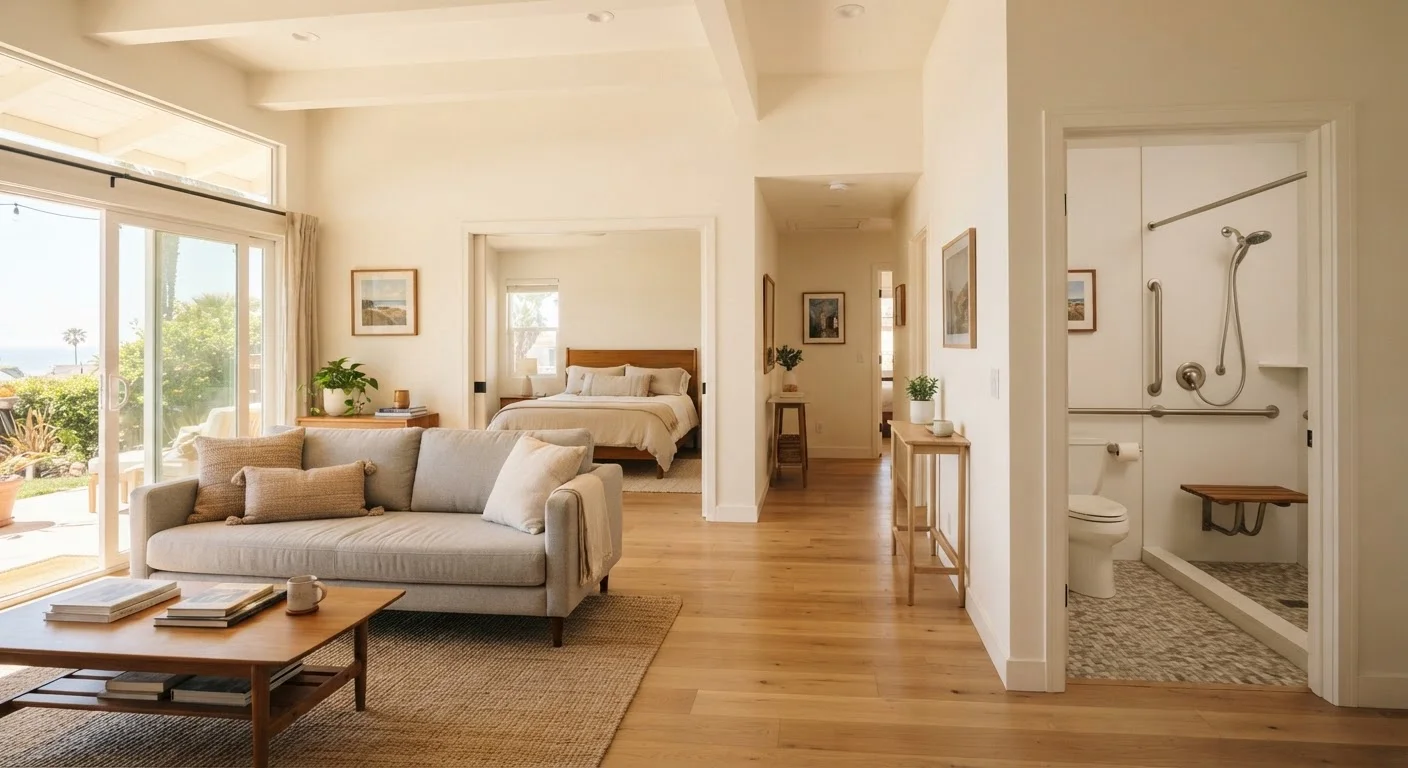
Photo: MyUrbanEscapes.net | Small Escapes. Big Experiences. editorial
—— In This Article
Key Takeaways
- The word 'accessible' on a rental listing carries no legal standard and means different things on different platforms.
- Vacation rentals are privately owned and are generally not required to meet ADA hotel standards.
- Hosts self-report accessibility features, so verifying details directly before booking is essential.
- Specific feature descriptions — such as 'step-free entrance' or 'roll-in shower' — are more reliable than the label 'accessible' alone.
- Contacting the host with a written list of your needs is one of the most effective verification strategies.
Why the Label Alone Isn't Enough
When you search for vacation rentals and filter by 'accessible,' you might expect to see properties with grab bars, step-free entrances, and wide doorways. Sometimes that's exactly what you find. Other times, the listing earns that label simply because the host believes their home is easier to get around than most — perhaps because it's single-story, or because the bathroom is large.
There is no national checklist that a vacation rental must pass before being called accessible. Hosts self-report these features, and platforms vary in how rigorously they verify or structure that information. The result is that two rentals labeled 'accessible' can look completely different in practice.
This matters especially for senior travelers who depend on specific features — a roll-in shower, a bed at a certain height, or an entrance without stairs. Treating the label as a starting point rather than a guarantee is the first shift in thinking that makes searching more effective.
ADA and Vacation Rentals: An Important Distinction
The Americans with Disabilities Act sets clear accessibility standards for hotels and other public accommodations. However, private short-term rentals are generally not classified as public accommodations under the ADA, meaning those standards do not automatically apply. If accessibility requirements are important to your stay, confirm specific features directly with the host rather than assuming ADA-level compliance.
What Platforms Actually Mean by 'Accessible'
Different rental platforms take different approaches to accessibility. Some offer structured filters where hosts check boxes confirming specific features, such as 'step-free entrance' or 'accessible parking.' Others rely on freeform descriptions where the host writes whatever they choose. A few platforms have invested in more detailed accessibility questionnaires in recent years, though consistency across listings on any given platform is still uneven.
Understanding how a platform organizes — or doesn't organize — accessibility data helps you interpret what you're reading. A checked filter on one platform may represent a confirmed feature; a bullet point in a description on another platform may reflect the host's general impression. How platforms handle accessibility listings explains what to expect from each approach.
No standard
National definition for rental accessibility
Unlike hotels, private vacation rentals in the US are not subject to a universal federal accessibility standard, leaving 'accessible' as a self-reported label.
1 in 4
US adults living with a disability
According to the CDC, approximately 1 in 4 US adults has some type of disability, making accessible travel options a widespread practical need rather than a niche concern.
Translating Listing Language Into Real Features
Certain phrases in rental listings point to more concrete accommodations than others. Terms like 'step-free entrance,' 'roll-in shower,' 'wide doorway,' and 'shower chair available' describe specific, measurable features. Phrases like 'easy access,' 'comfortable for all ages,' or 'convenient layout' are vaguer and require follow-up.
A practical approach: write down the three to five features that matter most for your trip — whether that's no stairs to the front door, a walk-in shower, or proximity to parking — and compare those directly against what the listing states. Then contact the host to confirm. A host who responds with specific details and photos is giving you much more reliable information than a listing tag alone.
For a plain-language reference to terms you'll encounter, see the senior renter's feature glossary, which explains what each accessibility term means in practice.
How to Verify Before You Book
The most reliable approach is direct communication with the host before booking. Use the platform's messaging system so your conversation is documented. Describe your specific needs clearly and ask whether the property meets each one. If a host says yes, ask for a photo. This protects you if a dispute arises later.
Questions worth asking include:
- Are there any steps between the parking area and the front door?
- What is the doorway width for the bedroom and bathroom?
- Is there a grab bar next to the toilet and in the shower?
- Is the shower a step-in, walk-in, or roll-in design?
- Is the property on a single level?
If you're new to evaluating rentals with accessibility in mind, this introduction for new senior travelers covers the core concepts and first steps in plain language.
Keep Your Communications on the Platform
When asking hosts about accessibility features, use the rental platform's built-in messaging system rather than switching to email or phone. Written records within the platform can be referenced if you need to raise a concern after booking. Request photos of key features — entrance, bathroom, and bedroom — as part of your pre-booking checklist.
Moving Beyond the Label
Searching for a genuinely accessible vacation rental takes a bit more effort than filtering by a single keyword, but it's effort well spent. The clearer you are about your own needs, the more effective your search becomes — both in reading listings and in communicating with hosts.
Keep in mind that 'accessible' in a rental listing describes a privately owned home, not a regulated hotel category. For a comparison of how the term works differently in hotel settings, see how accessible hotel room categories differ from what vacation rentals offer.
Once you understand what the label actually means — and what it doesn't — you're better equipped to find properties that genuinely match your travel needs. Specific accessibility features to prioritize can help you build your own checklist from there.
Frequently Asked Questions

Vacation Rentals Editorial Team
Vacation Rentals Editorial Team is the collective byline for our editorial team and contributor network. Articles published under this byline or an editorial pen name are researched, written, and reviewed according to our editorial standards for clarity, consistency, and independence before publication.
View author profile