
Ground-Floor Units, Grab Bars, and Wide Doorways: A Senior Renter's Feature Glossary
A plain-language reference to the accessibility and mobility terms that appear in vacation rental listings and what each one means in practice.
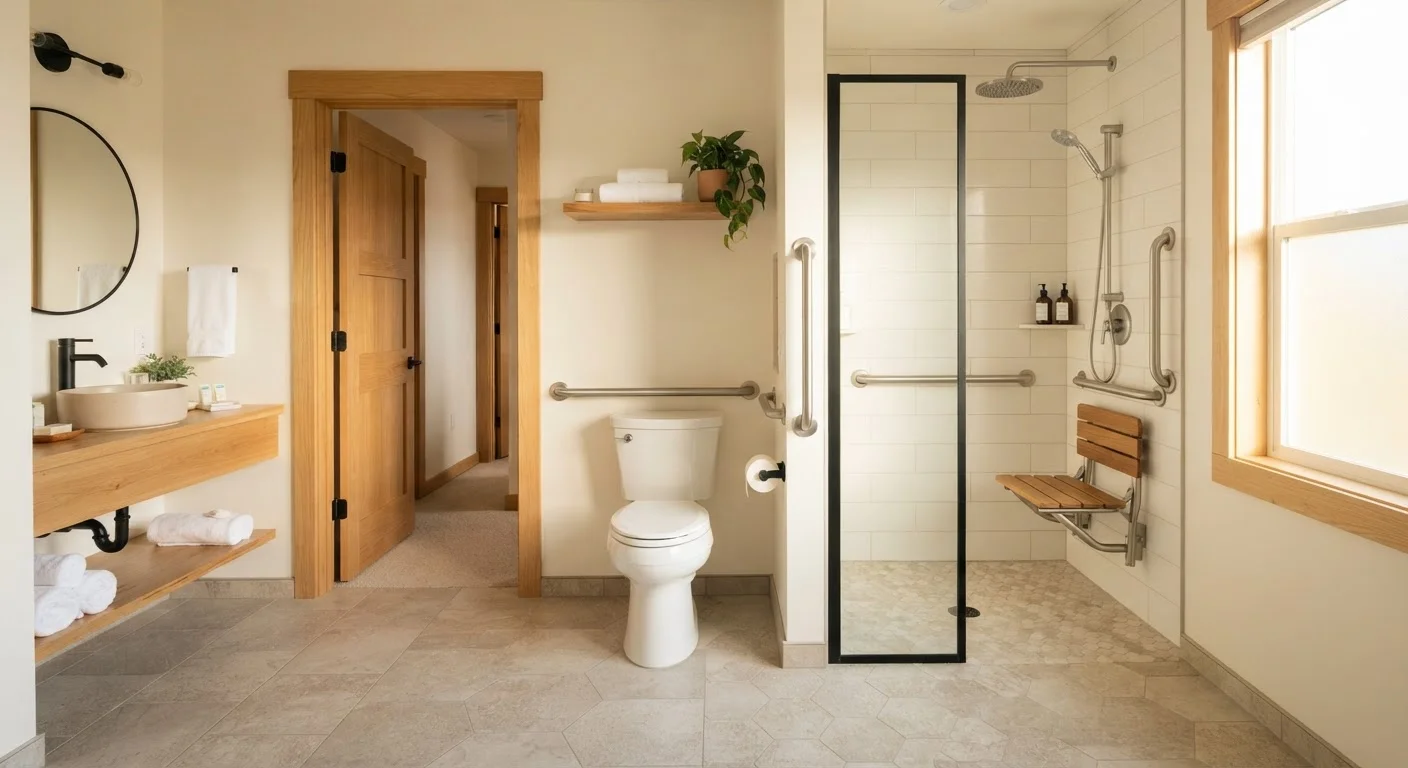
Photo: MyUrbanEscapes.net | Small Escapes. Big Experiences. editorial
—— In This Article
Why This Glossary Exists
Vacation rental listings use accessibility language inconsistently. One property may advertise a "step-free entrance" while another lists "no-step entry" — and a third says nothing at all but still qualifies. For senior travelers who rely on these features, unclear terminology is more than an annoyance; it can lead to a booking that simply doesn't work on arrival.
This glossary defines the terms you're most likely to encounter — or wish you had encountered — when searching listings. Each entry explains what the feature means in practice, not just in theory. Use it before you search, while you compare listings, and again before you confirm a booking.
For a broader introduction to evaluating rentals with mobility in mind, see Rental Accessibility for New Senior Travelers: Where to Begin.
Ground-floor unit
A rental located on the lowest occupied level of a building, typically near street level. It reduces or eliminates stair climbing to reach the front door, though a small step at the threshold may still exist.
Step-free entry
An entrance with no steps between the exterior path and the front door. This is a distinct, more specific claim than simply being on the ground floor, and is particularly important for cane, walker, or wheelchair users.
Wide doorways
Interior doorways measuring at least 32 inches in clear width, ideally 36 inches. Standard residential doors are often narrower, making this specification relevant for anyone using mobility equipment.
Grab bars
Wall-mounted support handles installed near toilets, showers, or bathtubs that are anchored to bear body weight. They differ from decorative towel bars and are a key fall-prevention feature in bathrooms.
Roll-in shower
A shower with a fully flush, curbless entry that allows a wheelchair or shower chair to roll directly inside without any step or lip. It provides maximum bathroom accessibility for users with limited mobility.
Comfort-height toilet
A toilet with a seat height of 17–19 inches — taller than the standard 15-inch height — making it easier to sit and stand for people with knee, hip, or balance limitations.
Shower seat or bench
A fixed or fold-down seat inside a shower stall that allows bathing while seated. It reduces fall risk and physical fatigue, and should be weight-rated and firmly anchored.
Turning radius
The floor space needed for a wheelchair to complete a full 180- or 360-degree turn — typically a clear circle of at least 60 inches in diameter. Adequate turning radius in bathrooms and hallways is essential for wheelchair users.
Accessible parking space
A designated parking area that is wider than standard, located close to the building entrance, and situated on a level surface. It is distinct from general nearby parking and is relevant to anyone using a mobility placard.
Walk-in shower
A shower enclosure entered without stepping into a full bathtub. The term is sometimes used interchangeably with roll-in shower, but may still have a small curb — always verify the threshold height with the host.
Key Accessibility Features Explained
The terms below cover the features that appear most often in listings and matter most for day-to-day comfort and safety. Where a feature is sometimes misrepresented or misunderstood, that nuance is noted.
| Minimum wide doorway width | 32 inches clear (36 inches preferred for wheelchairs) (ADA Standards for Accessible Design) |
| Comfort-height toilet seat | 17–19 inches from floor (ADA Standards for Accessible Design) |
| Wheelchair turning radius | 60-inch diameter clear floor space (ADA Standards for Accessible Design) |
| Standard toilet seat height | Approximately 15 inches (General industry reference) |
| Roll-in shower threshold | 0 inches (fully flush/curbless entry) (ADA Standards for Accessible Design) |
Entrance and Entry Points
Ground-floor unit means the rental is located on the building's lowest occupied level — typically at or very near street level. This matters because it eliminates stair climbing to reach the front door. However, "ground floor" does not guarantee a step-free threshold; a single step at the entrance is still common. Always confirm whether the entry is truly level. For a full comparison of floor-level trade-offs, see Ground-Floor vs. Upper-Floor Rental Units: Weighing the Trade-Offs.
Step-free or no-step entry means there are no steps between the parking area or sidewalk and the front door. This is the most critical entrance feature for anyone using a cane, walker, or wheelchair. Confirm whether the path from where you park — not just the doorstep — is also step-free.
Interior Doorways and Hallways
Wide doorways refers to doorways that measure 32 inches or more in clear width; 36 inches is preferable for wheelchair users. Standard interior doors are often only 28–30 inches wide. A listing that specifies wide doorways should ideally state the measurement; if it doesn't, ask the host directly before booking.
Wide hallways or turning radius describes corridors wide enough for a wheelchair or walker to maneuver comfortably. A usable turning radius for a standard wheelchair is approximately 60 inches in diameter. Narrow hallways can make even an otherwise accessible rental difficult to navigate.
Listings Don't Always Match Reality
Hosts self-report accessibility features on most vacation rental platforms, and there is no universal third-party verification process. A listing may claim wide doorways or grab bars that do not meet practical standards. Before booking, request photos of specific features and ask the host to confirm measurements in writing. This record can be useful if there is a dispute after arrival.
Bathroom Safety Features
Grab bars are sturdy, wall-mounted handles installed near the toilet, beside the shower, or inside the bathtub surround. Unlike towel bars, grab bars are anchored to wall studs or blocking to support body weight. Their presence — and placement — makes a significant difference in fall prevention.
Roll-in shower means the shower has no curb or lip at the entry, allowing someone using a shower chair or wheelchair to enter without stepping over a barrier. A walk-in shower may or may not have a small curb; the terms are sometimes used interchangeably, so confirm the threshold height with the host.
Shower seat or bench is a fixed or fold-down seat inside the shower stall. It allows a bather to sit while washing, which reduces fatigue and fall risk. Ask whether the seat is weight-rated and securely installed.
Raised toilet seat or comfort-height toilet refers to a toilet with a seat height between 17 and 19 inches — higher than a standard toilet's 15-inch height. This makes sitting down and standing up considerably easier for people with knee or hip limitations.
For a deeper look at which features to prioritize, see Accessibility Features Every Senior Should Look for in a Vacation Rental.
Terms That Can Mislead — and How to Read Them Accurately
The word "accessible" in a listing title is not standardized on most vacation rental platforms. It may mean the property meets full wheelchair-accessibility standards, or it may simply mean the host added a grab bar in one bathroom. Accessible Vacation Rentals: What the Term Actually Means breaks down how to look past the label.
"Elevator access" means the building has an elevator, but it does not guarantee the elevator is large enough for a wheelchair or that it is consistently operational. On your checklist, note the elevator's interior dimensions if mobility equipment is involved.
"Parking nearby" is not the same as an accessible or designated parking space. An accessible parking space is wider, located close to the entrance, and is generally on a level surface. If you use a mobility placard, ask whether the property has a designated accessible space or whether street parking requires a walk of several blocks.
Once you've reviewed this glossary, use it alongside The Accessibility Features Checklist Every Senior Should Use Before Booking a Rental and The Accessibility Questions Worth Asking Every Rental Host to verify every detail before confirming your stay.

Vacation Rentals Editorial Team
Vacation Rentals Editorial Team is the collective byline for our editorial team and contributor network. Articles published under this byline or an editorial pen name are researched, written, and reviewed according to our editorial standards for clarity, consistency, and independence before publication.
View author profile