
Rental Accessibility for New Senior Travelers: Where to Begin
If you're navigating vacation rentals for the first time with accessibility in mind, this plain-language introduction covers the core concepts and first steps.
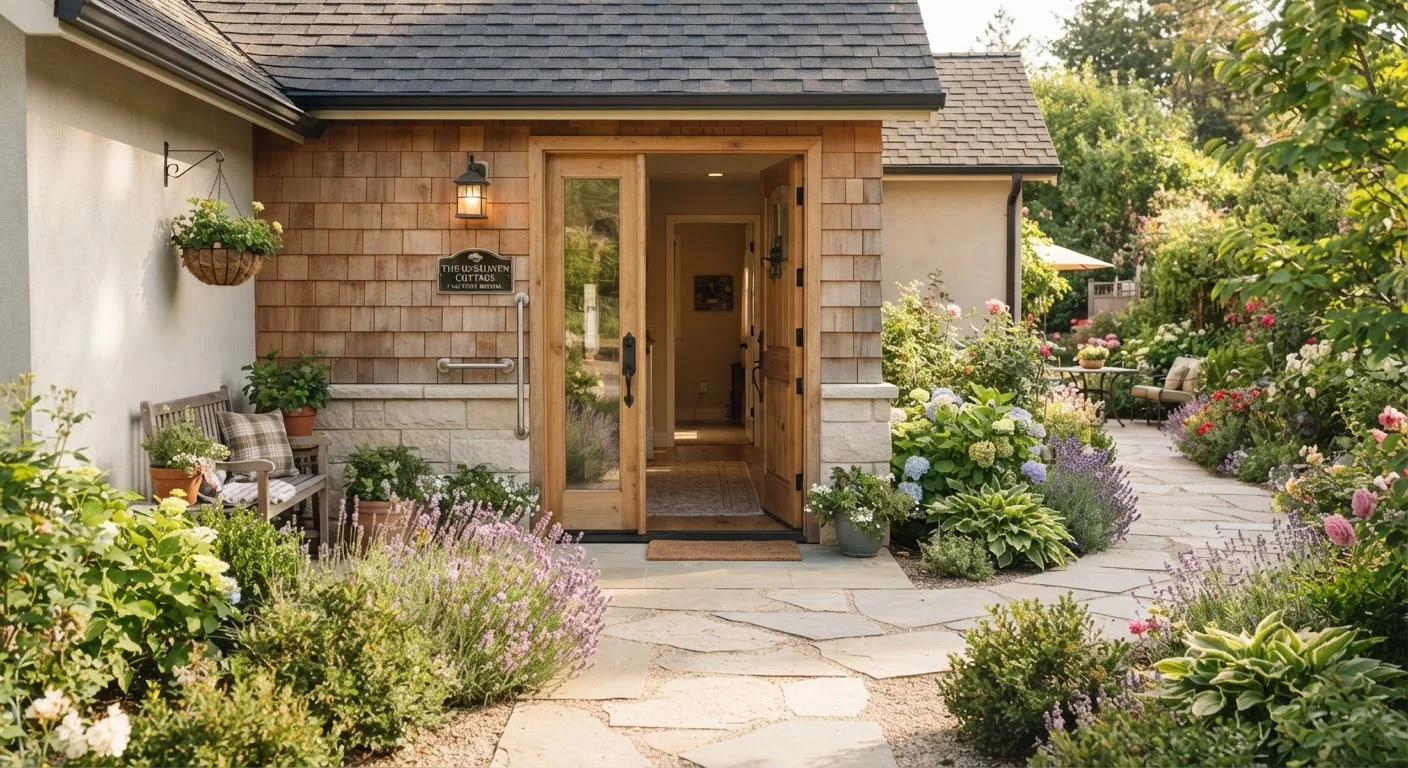
Photo: MyUrbanEscapes.net | Small Escapes. Big Experiences. editorial
—— In This Article
Key Takeaways
- Identifying your personal mobility needs before searching saves significant time and prevents costly mistakes.
- Accessibility terminology in listings is inconsistent — learning key terms helps you read between the lines.
- Contacting hosts directly is often the most reliable way to verify accessibility features.
- Ground-floor units and step-free entrances are the highest-priority features for most senior travelers.
- A simple written checklist reviewed before booking reduces the risk of arriving at an unsuitable property.
Why Accessibility Matters Before You Book
Discovering that a vacation rental has a steep front staircase after you have already arrived is more than inconvenient — it can make the property unusable. For senior travelers, especially those booking a vacation rental for the first time, accessibility is not a minor preference. It is a practical requirement that shapes the entire trip experience.
Unlike hotels, which must meet defined regulatory standards in many states, privately owned vacation rentals operate under different rules. This means the responsibility for checking accessibility falls largely on you, the traveler. The good news is that a clear and methodical approach before booking protects you from most unpleasant surprises. The Finding Rentals hub is a useful starting point for building that approach.
Write Your Requirements Down First
Before opening any rental platform, take a few minutes to write a short list of your specific accessibility needs. Having this list in front of you while browsing keeps your search focused and makes it much easier to compare properties objectively. It also gives you a ready-made set of questions to send to hosts.
Key Accessibility Terms You Should Know
Rental listings use accessibility language inconsistently. Understanding what common terms typically mean — and where they fall short — helps you evaluate a property with much greater confidence.
Step-free entrance
An entrance that can be reached without climbing any steps or stairs. This may include a ramp or a ground-level path from the parking area to the front door.
Grab bar
A fixed bar mounted to a wall, usually in the bathroom, that provides support when sitting down, standing up, or moving around a wet area.
Roll-in shower
A shower with no raised threshold or lip, allowing a wheelchair or wheeled shower chair to enter directly. The floor is typically sloped toward a drain.
Wide doorways
Doorways broad enough to accommodate a wheelchair or walker — generally 32 inches or wider in the clear opening, though requirements vary by device.
Single-level layout
A property where all essential living spaces — bedroom, bathroom, kitchen, and living area — are on one floor, eliminating the need to use stairs.
ADA
The Americans with Disabilities Act, a U.S. law that sets accessibility standards for many public buildings. Private vacation rentals are generally not required to meet ADA standards, though some hosts voluntarily follow its guidelines.
For a fuller plain-language reference to the terms you will encounter in listings, see our senior renter's feature glossary, which explains each term in practical, everyday language.
Assessing Your Own Needs First
Before searching any platform, take fifteen minutes to write down your own mobility and comfort requirements. This step is often skipped, yet it is the single most valuable thing you can do.
- Entrances and stairs: Can you manage steps, and if so, how many? Do you use a cane, walker, or wheelchair?
- Bathroom safety: Do you need grab bars, a walk-in shower, a shower seat, or a handheld showerhead?
- Sleeping arrangements: Is a ground-floor bedroom essential? Do you need a bed at a specific height?
- Distances and layout: How far can you comfortably walk from a parking area to the front door? Is an open-plan layout important?
Separate your list into must-haves and nice-to-haves. Must-haves are non-negotiable — if a property does not meet them, move on. This discipline prevents the common mistake of convincing yourself that a property will "work out" when it clearly will not. The trade-offs between urban and rural rentals are also worth considering at this stage, since location type significantly affects what accessibility looks like in practice.
Don't Rely on Listing Labels Alone
The word "accessible" in a vacation rental listing has no universal legal definition. A property may be labelled accessible while having features that don't suit your particular needs. Always verify the specific features that matter to you by reading the full description and, when in doubt, messaging the host directly for clarification.
Where to Start Your Search
Once you know what you need, you are ready to search. Most major vacation rental platforms include at least some accessibility filters — look for options such as "step-free entry," "accessible bathroom," or "single-level home" in the filter menus. Apply your must-have filters first to narrow results before browsing photos or descriptions.
After filtering, read listing descriptions carefully. Look for specific details rather than vague claims. A description that says "the bathroom has a grab bar beside the toilet and a roll-in shower with a fold-down seat" is far more useful than one that simply says "accessible." If the description is vague, that is your cue to contact the host directly.
Our complete starting point for senior rental searches walks through this entire process in more detail, including how to use platform filters effectively and what questions to ask hosts.
Questions to Ask Before You Confirm
Contacting the host before booking is not just acceptable — it is strongly advisable for any senior traveler with accessibility needs. A short, specific message sent through the platform's messaging system creates a written record and often reveals whether a host is knowledgeable and forthcoming about the property's features.
Useful questions to ask include:
- Is the entrance step-free from the parking area to the front door?
- Are there any interior stairs between the sleeping area and the bathroom?
- What are the exact bathroom features — shower type, grab bar locations, seat availability?
- How wide are the main doorways, approximately?
- Is parking available directly adjacent to the property?
Once you have confirmed the details, use a structured checklist to make sure nothing important has been overlooked. Our accessibility features checklist is designed specifically for this final review stage. For a comprehensive walkthrough from first search to confirmed booking, the end-to-end guide for senior travelers covers every step in sequence.
Frequently Asked Questions

Vacation Rentals Editorial Team
Vacation Rentals Editorial Team is the collective byline for our editorial team and contributor network. Articles published under this byline or an editorial pen name are researched, written, and reviewed according to our editorial standards for clarity, consistency, and independence before publication.
View author profile