
Desert Southwest RV Destinations: The Terrain, the Climate, and the Campgrounds
A destination overview of the Desert Southwest for senior RVers, covering elevation, heat considerations, and which parks offer shade and full hookups.
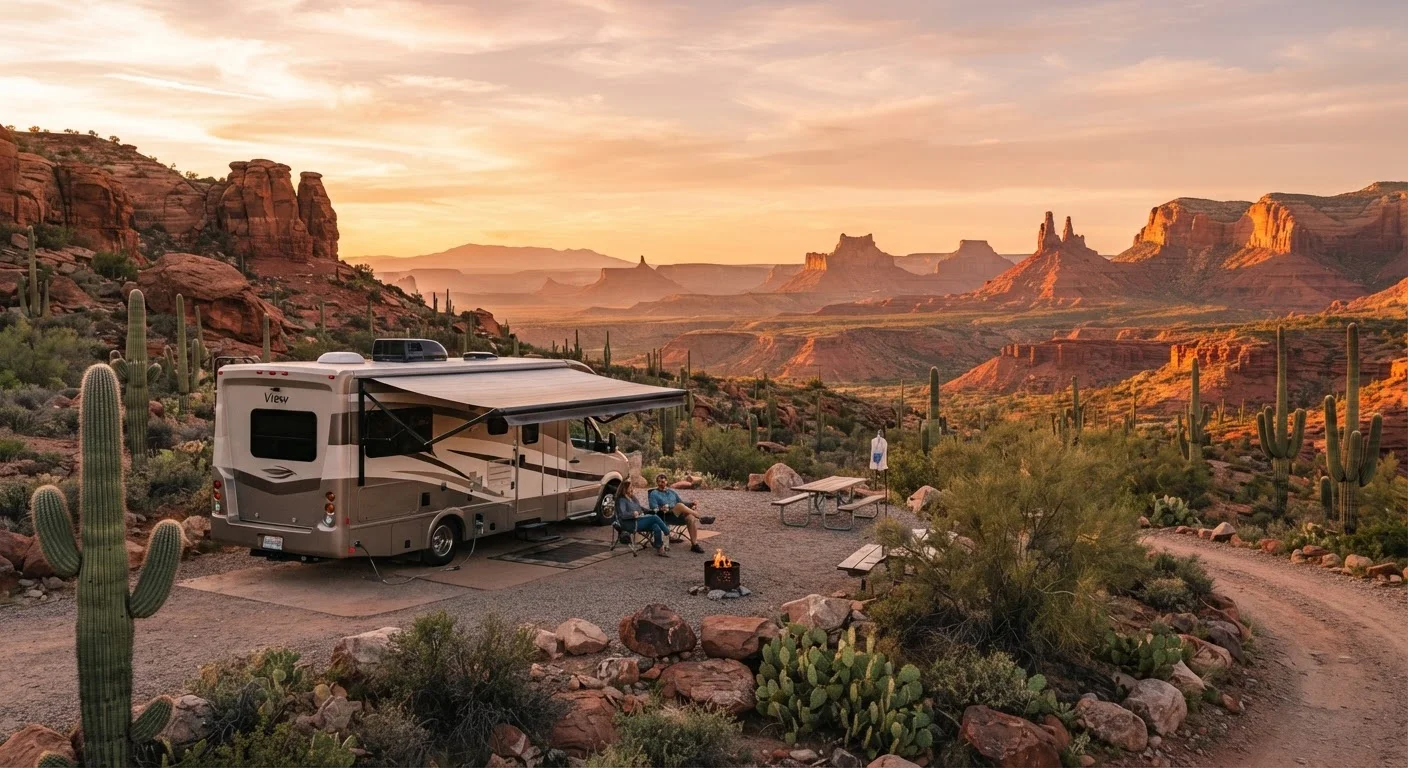
Photo: MyUrbanEscapes.net | Small Escapes. Big Experiences. editorial
—— In This Article
Key Takeaways
- Elevation matters as much as latitude when planning desert Southwest RV trips for comfort and safety.
- Peak summer heat in low-elevation basins can exceed 110°F — timing your visit is essential.
- Many national park and state campgrounds offer full hookups, shade structures, and paved pull-through sites.
- Choosing campgrounds near town centers improves access to medical services and supply runs.
- Dry desert air requires intentional hydration strategies — particularly important for older travelers.
Why the Desert Southwest Works for Senior RVers
The Desert Southwest — broadly encompassing southern Arizona, southern Utah, southeastern California, Nevada, and New Mexico — draws senior RVers year-round for good reason. The region delivers extraordinary scenery, reliable sunshine, and an impressive concentration of national parks, state parks, and established RV campgrounds within manageable driving distances of one another.
That said, the Southwest is not a single uniform environment. Elevation ranges from below sea level at California's Salton Sea to well above 8,000 feet at some New Mexico plateau sites. Temperature swings of 40°F between day and night are common. Understanding these variables — and matching them to your physical comfort zone — is the first step in planning a successful trip. For a broader look at how desert climates compare to coastal options, see Coastal Warmth vs. Desert Dryness.
The destinations below are selected with senior-specific priorities in mind: accessible terrain, shade availability, full hookups (electric, water, sewer connections at your site), proximity to services, and reasonable elevation profiles. Each one offers a genuinely rewarding experience without requiring rugged off-road navigation or extreme physical exertion.
Hydration in Dry Desert Air
The Desert Southwest's low humidity causes perspiration to evaporate so quickly that many travelers don't feel how much they're sweating. Drink water consistently throughout the day — before you feel thirsty — rather than waiting for thirst to signal need. This is particularly important for older travelers, as the thirst mechanism can become less reliable with age. Consult your healthcare provider if you have conditions or take medications that affect fluid balance.
Top Desert Southwest RV Destinations for Senior Travelers
Saguaro National Park Area, Tucson, Arizona
Tucson sits at roughly 2,400 feet — high enough to temper the worst of the desert heat, yet low enough to remain accessible and mild from October through April. The city sits between the east and west units of Saguaro National Park, offering senior RVers both iconic desert scenery and urban conveniences within minutes.
Gilbert Ray Campground, operated by Pima County, is the closest full-hookup option to the park's west unit. Sites are spacious, many are paved pull-throughs, and the campground is flat. The Rincon Mountain District (east unit) provides trailhead access to paved and compacted paths suitable for easy walking or cycling. Nearby Tucson offers major medical centers, grocery stores, and pharmacies — a comfort factor worth weighing on longer stays.
Summer temperatures regularly exceed 100°F here, so plan visits outside the June–September window unless your RV's air conditioning system is robust and you intend to remain largely indoors during afternoon hours.
Tucson's elevation and urban amenities make it one of the Southwest's most senior-friendly RV base camps.
Zion National Park Area, Springdale, Utah
Zion Canyon sits at approximately 4,000 feet at its floor, offering notably cooler conditions than Arizona's low desert. The canyon's towering sandstone walls provide natural shade during morning and late afternoon hours, which senior visitors who prefer walking the paved Riverside Walk (a mostly flat, one-mile accessible trail along the Virgin River) will appreciate.
South Campground and Watchman Campground, both inside the park, offer electric hookups and are within easy walking distance of the visitor center and park shuttle stop. The free park shuttle eliminates the need to drive narrow canyon roads — a significant advantage for travelers who prefer not to navigate tight switchbacks in large rigs. Springdale, just outside the park entrance, has restaurants, a grocery option, and medical urgent care.
Spring (March–May) and fall (September–October) are the most comfortable seasons. Summer temperatures can reach the upper 90s°F in the canyon floor, and the park sees its highest visitor volumes in summer.
Zion's free shuttle system removes the stress of driving narrow canyon roads for RVers of all experience levels.
White Sands National Park Area, Alamogordo, New Mexico
White Sands offers one of the Southwest's most visually distinctive landscapes — vast gypsum dunes that remain cool to the touch even in summer due to the mineral's low heat retention. The park sits at around 4,000 feet in elevation, and Alamogordo, about 15 miles east, provides a practical RV base with multiple campgrounds offering full hookups.
Oliver Lee Memorial State Park, south of Alamogordo, is a well-regarded option with electric and water hookups, a modern visitor center, and a shaded picnic area. The park sits at the base of the Sacramento Mountains and offers a peaceful, uncrowded alternative to busier Southwest destinations.
The dunes themselves have designated backcountry camping with prior permits, but for most senior RVers, a day-visit approach — arriving early morning, departing before peak afternoon heat — is the most comfortable strategy. New Mexico's summer monsoon season (July–September) can produce brief but intense afternoon storms; check forecasts daily during those months.
White Sands' gypsum dunes stay notably cooler than sand, making midday walks more manageable than expected.
Lake Havasu, Arizona
Lake Havasu sits along the Arizona-California border at a low elevation of around 735 feet, making it warm nearly year-round — but best visited between October and April. The lake itself is the main draw: calm, navigable water that supports kayaking, fishing, and boat tours without requiring significant physical exertion.
Lake Havasu State Park offers full-hookup sites, some with shade structures, and a well-maintained beach area. The adjacent city of Lake Havasu City is a mid-sized community with a hospital, multiple grocery options, and a variety of restaurants — all factors that support longer-term stays for senior travelers who want consistent access to services.
The famous London Bridge, relocated here in the late 1960s, provides an unusual and walkable cultural attraction. Flat paved paths around the bridge and waterfront are suitable for travelers with limited mobility. Summer heat here is significant — temperatures above 110°F occur regularly — making this primarily an autumn-through-spring destination.
Lake Havasu's flat waterfront paths and full-service city amenities make it a low-exertion, high-reward stop.
Carlsbad Caverns National Park Area, New Mexico
Carlsbad Caverns offers something unique among desert destinations: a naturally air-conditioned underground environment that stays around 56°F year-round, regardless of the surface temperature. For senior travelers visiting in warmer months, the cavern tour provides a welcome and genuinely comfortable midday activity.
The park sits at roughly 4,400 feet elevation, and Carlsbad — about 20 miles north — is the nearest city with RV park options offering full hookups, along with medical facilities and shopping. The main cavern trail is paved and descends steeply via a natural entrance path; an elevator alternative is available for those for whom descent or ascent presents difficulty.
The surrounding Chihuahuan Desert landscape is dramatic and less visited than Arizona or Utah destinations, which means campgrounds are generally less crowded and reservations easier to secure. The famous bat flight (a mass emergence of hundreds of thousands of Mexican free-tailed bats at dusk from May through October) is an extraordinary spectacle accessible from a paved amphitheater area.
The cavern's year-round 56°F temperature makes it a genuinely refreshing midday stop during any season.
Elevation and Altitude Awareness
Several Southwest destinations — particularly in southern Utah and New Mexico — sit at elevations between 4,000 and 7,000 feet. At these altitudes, some travelers experience mild symptoms such as headaches or fatigue during the first day or two of adjustment. This is general information, not medical advice. If you have cardiovascular, respiratory, or other chronic health conditions, speak with your healthcare provider before traveling to higher-elevation areas.
Planning Your Desert Southwest RV Trip
Timing is the single most impactful planning decision you'll make. The low-elevation basins — Tucson, Phoenix, the Sonoran Desert — are at their most welcoming from October through April. Southern Utah's canyon country (Moab, Zion, Bryce) tends to be more manageable in spring and fall, when summer crowds and heat both recede. New Mexico's higher elevations offer pleasant summers but require attention to afternoon monsoon patterns from July through September.
If you're mapping a longer warm-weather itinerary from the Midwest or Northeast, the Snowbird RV Routes guide outlines practical routing options, distances, and amenity benchmarks across the Sun Belt. And if you're deciding between campground types — from full-service resorts to national forest dispersed sites — RV Parks, National Forest Campgrounds, and State Sites walks through the trade-offs clearly.
Before you travel, verify current road conditions, campground reservation availability, and any park entry requirements directly with official park and land management agency websites, as policies and site configurations change. Consult your healthcare provider about heat, altitude, and hydration considerations specific to your health profile before undertaking a desert trip.
This article is for general informational and travel planning purposes only. Campground details, availability, and conditions change regularly — always verify with official sources before travel. Nothing here constitutes medical advice; consult a qualified healthcare professional regarding any health considerations for your trip.

Rv Travel Editorial Team
RV Travel Editorial Team is the collective byline for our editorial team and contributor network. Articles published under this byline or an editorial pen name are researched, written, and reviewed according to our editorial standards for clarity, consistency, and independence before publication.
View author profile